
The Break-Fix Trap and How to Avoid It
The Real Cost of Waiting for Something to Break

Preventive maintenance vs reactive repairs commercial HVAC is one of the most consequential decisions a facility manager or building owner will make — and most organizations don't realize they've made it until they're already paying the price.
Picture this: it's the hottest week of summer in Roanoke, VA. Your rooftop unit goes down mid-afternoon. Tenants are calling, operations are stalling, and you're on the phone trying to reach an emergency technician. What might have cost a fraction of the price during a scheduled service visit is now an after-hours emergency — and that's before accounting for lost productivity or potential equipment damage.
This is the break-fix trap: a pattern where facilities react to failures instead of preventing them, spending more over time while getting less reliability in return.
The data makes the case plainly:
Reactive Repairs | Preventive Maintenance | |
Approach | Fix after failure | Service on a schedule |
Cost pattern | Unpredictable spikes | Predictable, controlled spend |
Emergency risk | High | Low |
Equipment lifespan | ~10 years (neglected) | 15-20 years (maintained) |
Energy efficiency | Degraded over time | Optimized consistently |
Downtime | Frequent and unplanned | Rare and brief |
Budget impact | 3-10x higher long-term | Up to 50% lower total costs |
For commercial and industrial operations — where HVAC failure can mean lost revenue, compliance exposure, or disrupted processes — the stakes are simply too high to leave equipment care to chance.
This guide breaks down both strategies in full: what they are, how they compare across cost, reliability, and efficiency, and how to build a maintenance framework that protects your facility for the long term.

Defining Preventive Maintenance vs Reactive Repairs Commercial HVAC
In facility management, maintenance isn't just a chore; it’s a financial strategy. At Whitescarver Engineering Co., we see businesses across Virginia struggle with the balance between immediate savings and long-term asset health. Understanding the core definitions of preventive maintenance vs reactive repairs commercial HVAC is the first step toward breaking the cycle of emergency calls.
A proactive approach involves creating a detailed asset inventory. This means documenting every chiller, air handler, and boiler in your facility, noting its age, condition, and service history. This allows us to move away from the "run-to-failure" mindset and toward a systematic, scheduled plan. By addressing needs before they become emergencies, you can virtually eliminate unplanned downtime.
To see how these strategies manifest in a real-world setting, we offer comprehensive Maintenance Services that prioritize foresight over hindsight.
What is Reactive Maintenance for Commercial HVAC?
Reactive maintenance, often called "break-fix" or "run-to-failure," is exactly what it sounds like: you wait until a component stops working before you call for service. While this might seem like it saves money in the short term because you aren't paying for "unnecessary" visits, it is actually the most expensive way to run a building.
The consequences of this approach include:
Emergency Service Premiums: Repairs performed under duress often involve higher labor rates and expedited shipping for parts.
Cascade Damage: A simple $100 part failure, like a capacitor or a belt, can lead to a $5,000 compressor failure if left unaddressed.
Unplanned Downtime: When systems fail unexpectedly, business stops. For a retail space, this means lost customers; for an industrial plant, it means halted production.
Rushed Decisions: You’re forced to choose the fastest fix rather than the most efficient or long-term solution.
When these failures occur, our team provides expert Systems Repairs & Retrofits to get you back online, but we always advocate for a shift toward prevention to avoid the stress of the next breakdown.
What is Preventive Maintenance for Commercial HVAC?
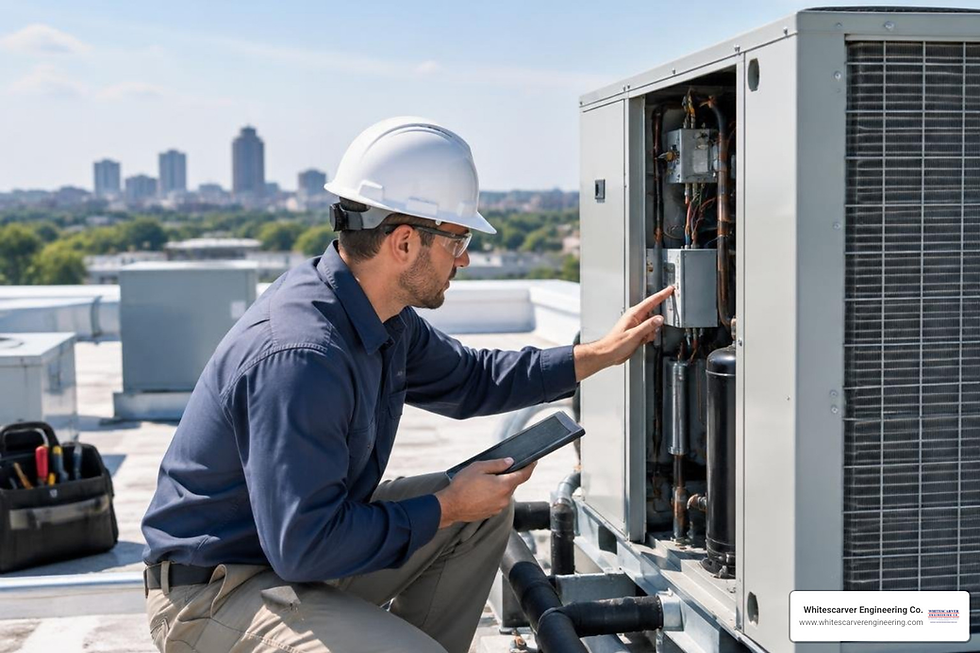
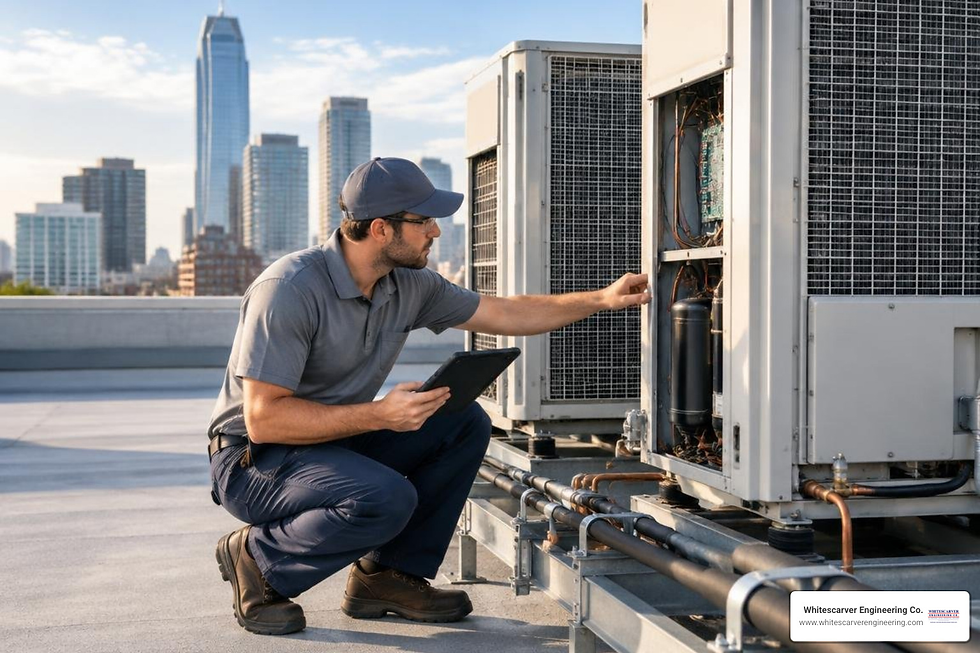
Preventive maintenance is a proactive, calendar-based approach. It involves performing routine tasks — such as filter changes, coil cleanings, and electrical inspections — at set intervals to keep Commercial HVAC Systems running at peak performance.
Think of it as an insurance policy for your mechanical assets. By keeping the system clean and calibrated, you ensure that it doesn't have to work harder than necessary to meet the building's load. This not only prevents breakdowns but also keeps you in compliance with manufacturer warranties, which often require documented proof of regular service to remain valid.
The Operational Impact of Maintenance Strategies
The choice between reactive and proactive care has a ripple effect across your entire operation. In a commercial or industrial setting, your HVAC system is the lungs of the building. If it fails, the indoor air quality suffers, employee productivity drops, and critical industrial processes can become unstable.
Comparing Preventive Maintenance vs Reactive Repairs Commercial HVAC Efficiency
One of the most immediate benefits of a preventive approach is the impact on your utility bills. HVAC systems account for roughly 44% of energy consumption in commercial buildings. When a system is neglected, its efficiency drops significantly.
Dirty Filters: Can increase energy use by 15% as the blower motor works harder to pull air through the blockage.
Grimy Coils: Can reduce heat transfer by 30%, forcing the system to run longer cycles to reach the set temperature.
Low Refrigerant: Even a small leak can reduce cooling capacity by 20%, leading to massive energy waste.
Through regular system calibration and airflow optimization, we help businesses achieve significant energy cost reductions. A well-maintained system can use 10-20% less energy than one that only receives reactive care. In large industrial settings, these savings can equate to thousands of dollars saved annually.
Impact on Equipment Lifespan and Reliability
Capital protection is a major concern for any facility manager. Replacing a large-scale commercial HVAC unit is a significant investment. By choosing preventive care, you are essentially extending the life of that investment.
Research shows that systems receiving regular care typically last 15-20 years. In contrast, neglected units often require full replacement in as little as 10 years. Routine tasks like bearing lubrication and checking belt tension prevent the excessive wear and tear that leads to premature mechanical failure. For our clients in Roanoke and the surrounding corridor, this reliability is essential for maintaining industrial process stability and avoiding the sudden need for a massive capital outlay.
Implementing a Proactive Maintenance Framework
Moving from a reactive to a proactive model doesn't happen overnight, but the roadmap is clear. It begins with an assessment of your facility's specific needs. Not every piece of equipment requires the same level of attention. We use a strategy called "asset tiering" to classify equipment:
Tier 1 (Mission-Critical): Systems like chillers or boilers that serve hospital wings or data centers. These require the highest level of preventive care.
Tier 2 (Standard Commercial): Rooftop units or split systems serving office spaces. These follow a standard bi-annual schedule.
Tier 3 (Non-Critical): Low-cost items like exhaust fans or unit heaters in storage rooms where a failure won't disrupt operations.
By using this framework, we ensure your maintenance budget is spent where it provides the most value. Our Maintenance Services are designed to integrate these tiers into a seamless plan for your facility.
Essential Preventive Maintenance vs Reactive Repairs Commercial HVAC Checklist
A professional maintenance visit is much more than just a quick look at the unit. A robust checklist should include:
Electrical Tightening: Checking and tightening all connections to prevent the 30% of failures caused by electrical issues.
Condensate Flushing: Cleaning drain lines and using biocides to prevent leaks and water damage.
Coil Cleaning: Removing dirt and debris from evaporator and condenser coils to maintain heat transfer efficiency.
Belt and Motor Care: Inspecting belt tension and lubricating bearings to ensure smooth mechanical operation.
Sensor Calibration: Testing thermostats and sensors to ensure the system is reacting accurately to the environment.
Refrigerant Check: Monitoring levels and performing leak detection to ensure environmental compliance and system capacity.
Performance Reporting: Providing detailed documentation that acts as business intelligence, showing trends and potential future issues.
Transitioning from Reactive to Proactive Care
If your facility is currently stuck in the "break-fix" cycle, the transition starts with an asset registry. We document every unit, its age, and its tonnage. From there, we establish a staged implementation of maintenance agreements.
The goal is to move your "planned-to-reactive" work order ratio to at least 70%. As you implement these changes, you can track your ROI. Most facilities see a 25-35% reduction in emergency calls within the first 90 days of a structured program. We provide 24/7 service for commercial clients to handle any remaining outliers, but the ultimate goal is to make those emergency calls a thing of the past.
Frequently Asked Questions about Commercial HVAC Maintenance
How often should commercial HVAC systems receive preventive maintenance?
For most commercial environments in Virginia, we recommend professional service at least twice per year — once in the spring to prepare for the cooling season and once in the fall for the heating transition. However, high-use environments like restaurants or industrial plants may require quarterly visits. We specialize in custom industrial HVAC projects that tailor the frequency to the specific demands of your machinery and environment.
What are the risks of relying solely on reactive repairs?
Beyond the high costs, reactive repairs carry significant safety and compliance risks. Neglected systems are more prone to safety hazards like carbon monoxide leaks or electrical fires. Furthermore, you risk voiding manufacturer warranties and falling out of compliance with EPA Section 608 regulations regarding refrigerant leaks. The budget volatility of reactive repairs also makes it impossible to accurately forecast facility expenses.
When does a hybrid maintenance approach make sense?
A hybrid approach is often the most practical solution for large facilities. This involves applying intensive preventive or even predictive monitoring to mission-critical Tier 1 assets while allowing non-essential Tier 3 assets to run until they fail. This tiered strategy ensures that your resources are allocated effectively, protecting your most expensive and vital systems while saving money on equipment that is cheap and easy to replace.
Conclusion
Since 1937, Whitescarver Engineering Co. has been a cornerstone of B2B service excellence in Roanoke and the surrounding region. We understand that for facility managers in Salem, Vinton, and the Blacksburg corridor, HVAC reliability is not a luxury — it is a requirement for operational success.
By moving away from the break-fix trap and embracing a structured approach to preventive maintenance vs reactive repairs commercial HVAC, you protect your capital, reduce your energy footprint, and ensure long-term reliability for your building. Our BBB A+ accredited team brings over 75 years of technical expertise to every project, providing the custom solutions your industrial or commercial facility deserves.
Don't wait for the next emergency to rethink your strategy. Secure your facility with professional Maintenance Services today and experience the peace of mind that comes with proactive care.

Comments