
Commercial HVAC Controls Integration for Virginia Energy Conservation and Peak Efficiency
Whitescarver Engineering
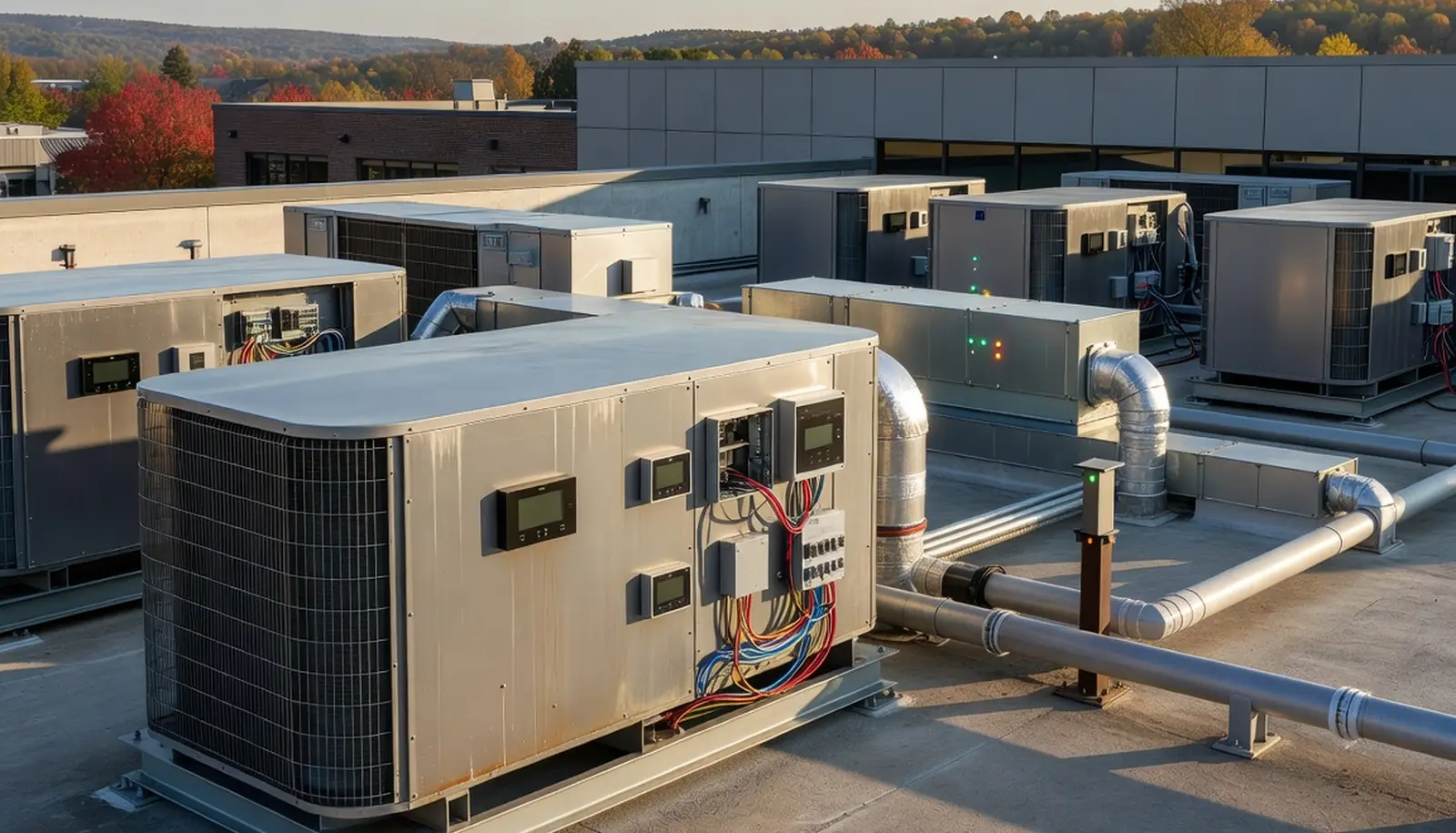
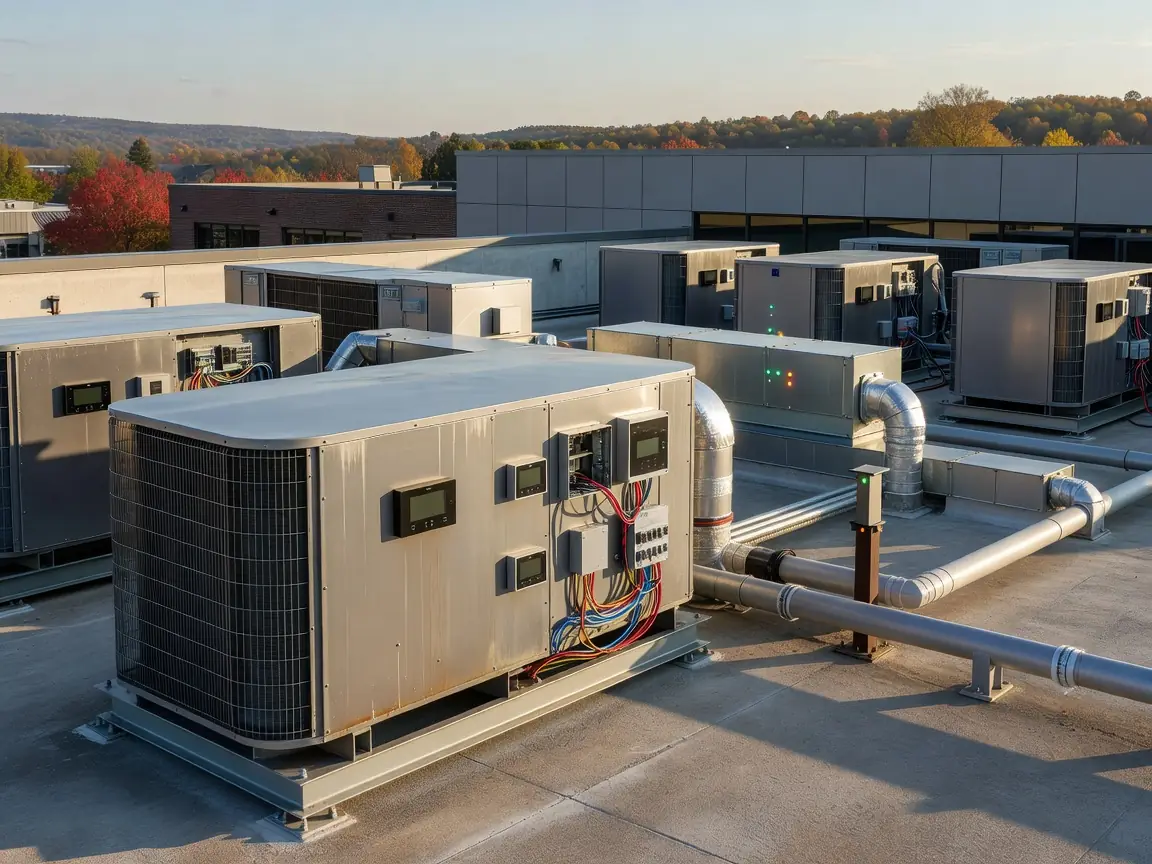
How Commercial HVAC Controls Integration Helps Roanoke, VA Businesses Save Energy
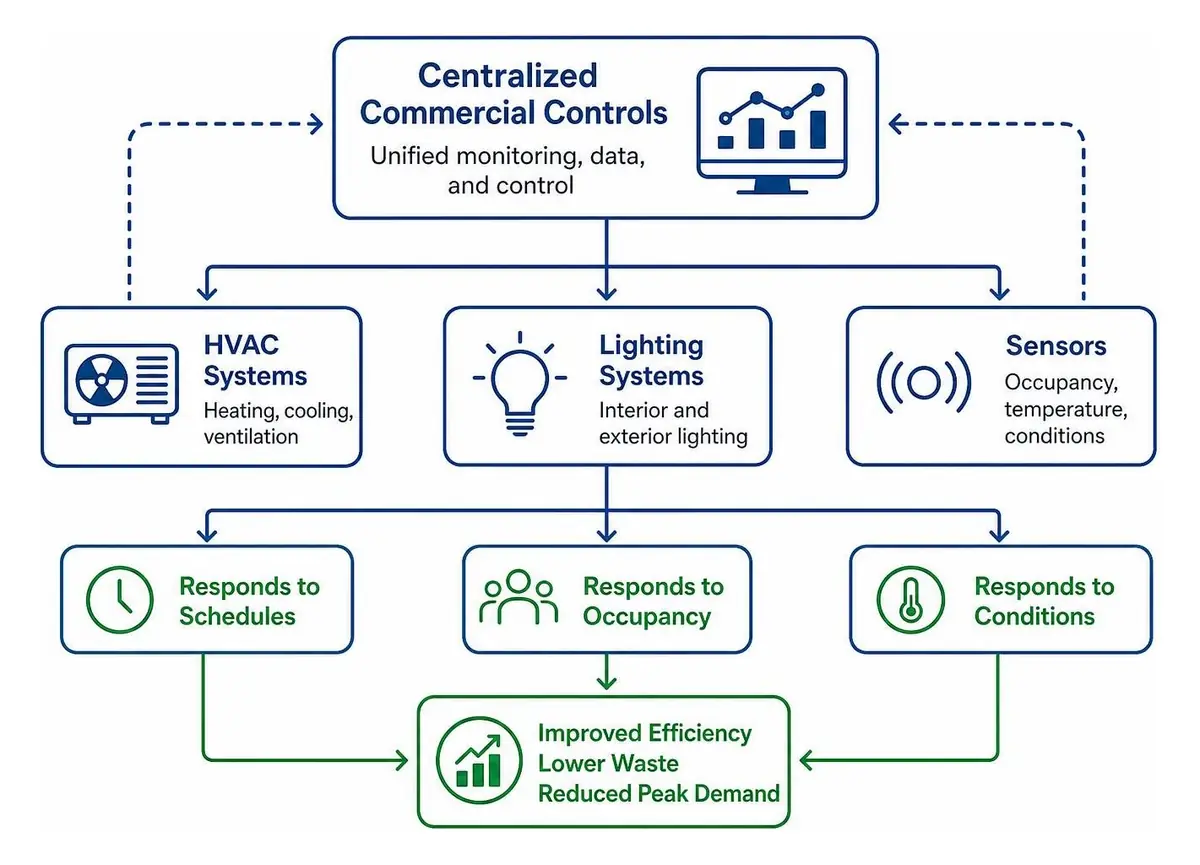
Commercial HVAC controls integration helps Virginia businesses save energy by making building systems work together. Start by checking when your HVAC, lighting, and other equipment run. Then connect their controls so they can respond to occupancy, schedules, and changing conditions. For a facility manager in Roanoke, VA, the problem is often that each system runs on its own, even when parts of the building are empty. Integrated controls can reduce that waste, limit peak demand, and give your team data to check whether the changes are working.
Explore our energy conservation solutions guide, or see our commercial and industrial controls services.
Talk with Whitescarver Engineering Co. about controls for your facility.
Understanding Commercial Controls Integration in Commercial Facilities
In many commercial and industrial facilities across the Commonwealth, mechanical and electrical subsystems operate as isolated islands of automation. The chiller plant runs on its dedicated control panel, packaged rooftop units operate via standalone programmable thermostats, and lighting panels follow rigid internal timers. This disconnected setup leads to operational waste, such as air handlers supplying conditioned air to unoccupied zones while exterior dampers bring in humid outdoor air.
Controls integration brings these separate subsystems into a unified, interoperable network architecture. Using open communication standards like BACnet, Modbus, and LonWorks, integration lets field devices, variable frequency drives (VFDs), chillers, boilers, and lighting panels share telemetry and operational commands in real time.
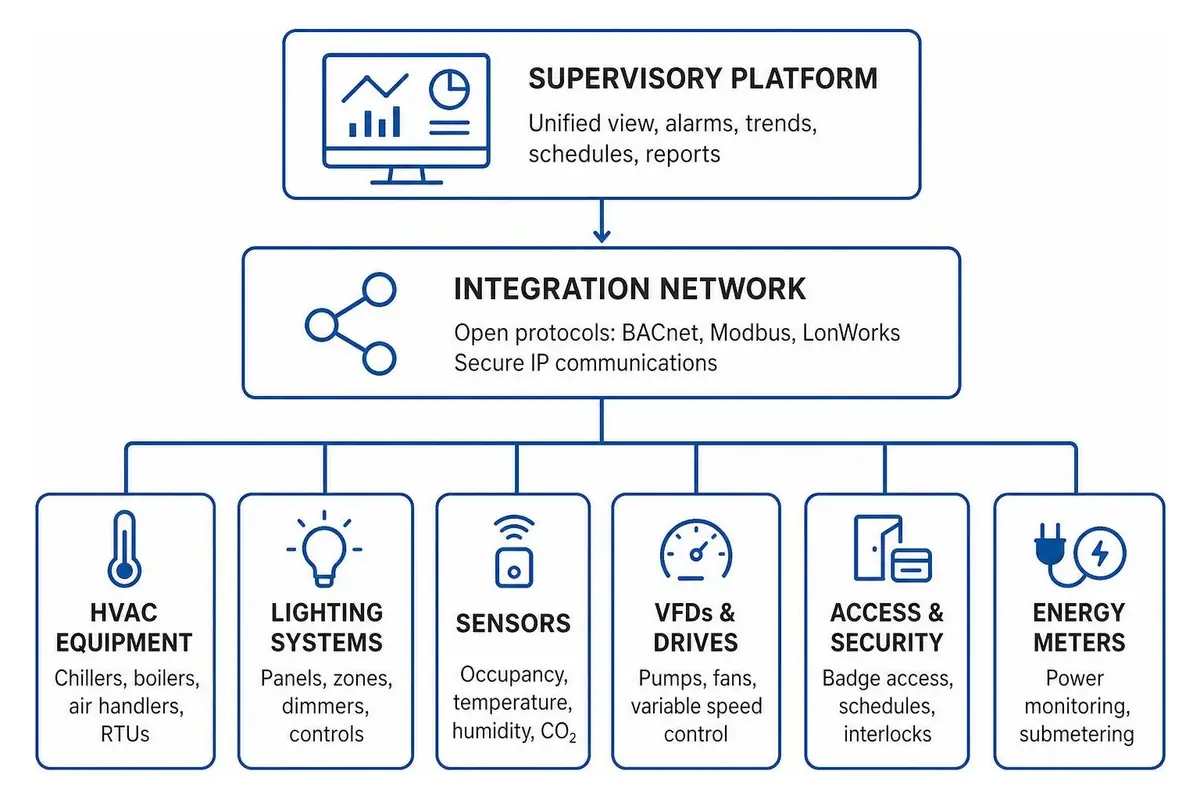
By integrating building controls with commercial HVAC, facilities move away from siloed operations. Instead of checking separate interfaces across mechanical rooms, operators get a single supervisory view. Integrating these systems allows for complex control logic, such as using security badge access or lighting occupancy sensors to adjust airflow setpoints, reset chilled water temperatures, and align ventilation rates with real-time zone demand.
Distinguishing BAS and BMS Platforms
While often used interchangeably, supervisory platforms and direct digital field controllers perform distinct functions within a modern building automation architecture. Understanding the building management system vs building automation system distinction helps clarify how enterprise software interacts with physical field hardware.
| Feature / Metric | Supervisory Control Platforms (BMS) | Direct Digital Field Controllers (BAS) |
|---|---|---|
| Primary Function | Enterprise monitoring, long-term trending, alarm routing, and multi-facility analytics | Real-time closed-loop control, sensor input processing, and physical actuator positioning |
| Data Resolution | Historical polling intervals (e.g., 1 to 15 minutes) for energy logging and reporting | High-speed processing (sub-second execution loops) for precise mechanical stability |
| Protocol Support | High-level IP networks (BACnet/IP, Modbus TCP, REST APIs, Web Services) | Field-level serial networks (BACnet MS/TP, Modbus RTU, hardwired analog/binary I/O) |
| Automation Scope | Global scheduling, facility-wide demand limiting, and weather-forecast integration | Local sequence of operations, freeze protection routines, and fail-safe safety logic |
| User Interface | Web-based graphical dashboards, dynamic floor plans, and enterprise energy reporting | Local handheld technician interfaces or direct programmatic tool connections |
Direct digital control (DDC) field microprocessors execute local algorithms to maintain critical variables such as static duct pressure and supply water temperature. Simultaneously, the supervisory platform orchestrates holistic operational strategies, including optimal start/stop schedules and peak load shedding.
Upgrading from Legacy Pneumatic Systems
Many older commercial properties, healthcare facilities, and educational campuses throughout Western and Central Virginia still rely on pneumatic control systems. These systems use compressed air to position damper actuators and valve assemblies. While robust, pneumatics degrade over time, leading to hidden energy waste.
Reviewing a pneumatic vs digital controls commercial HVAC comparison highlights the main operational drawbacks of compressed air networks:
- Signal Drift and Calibration Loss: Pneumatic thermostats and receiver-controllers rely on mechanical springs, bellows, and restrictors that drift out of calibration over time. This causes simultaneous heating and cooling in adjacent zones.
- Parasitic Energy Demands: Central air compressors run continuously to keep main air lines pressurized, consuming steady power while struggling against piping leaks.
- Zero Remote Visibility: Pneumatic components cannot transmit status telemetry, leaving facility teams unaware of stuck dampers or failing valves until occupants complain.
- Sluggish Actuation: Compressed air lines experience signal latency over long distances, preventing the tight loop tuning needed for advanced energy strategies.
Upgrading to direct digital controls provides precise electronic positioning, continuous sensor feedback, and the system stability required to pursue modern energy conservation goals.
How Commercial Controls Integration Supports Energy Conservation Goals in Virginia Businesses
Commercial and industrial operations account for roughly 45% of Virginia's electricity consumption, with HVAC and process refrigeration representing the largest share of peak utility demand. When evaluating how commercial controls integration supports energy conservation goals in Virginia businesses, the primary financial and operational driver is eliminating simultaneous load conflicts while keeping equipment operation aligned with real-time building demand.
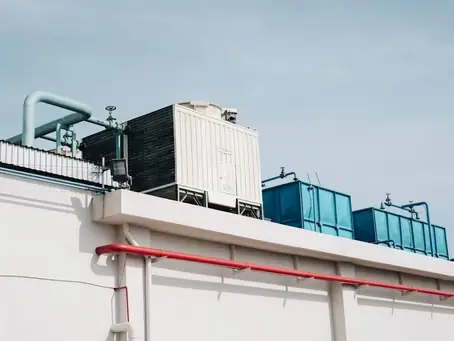
Integrated controls establish continuous communication between field sensors and primary equipment, allowing businesses to shift from reactive adjustments to active load management. Centralized automation platforms prevent expensive power spikes through demand limiting, coordinated staging, and power factor correction.
To see how automated setpoint management trims operational waste, review how building automation systems save energy across various commercial applications.
Real-Time Optimization: How Commercial Controls Integration Supports Energy Conservation Goals in Virginia Businesses
Integrated control logic coordinates multiple efficiency strategies across mechanical systems:
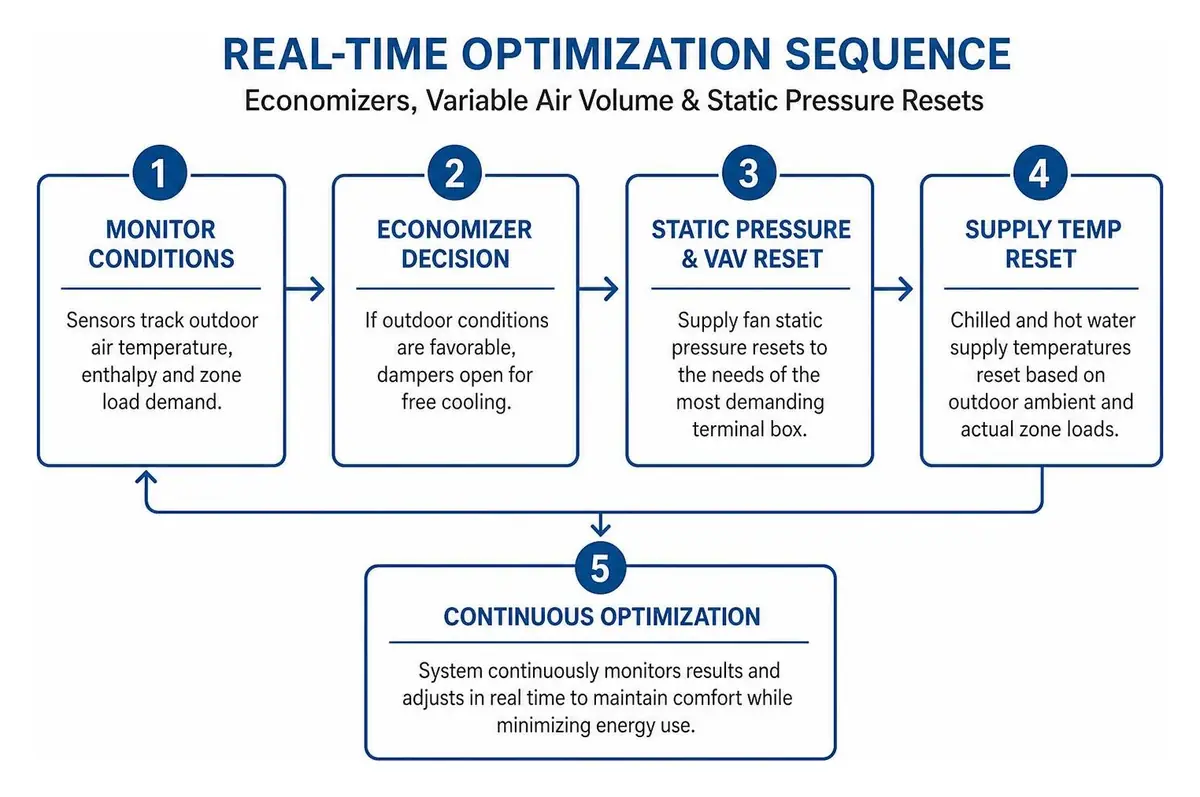
- Dynamic Setpoint Setbacks: Unoccupied zones automatically switch to wider deadbands, reducing heating and cooling runtimes when spaces are empty.
- Daylight Harvesting and Thermal Boundary Control: Daylight sensors dim interior LED arrays and signal the building automation platform to adjust perimeter cooling as solar heat gains change.
- Advanced Economizer Cycles: Integrated controllers monitor outdoor air temperature and enthalpy. When outdoor conditions are favorable, dampers open to provide free cooling, keeping mechanical compressors offline.
- Static Pressure and Temperature Resets: Variable air volume (VAV) air handlers adjust duct static pressure based on the needs of the most demanding terminal box rather than running at a fixed high pressure. Chilled water and hot water supply temperatures reset dynamically based on outdoor ambient air and actual zone loads.
Understanding what a building automation system is and how it improves commercial HVAC performance helps explain how these linked sequences prevent equipment wear while lowering total consumption.
Code Compliance and Policy: How Commercial Controls Integration Supports Energy Conservation Goals in Virginia Businesses
The regulatory landscape across the Commonwealth makes controls integration a practical requirement for long-term building compliance. Under the Virginia Clean Economy Act (VCEA), major electric utilities face mandatory energy efficiency targets. For example, Phase II utilities (Dominion Energy) and Phase I utilities (Appalachian Power Company / APCo) run extensive Demand-Side Management (DSM) and commercial energy efficiency programs to lower customer demand.
Commercial facilities must also comply with the Virginia Uniform Statewide Building Code (VUSBC), which incorporates ASHRAE Standard 90.1 requirements for commercial building efficiency:
- Demand Controlled Ventilation (DCV): Mandatory installation of CO2 sensors to modulate outdoor ventilation rates in high-occupancy spaces, preventing the over-conditioning of outside air.
- Automatic Off-Hour Setbacks: Required controls to automatically adjust temperature setpoints and close outdoor air dampers during unoccupied hours.
- Economizer Fault Detection and Diagnostics (FDD): Monitored dampers and temperature sensors to detect sensor drift, stuck linkages, or mechanical bypass issues.
- Daylight-Responsive Lighting Integration: Automatic stepped or continuous dimming within secondary and primary sidelit daylight zones.
By deploying integrated digital systems, facility executives can access utility DSM rebates—which often cover substantial portions of project implementation—while maintaining compliance with state energy codes.
Implementing Integrated Commercial Controls and Measuring Performance
Deploying integrated controls across an operational facility requires a structured engineering approach to protect daily operations while confirming energy savings.
The process begins with an on-site facility assessment. Engineering teams review existing mechanical equipment, map current control wiring, verify network security protocols, and identify operational bottlenecks. Learning how an HVAC energy audit identifies savings opportunities in a Roanoke Valley business provides a clear look at how field logging uncovers hidden mechanical and electrical waste.
Phased Retrofit Strategies for Operational Buildings
Upgrading controls does not require shutting down a commercial building or replacing major mechanical assets all at once. A phased retrofit approach preserves existing mechanical equipment while modernizing the automation layer.
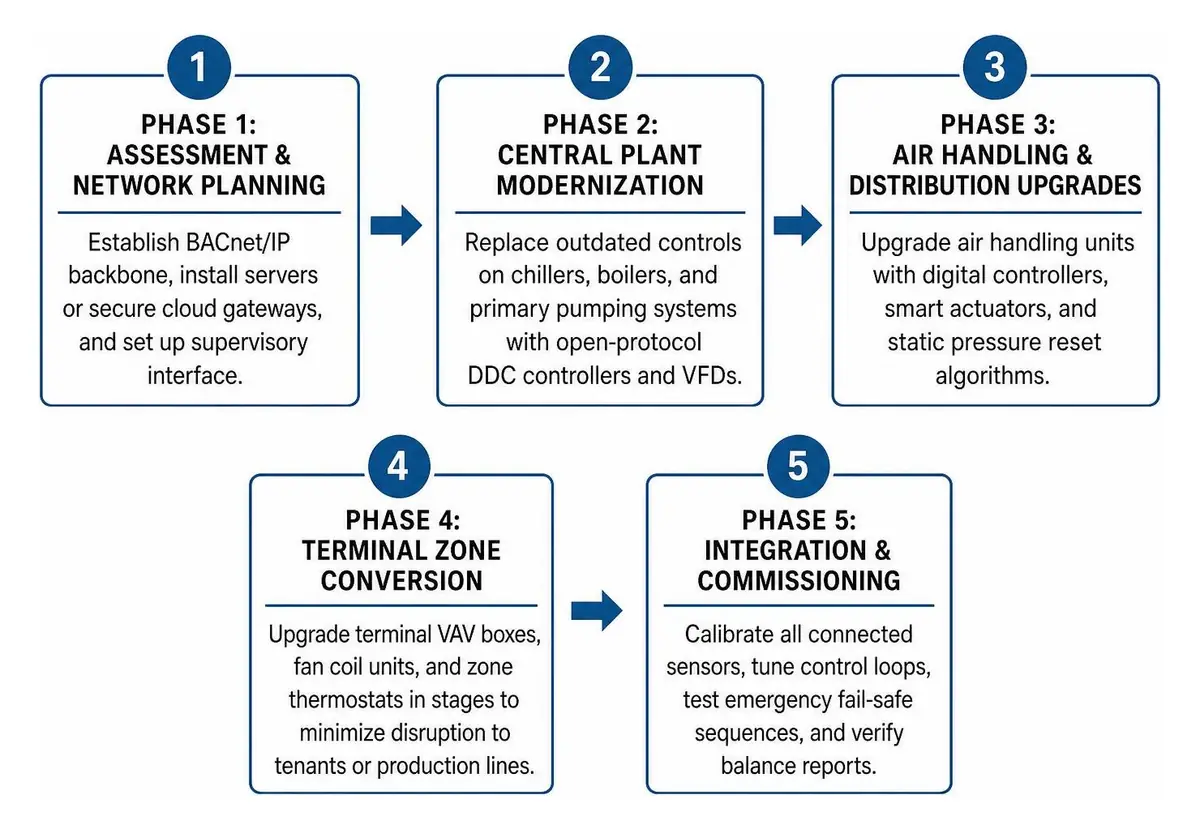
- Phase 1: Diagnostic Assessment and Network Planning: Establish the central BACnet/IP backbone, install server hardware or secure cloud gateways, and set up the supervisory interface.
- Phase 2: Central Plant and Primary Equipment Modernization: Replace outdated controls on chillers, boilers, and primary pumping packages with open-protocol DDC controllers and VFDs to capture early energy savings.
- Phase 3: Air Handling and Distribution Upgrades: Upgrade legacy air handling units with digital controllers, smart actuators, and static pressure reset algorithms.
- Phase 4: Terminal Zone Conversion: Upgrade terminal VAV boxes, fan coil units, and zone thermostats in stages to minimize disruption to tenants or production lines.
- Phase 5: Point-to-Point Commissioning: Calibrate all connected sensors, tune control loops, test emergency fail-safe sequences, and verify balance reports across all operating modes.
Following a quick start guide to commercial HVAC retrofits for energy conservation in Virginia helps facility teams maintain business continuity throughout the project.
Verification, Analytics, and Continuous Optimization
Once installed, integrated controls provide the data stream required for ongoing Measurement and Verification (M&V). Operating under International Performance Measurement and Verification Protocol (IPMVP) guidelines, engineering teams use submetering and automated trend logs to evaluate savings against pre-retrofit consumption baselines.
Continuous commissioning routines run ongoing Fault Detection and Diagnostics (FDD) to spot equipment issues early. Telemetry rules flag problems like leaking heating valves, hunting actuators, or overridden schedules before they show up as higher utility bills or equipment downtime.
Frequently Asked Questions About Commercial Controls Integration
How does commercial controls integration reduce peak electrical demand?
Commercial controls integration limits peak electrical demand through automated load shedding and staged equipment restarts. High peak demand charges occur when multiple large electrical loads—such as chiller compressors, rooftop unit stages, and industrial air compressors—start simultaneously during utility peak hours.
An integrated supervisory system manages these spikes through coordinated control sequences. It stages motor starts, resets chilled water supply temperatures slightly higher during peak demand windows, and temporarily widens temperature deadbands in non-critical zones.
By taking advantage of thermal mass and staggering high-draw equipment, facilities flatten their electrical demand profile without affecting occupant comfort or process stability.
Can existing legacy HVAC equipment be integrated without total replacement?
Yes. Existing chillers, boilers, air handlers, and packaged units can usually be integrated into a modern automation platform without replacing the mechanical equipment itself.
Technicians install direct digital field controllers, electronic valve and damper actuators, and open-protocol communication gateways directly onto existing machinery. If a chiller or boiler has an older proprietary communication card, a protocol translator converts those signals into standard BACnet or Modbus protocols.
This hybrid approach allows facilities to gain centralized scheduling, remote visibility, and advanced energy optimization while extending the operating life of their current mechanical assets.
What Virginia-specific standards govern commercial building control efficiency?
Commercial building control efficiency in Virginia is governed by the Virginia Uniform Statewide Building Code (VUSBC), which adopts ASHRAE Standard 90.1 and the International Energy Conservation Code (IECC) with state-specific amendments. These standards mandate automatic off-hour setbacks, deadband controls to prevent simultaneous heating and cooling, economizer fault detection and diagnostics (FDD), and demand-controlled ventilation (DCV) based on CO2 occupancy levels.
Commercial projects are also influenced by the Virginia Clean Economy Act (VCEA). The VCEA requires utilities like Dominion Energy and Appalachian Power Company to achieve specific energy efficiency savings targets. These utilities offer structured Demand-Side Management (DSM) incentive programs that require formal measurement and verification (M&V) to confirm that installed control systems achieve sustained energy reductions.
Conclusion
Maximizing facility efficiency, meeting regional energy mandates, and maintaining reliable operations require moving past disconnected mechanical equipment. Centralized commercial controls integration turns individual HVAC, refrigeration, and lighting systems into a coordinated, responsive network that lowers energy use and peak demand across Virginia facilities.
Whitescarver Engineering Company has delivered commercial and industrial HVAC, refrigeration, and controls solutions across Virginia since 1937. Based in Roanoke and serving businesses throughout Salem, Vinton, and the Blacksburg/Christiansburg corridor, our team designs, installs, retrofits, and maintains advanced control platforms tailored to the demands of commercial buildings and industrial operations.
Partner with our direct digital controls engineering team to lower operating waste and improve facility performance. Contact us today to discuss custom commercial and industrial controls solutions for your facility.
Facility intake
Need Help?
Tell us what facility, system, or maintenance risk needs attention so the first conversation starts with useful context.
About the Author
Whitescarver Engineering
Related Posts
- A Quick Start Guide to Commercial HVAC Retrofits for Energy Conservation in Virginia
- Keep Your Operations Online by Investing in Routine Commercial HVAC Care
- How Businesses Across Virginia Keep Commercial HVAC Running Through Extreme Seasons
- The Complete Guide to VRF Energy Savings for Roanoke Businesses
- The Complete Guide to 90 Years of Commercial HVAC Expertise for Virginia Businesses
Related service: Controls
Related Articles
Engineering-led support
Ready to Get Started?
Whether you need a repair, maintenance, or a new installation, our expert team is here to help.