
More Than Just Hot Air: The Connection Between HVAC and Tenant Satisfaction
Why How HVAC Design Affects Tenant Comfort Is a Business-Critical Decision

How HVAC design affects tenant comfort is one of the most direct — and most underestimated — drivers of lease renewals, tenant satisfaction, and long-term property value in commercial and multi-unit buildings.
Here is a quick summary of the connection:
Temperature consistency — Proper zoning and load calculations prevent hot and cold spots that trigger complaints
Air quality and ventilation — Adequate fresh air exchange reduces stuffiness, odors, and health-related concerns
Humidity control — Keeping relative humidity between 40–60% prevents mold, dry air discomfort, and respiratory issues
Noise levels — Poorly isolated mechanical systems create hums and vibrations that quietly erode tenant satisfaction
Airflow distribution — Balanced duct design eliminates drafts and dead zones across all occupied spaces
Smart zoning — Multi-zone systems let different spaces operate independently, reducing thermostat conflicts
The numbers back this up. Over 60% of tenant complaints in multifamily and commercial buildings are temperature- or noise-related. When HVAC comfort issues are proactively managed, tenant renewal likelihood increases by 25–30%. In one documented case, rooftop unit rebalancing and filter maintenance alone dropped complaint volume by 80% within two months — and lease renewal rates climbed alongside it.
For facility managers and building owners in Virginia, this is not a peripheral concern. HVAC performance shapes how tenants feel about a building every single day — long before they ever speak to a property manager. A space that feels stuffy, drafty, or inconsistently conditioned signals neglect, even when everything else is well-maintained.
The engineering decisions made at the design stage — from equipment sizing and duct routing to zoning strategy and controls integration — ripple through every tenant experience for the life of the building.

The Science of Thermal Comfort: Beyond the Thermostat
To truly understand how hvac design affects tenant comfort, we have to look past the simple number on a wall-mounted thermostat. At Whitescarver Engineering Co., we utilize ASHRAE Standard 55 as our North Star. This international standard defines the "comfort zone" as a condition of mind that expresses satisfaction with the thermal environment. Achieving this state is a complex balancing act involving six distinct variables.
The Six Variables of Thermal Comfort
Most traditional systems focus solely on air temperature, but that is only one-sixth of the equation. A comprehensive Engineering Design must account for:
Air Temperature: The most obvious factor, typically targeted between 68–75°F in winter and 73–79°F in summer.
Radiant Temperature: This is the heat emitted by surfaces. You might sit in a 72-degree room but feel freezing because a nearby window is radiating a "chill." Radiant temperature can account for over 50% of how comfortable a person actually feels.
Humidity Control: Stagnant, humid air feels warmer than it is, while overly dry air causes respiratory irritation. We target a relative humidity range of 40–60% for optimal health and comfort.
Air Velocity: This is the "draft" factor. If air moves faster than 0.2 meters per second, tenants feel a draft. If it doesn't move enough, the space feels "stuffy."
Metabolic Rate: The activity level of the tenant. An office worker at a desk has a different thermal need than a technician in a light industrial facility.
Clothing Insulation: While we can't control what tenants wear, our designs must account for seasonal clothing shifts.
The PMV-PPD Model
In high-level mechanical engineering, we use the Predicted Mean Vote (PMV) and Predicted Percentage of Dissatisfied (PPD) models. These allow us to mathematically predict how many people will be uncomfortable in a given space. By calculating the "operative temperature"—a blend of air and radiant temperatures—we can design systems that satisfy the highest possible percentage of occupants, reducing the "thermostat wars" that often plague commercial offices.
How HVAC Design Affects Tenant Comfort in Multi-Unit Buildings
In multi-tenant environments like Roanoke high-rises or Salem medical complexes, the challenges of HVAC design scale exponentially. A single-zone system simply cannot handle the diverse loads of a modern building. This is where HVAC System Design in Roanoke VA becomes a differentiator for property owners.
The Power of Multi-Zone Systems
Multi-zone systems allow different areas of a building to be conditioned independently. This is essential because:
Solar Orientation: The south side of a building might be baking in the afternoon sun while the north side remains chilly.
Usage Patterns: A conference room packed with 20 people generates significantly more heat than a single executive office.
Tenant Preferences: Different tenants have different "comfort setpoints." Zoning allows a kitchen area to be cooled independently without freezing out the adjacent office.
Avoiding Common Design Flaws
In our 75+ years of experience in Virginia, we’ve seen how poor design leads to immediate tenant dissatisfaction. Common flaws include:
Undersized or Oversized Equipment: Ironically, oversized units are often worse; they "short-cycle," satisfying the temperature quickly but failing to remove humidity, leading to a "cold and clammy" environment.
Inadequate Return Air Paths: If air can't get back to the system, the space becomes pressurized and stuffy. This is a common reason why suite doors may not close properly.
Poor Ductwork Layout: Sharp bends and uninsulated ducts create noise and energy loss. Best HVAC System Engineering in Salem VA focuses on balanced duct design to ensure even air distribution.
Advanced Technologies for Precision Climate Control
As we move through 2026, the technology available to enhance tenant comfort has reached new heights of precision. We no longer rely on "brute force" heating and cooling. Instead, we use sophisticated Commercial HVAC Systems that adapt in real-time.
Variable Refrigerant Flow (VRF) Systems
VRF technology is a game-changer for multi-tenant comfort. These systems can simultaneously heat and cool different zones within the same building. By moving refrigerant instead of air, they offer incredibly granular control and operate at whisper-quiet decibel levels.
High-Efficiency Chillers and Variable Speed Drives (VSDs)
Modern chillers equipped with VSDs can adjust their output to match the exact cooling load of the building. This prevents the temperature "swings" associated with older on/off systems. When combined with Professional HVAC System Optimization in Salem VA, these systems provide a stable thermal environment that tenants often don't even notice—which is the ultimate sign of a successful design.
Dedicated Outdoor Air Systems (DOAS) and ERV
To address indoor air quality (IAQ) without wasting energy, we implement Dedicated Outdoor Air Systems. These separate the task of heating/cooling from the task of ventilating. Energy Recovery Ventilation (ERV) captures energy from exhaust air to precondition incoming fresh air, ensuring the building stays "fresh" without spiking utility bills.
Balancing Energy Efficiency with Occupant Satisfaction
One of the most common questions we hear is whether comfort must be sacrificed for efficiency. The answer is no. In fact, the most efficient buildings are often the most comfortable because they are the most tightly controlled.
The Building Envelope Connection
An HVAC system is only as good as the box it’s in. Improvements to the building envelope—such as high-performance insulation and solar-control windows—reduce the peak loads the HVAC system must handle. This allows for smaller, quieter equipment that runs more consistently.
Setpoint Optimization
Strategic Business HVAC System Design Roanoke Guide includes smart controls that can shift setpoints based on occupancy. Research shows that shifting heating setpoints down by two degrees in winter and cooling setpoints up by two degrees in summer can reduce energy costs by 15–20% without significantly impacting perceived comfort, provided the humidity and air velocity are correctly managed.
Feature | Single-Zone System | Multi-Zone (VRF/VAV) |
Temperature Control | Average across all spaces | Precise by room/zone |
Tenant Complaints | High (Hot/Cold spots) | Low (Individual control) |
Energy Efficiency | Low (Conditions empty rooms) | High (Conditions only occupied zones) |
Property Value | Standard | Premium (3-5% Increase) |
Maintenance | All or nothing | Isolated zone maintenance |
By utilizing a Commercial HVAC Optimization Guide Roanoke VA, property managers can ensure they are meeting sustainability goals while keeping their "rooftop reputation" spotless.
Proactive Maintenance: Ensuring Consistent Performance
Design is only the first step. To maintain how hvac design affects tenant comfort over the decades, a rigorous maintenance and commissioning schedule is non-negotiable.
The Role of Commissioning
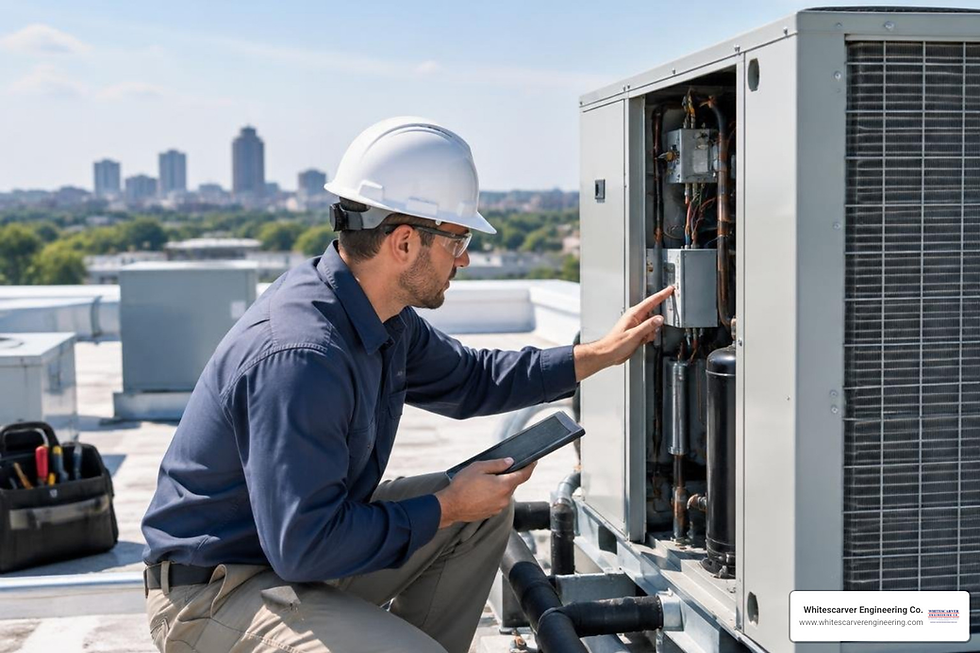
Commissioning is the process of verifying that every component of the HVAC system is installed and operating exactly as the engineer intended. It’s not just about turning it on; it’s about testing the system under various load conditions to ensure the sequences of operation are flawless.
Maintenance as a Retention Strategy
A proactive maintenance agreement is one of the smartest investments a building owner can make. Reducing tenant turnover by just one lease per year often offsets the entire annual HVAC service plan. Our Commercial HVAC System Engineering Guide Salem VA emphasizes:
Filter Cycles: Dirty filters reduce airflow and degrade IAQ, leading to "stuffy" room complaints.
Rebalancing: Over time, building usage changes. A space that was once a storage room might become an office. Periodic rebalancing ensures airflow matches current needs.
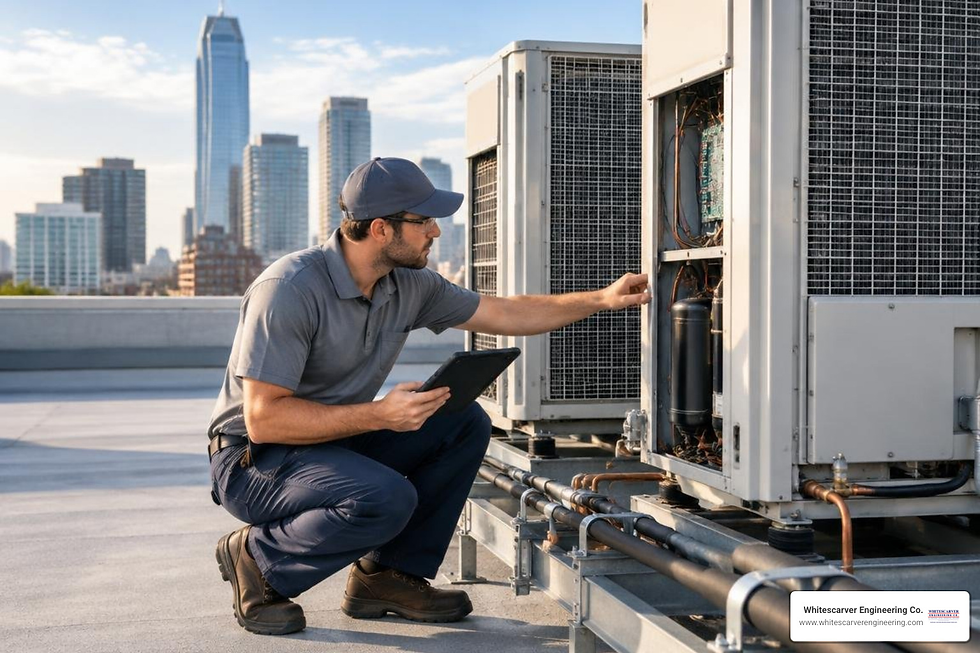
Vibration Isolation: Checking mounts and bearings prevents mechanical hums from telegraphing through the building structure.
Whether it's a new Installation or HVAC System Optimization Services in Vinton VA, the goal is to prevent the "emergency call" that disrupts a tenant's workday.
Frequently Asked Questions about How HVAC Design Affects Tenant Comfort
Why is humidity control a critical part of how HVAC design affects tenant comfort?
Humidity is a primary driver of both perceived comfort and health. High humidity prevents the body from cooling itself through evaporation, making a 75-degree room feel like 80 degrees. More importantly, poorly controlled humidity leads to mold growth and "sick building syndrome." Following an Affordable HVAC Design Roanoke Guide ensures that your system is sized not just for temperature, but for the latent load (moisture removal) required by Virginia's humid summers.
How do multi-zone systems reduce tenant complaints in 2026?
In 2026, tenants expect a personalized experience. Multi-zone systems, often integrated with occupancy sensors, allow the system to "follow" the tenant. If a conference room is empty, the system scales back; when it fills up, the Commercial HVAC System Design in Vinton VA triggers an immediate increase in ventilation and cooling. This responsiveness eliminates the "thermostat wars" where one employee is freezing while another is sweltering.
What role does noise mitigation play in how HVAC design affects tenant comfort?
Silence is an invisible luxury. Tenants may not compliment a quiet system, but they will certainly complain about a loud one. Noise mitigation involves using acoustic lining in ducts, selecting low-decibel diffusers, and ensuring proper vibration isolation for rooftop units. High-quality HVAC System Engineering in Salem VA ensures that the mechanical "heartbeat" of the building remains in the background, allowing tenants to focus on their work.
Conclusion
At Whitescarver Engineering Co., we know that a building's HVAC system is its most vital infrastructure. Since 1937, we have helped Virginia business owners understand that how hvac design affects tenant comfort is the key to financial resilience and property reputation.
From the Blacksburg corridor to the industrial hubs of Roanoke and Salem, we specialize in custom industrial HVAC projects that balance technical excellence with human-centric design. Whether you are looking for a state-of-the-art VRF installation, a comprehensive energy-conservation retrofit, or a reliable 24/7 maintenance partner, our team is ready to deliver.
Investing in superior Commercial HVAC Systems isn't just about moving air—it's about protecting your investment and ensuring your tenants feel at home in your facility every single day.
Ready to elevate your building's comfort and performance? Contact Whitescarver Engineering Co. today for a consultation on your next commercial or industrial HVAC project.

Comments