
The Facility Manager's Guide to Energy Efficient HVAC Practices
Why HVAC Energy Costs Are the Biggest Overhead Challenge in Commercial Buildings

How to reduce HVAC energy costs in commercial buildings is one of the most pressing questions facility managers face today — and for good reason. HVAC systems account for a significant portion of total energy consumption in commercial buildings, making them the single largest driver of operational overhead.
Here are the most effective ways to reduce HVAC energy costs in commercial buildings:
Program smart thermostats with 7-10°F setbacks during unoccupied hours
Seal leaky ductwork to stop conditioned air from escaping
Schedule preventive maintenance including filter changes and coil cleaning
Upgrade to high-efficiency equipment such as VRF systems or next-generation RTUs
Install smart controls like occupancy sensors and demand-controlled ventilation
Optimize system airflow by ensuring all supply and return grilles are unobstructed
Commission a professional energy audit to identify and prioritize your highest-impact fixes
For facility managers in Virginia, these challenges are compounded by aging equipment, variable occupancy schedules, and rising energy rates. A neglected HVAC system doesn't just drive up utility bills — it shortens equipment life, increases emergency repair frequency, and works against any sustainability goals your organization has set.
The good news is that meaningful savings are achievable at every budget level, from no-cost operational changes to strategic equipment upgrades. This guide walks you through each approach in order of priority.

Implementing Low-Cost Strategies to Reduce HVAC Energy Costs in Commercial Buildings
When we look for ways to trim the fat from an energy budget, we always recommend starting with "low-hanging fruit." These are strategies that require minimal capital investment but offer immediate, measurable returns.
Mastering the Thermostat
One of the simplest answers to how to reduce HVAC energy costs in commercial buildings lies in your thermostat settings. Many facilities are conditioned 24/7 as if they were fully occupied. By implementing a 7-10°F setback during unoccupied periods—such as nights and weekends—you can reduce your annual heating and cooling costs significantly.
Smart thermostats are a significant step up from standard programmable models because they offer remote monitoring and can adapt to changing weather patterns. For a more comprehensive look at these strategies, check out our Energy Conservation Solutions Complete Guide.
No-Cost Energy Habits
Keep vents clear: Ensure furniture or storage boxes aren't blocking supply or return grilles.
Close blinds: During Virginia's hot summer afternoons, closing blinds on south-facing windows can block significant solar heat.
Educate staff: A simple memo about keeping exterior doors closed can prevent treated air from literally flying out the door.
Prioritizing Preventive Maintenance for Maximum ROI
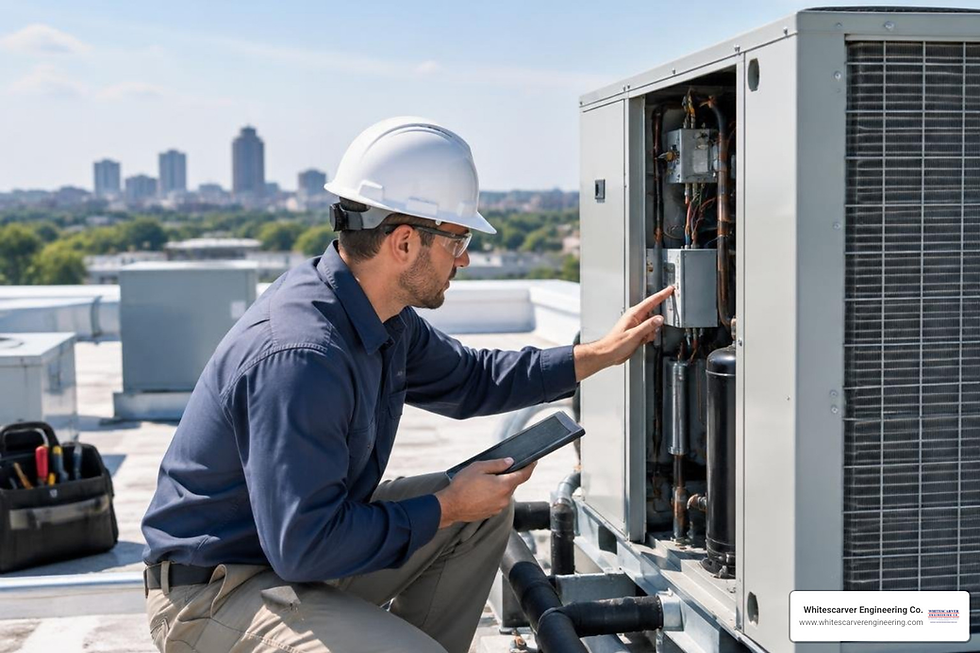
If there is one thing we’ve learned in over 75 years of serving the Roanoke area, it’s that reactive repairs are the enemy of your bottom line. Waiting for a system to break before fixing it is like "playing Russian roulette" with your business operations.
The Value of Maintenance
The value of proactive maintenance is significant. A well-structured preventive maintenance program ensures:
Equipment life extension: A system that is cleaned and lubricated lasts years longer.
Reduction in repair expenses: Catching a failing component early prevents a major system failure later.
Immediate energy savings: Simply keeping a system tuned ensures it runs at its peak efficiency.
For those in the Salem area looking for sustainable options, our Eco-Friendly Maintenance Services in Salem VA provide a roadmap for keeping systems green and lean.
The Cost of Neglect
Dirty filters and coils are the most common culprits behind high energy bills. When filters are clogged, the system has to work much harder to move air, which can lead to a spike in energy consumption. Similarly, dirty condenser coils cannot shed heat effectively, forcing the compressor to run longer and hotter.
Comparison: Proactive vs. Reactive
Feature | Proactive Maintenance | Reactive Repair |
Energy Efficiency | Optimized (Lowest Bills) | Degraded (High Bills) |
Equipment Lifespan | 15–20 Years | 8–12 Years |
Repair Costs | Planned & Budgeted | Emergency Rates |
Downtime | Scheduled (Zero impact) | Unscheduled (Disruptive) |
Value | High | Negative |
Regular professional inspections should also include checking refrigerant levels. A system low on refrigerant can see a massive drop in efficiency while increasing the risk of a total system "freeze-up."
Optimizing the Building Distribution Systems
You can have the most efficient HVAC unit in the world, but if your distribution system is "leaky," you are essentially losing money.
How to Reduce HVAC Energy Costs in Commercial Buildings via Duct Sealing
One of the most overlooked areas of energy waste is the ductwork. It is estimated that leaky ducts in unconditioned spaces can waste a significant portion of your HVAC energy. When air leaks out of the ducts before reaching the rooms it’s supposed to cool, the system has to run much longer to satisfy the thermostat.
Using mastic sealant and mesh tape is the professional standard for permanent duct sealing. We often use blower door tests to quantify exactly how much air is escaping. By properly sealing these leaks, we can typically achieve a substantial reduction in system runtime. For more details on these services, visit our Energy Conservation page.
Investing in Advanced Energy-Saving Technologies
For facility managers looking for long-term transformation, moving beyond maintenance into technology upgrades is the next step.
Next-Generation Rooftop Units (RTUs)
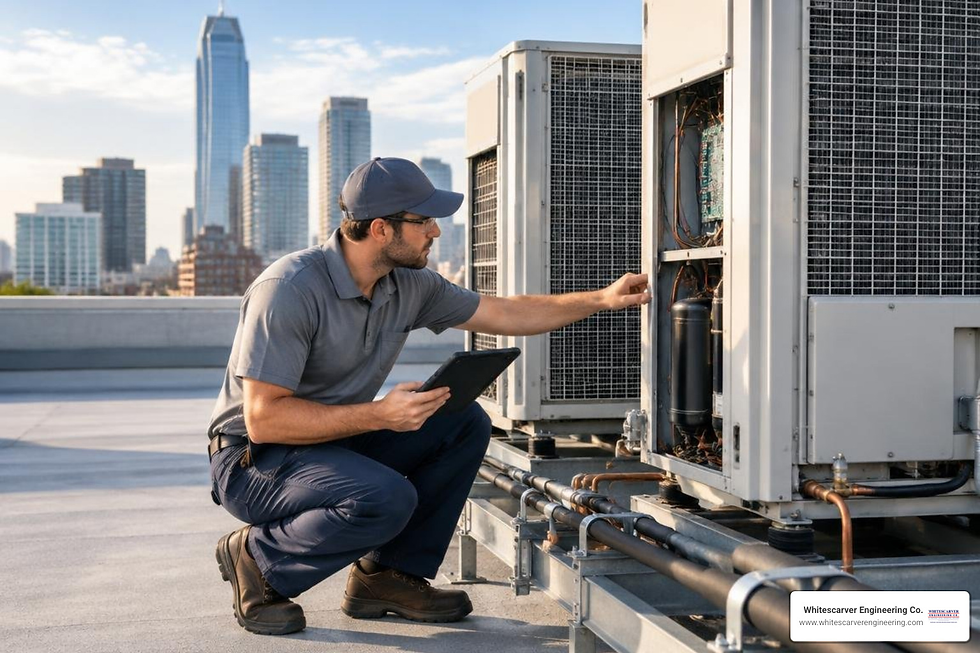
If your building relies on standard RTUs that are more than 15 years old, you are likely missing out on massive savings. High-efficiency next-generation RTUs are designed to significantly reduce energy costs compared to conventional models. These units often feature multi-speed fans and advanced compressors that modulate their output based on the actual needs of the building.
Variable Refrigerant Flow (VRF) Systems
VRF systems are the "gold standard" for buildings with diverse needs—like a hotel that needs cooling in the gym but heating in the lobby. VRF systems can achieve substantial HVAC energy reductions by moving heat from one part of the building to another rather than just exhausting it outside.
Energy Recovery Ventilators (ERVs)
Fresh air is vital for indoor air quality, but bringing in hot, humid air in August is expensive. ERVs solve this by "recovering" the energy from the air you are exhausting. They can recover a high percentage of the thermal energy, pre-cooling and de-humidifying the incoming fresh air using the stale air leaving the building. This prevents High Energy Bills caused by excessive ventilation loads.
How to Reduce HVAC Energy Costs in Commercial Buildings with Smart Controls
The "brain" of your HVAC system—the controls—is where the most sophisticated savings happen.
Demand-Controlled Ventilation (DCV) Standard systems often ventilate based on the maximum capacity of a room. DCV uses CO2 sensors to detect how many people are actually in a space. If a conference room is empty, the system scales back the ventilation, optimizing ventilation energy use.
Occupancy Sensors Just like lights that turn off when you leave a room, occupancy sensors can tell your HVAC system to enter "standby" mode for specific zones. This is particularly effective in office buildings with hybrid work schedules.
Building Automation Systems (BAS) A BAS provides a centralized dashboard for every piece of equipment in your facility. It allows for "setpoint grouping," scheduling, and real-time alerts when a unit is performing outside of its efficiency parameters. We specialize in Custom Energy Conservation Services Solutions in Roanoke VA that integrate these technologies into a seamless package.
Zone Control Systems In buildings with variable occupancy, zone control systems can deliver noticeable savings. Instead of cooling the entire floor to satisfy one hot office, dampers direct air only where it is needed, reducing the total load on the central plant.
Conclusion
Reducing HVAC energy costs isn't about a single "magic bullet" fix; it’s about a comprehensive strategy that combines smart habits, rigorous maintenance, and targeted technology investments. At Whitescarver Engineering Co., we have spent over 75 years helping Virginia businesses navigate these complexities.
As a BBB A+ accredited company, we pride ourselves on delivering technical solutions that aren't just patches, but long-term investments in your facility's future. Whether you are in Roanoke, Pulaski, or Dublin, the path to lower energy bills starts with a clear understanding of your current system's performance.
Next Steps for Facility Managers:
Conduct a walkthrough: Check for blocked vents and open windows today.
Review your bills: Look for "creep" in your energy costs over the last three years.
Schedule an audit: Get a professional assessment to find out where your building is "hemorrhaging" energy.
Set a maintenance calendar: Move from reactive to proactive care to protect your equipment.
Ready to take control of your operational costs? Explore our full range of Energy Conservation services and let’s build a more efficient future for your facility together.

Comments