
Everything You Need to Know About Commercial Building Ventilation and Air Quality
Why Indoor Air Quality Is One of the Most Overlooked Factors in Commercial Buildings

How commercial HVAC affects indoor air quality is a question every facility manager and building owner in Virginia should be asking. The short answer: your HVAC system controls nearly every variable that determines whether the air inside your building is safe, comfortable, and productive — or a hidden liability.
Here is a quick overview of the key ways commercial HVAC directly shapes IAQ:
HVAC Function | IAQ Impact |
Ventilation | Dilutes CO2, VOCs, and airborne pathogens by exchanging indoor air with filtered outdoor air |
Filtration | Traps particulate matter, dust, pollen, and microorganisms before they circulate through occupied spaces |
Humidity control | Maintains the 30-50% RH range that inhibits mold, bacteria, and dust mite growth |
Airflow balance | Prevents stagnant "dead zones" where contaminants accumulate |
Air purification | Advanced technologies like UVGI neutralize biological threats that standard filters miss |
The stakes are significant. According to the EPA, indoor air in the average commercial building is roughly three to five times more polluted than outdoor air. The Centers for Disease Control and Prevention (CDC) estimates that most Americans spend about 90% of their time indoors — and for office workers, a large share of that time is spent in commercial buildings where air quality is entirely dependent on how well the HVAC system is designed, operated, and maintained.
Poor IAQ is not just a comfort issue. The EPA has ranked it among the top five most urgent environmental risks to public health. Research published by NIH found that improved air quality can boost cognitive performance by as much as 61%. Even more conservatively, studies consistently link better IAQ to productivity gains of around 10% — a meaningful number for any business operating at scale.
For facility managers and building owners across Roanoke, Salem, and the broader Shenandoah Valley region, understanding this connection is the first step toward protecting both your people and your bottom line.

Understanding How Commercial HVAC Affects Indoor Air Quality
To understand how commercial HVAC affects indoor air quality, we often use the analogy of the building's "lungs." In a sealed, modern commercial structure, the air does not move unless the mechanical system moves it. If the system is poorly designed or maintained, the building "breathes" stale, contaminated air. If it is optimized, it provides a constant stream of life-sustaining, clean oxygen.
At Whitescarver Engineering Co., we have spent over 75 years refining the technical science of air movement. We know that Commercial HVAC Systems are the primary mechanical interface between the outdoor environment and the indoor workspace. They don't just change the temperature; they treat the air through a three-pronged approach: ventilation, filtration, and humidity regulation.
How commercial HVAC affects indoor air quality through ventilation
Ventilation is the process of intentional air exchange. In a commercial setting, this means bringing in fresh outdoor air to dilute indoor-generated pollutants. Without adequate ventilation, substances like carbon dioxide (CO2) from human respiration, volatile organic compounds (VOCs) from office furniture, and airborne pathogens can reach dangerous concentrations.
Modern systems often utilize Demand-Controlled Ventilation (DCV). Using CO2 sensors, the system can detect when a conference room is full and automatically increase the fresh air intake. This ensures high air quality during peak usage without wasting energy when the building is empty. For deeper insights into localized Virginia requirements, our Commercial HVAC Roanoke VA Guide details how regional climate factors influence these ventilation strategies.
How commercial HVAC affects indoor air quality via advanced filtration
Filtration is your building’s first line of defense against particulate matter (PM). This includes everything from large dust bunnies to microscopic PM2.5 particles that can lodge deep in the lungs. The effectiveness of these filters is measured by the Minimum Efficiency Reporting Value (MERV) rating.
MERV 8-11: Standard for many commercial buildings; captures pollen and dust mites.
MERV 13: The current ASHRAE recommendation for general office environments; effective at capturing smaller droplets that carry viruses.
HEPA (High-Efficiency Particulate Air): Capable of removing 99.97% of particles down to 0.3 microns. These are typically reserved for healthcare or laboratory settings due to the significant "pressure drop" (airflow resistance) they create.
Beyond physical barriers, we often implement Ultraviolet Germicidal Irradiation (UVGI). By installing UV-C lights inside the air handler, we can neutralize bacteria and viruses on the cooling coils before they ever enter the ductwork. If you are noticing dust buildup or lingering odors in your facility, our Commercial HVAC Repair Salem VA Guide explains how filtration failures can lead to larger system issues.
Regulating Humidity and Mitigating Industrial Pollutants
In the Roanoke and Salem areas, our humid summers can turn an HVAC system into a liability if moisture isn't managed. When we discuss how commercial HVAC affects indoor air quality, humidity is often the "silent" factor. High humidity leads to mold growth and dust mite infestations, while low humidity (common in Virginia winters) can dry out mucous membranes, making occupants more susceptible to respiratory infections.
Ideal Humidity Ranges for Commercial Comfort
The industry standard for a healthy indoor environment is a relative humidity (RH) between 30% and 50%.
Preventing Biological Growth: Mold spores are everywhere, but they need moisture to bloom. Keeping RH below 50% effectively starves mold of the water it needs.
Occupant Health: Maintaining at least 30% RH prevents static electricity and reduces the "survival time" of certain airborne viruses.
Asset Protection: Controlled humidity protects sensitive electronics, paper archives, and wooden finishes from warping or degradation.
Our Spring Maintenance for Commercial Rooftop Units guide highlights how checking condensate pans and dehumidification cycles during the transition to cooling season is vital for moisture control.
Neutralizing Common Indoor Air Pollutants
Commercial environments are unique because of the density of pollutant sources. Think about the emissions from high-volume printers, the off-gassing of new carpeting, or even the cleaning chemicals used in the lobby.
How commercial HVAC affects indoor air quality in these scenarios involves "source management." By maintaining a slight positive pressure inside the building, the HVAC system prevents outdoor pollutants (like vehicle exhaust from a nearby Roanoke highway) from leaking in through doors and windows. Furthermore, specialized exhaust systems in areas like kitchens or laboratories ensure that concentrated pollutants are removed at the source rather than being recirculated. For a seasonal approach to these checks, see our Spring Commercial HVAC Transition Checklist.
Best Practices for Maintaining Optimal System Performance
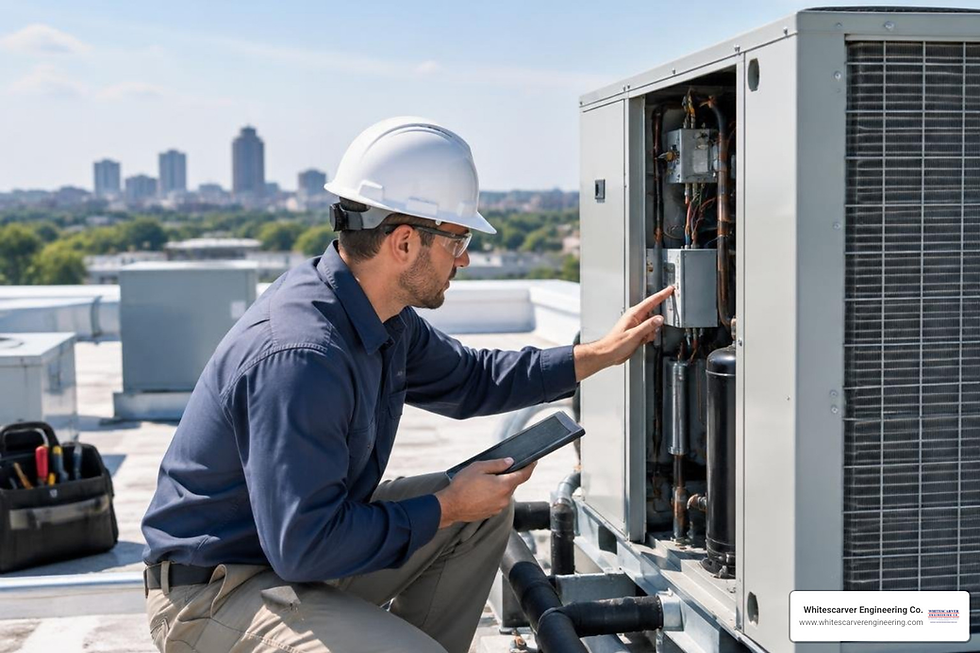
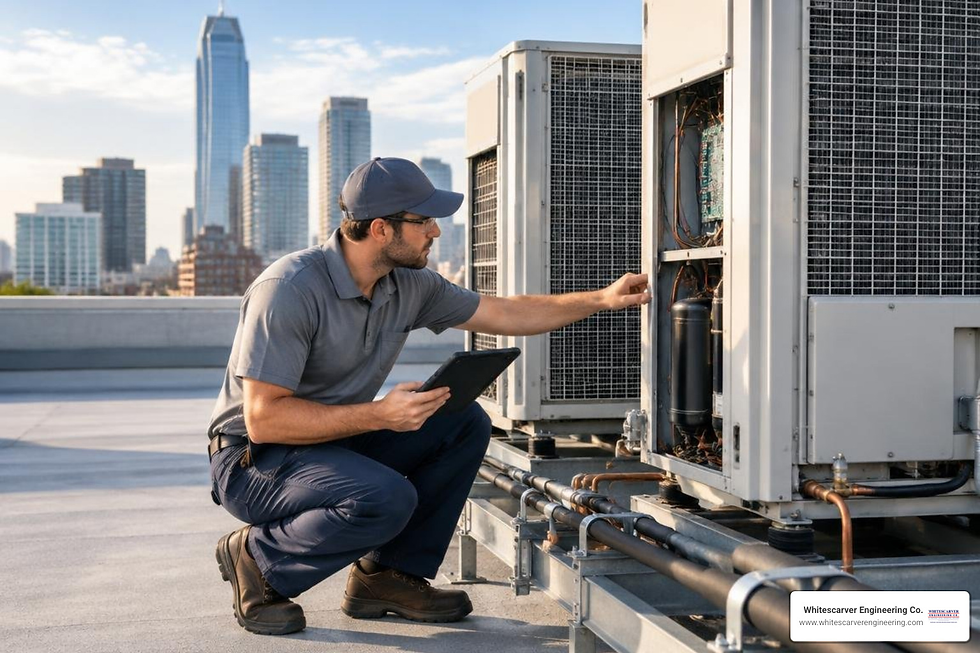
Even the most advanced HVAC system will eventually degrade IAQ if it is neglected. Maintenance is not just about preventing a breakdown; it is about preserving the hygiene of the air your employees breathe.
Proactive Maintenance and Duct Hygiene
Ductwork acts as the "arteries" of your building. Over time, dust and debris can accumulate, providing a medium for microbial growth. Regular inspections ensure that there are no leaks pulling in unconditioned air from crawlspaces or attics.
Key maintenance tasks for IAQ include:
Coil Cleaning: Dirty evaporator coils can harbor "biofilm" that releases musty odors and reduces heat exchange efficiency.
Filter Replacements: Clogged filters restrict airflow, forcing the system to work harder and potentially allowing "blow-by" where air bypasses the filter entirely.
Drain Pan Service: Standing water in drain pans is a primary source of Legionella and other biological contaminants.
For a comprehensive look at how we manage these tasks for our Virginia clients, refer to our Commercial HVAC Maintenance Guide Roanoke VA and our specific Commercial HVAC Maintenance Blue Ridge VA Tips.
Smart Sensors and System Optimization
The future of IAQ is data-driven. We are now integrating IoT (Internet of Things) sensors that monitor CO2, PM2.5, VOCs, and humidity in real-time. This allows for "smart" optimization where the system reacts to air quality dips before occupants even notice them.
Optimization ensures that you aren't over-ventilating (which wastes energy) or under-ventilating (which harms health). We offer specialized Commercial HVAC Optimization Guide Roanoke VA and HVAC System Optimization Services in Vinton VA to help local businesses achieve this delicate balance.
Regulatory Standards and the Strategic Business Case
Building managers must navigate a complex web of standards. Understanding these isn't just about avoiding fines; it's about following a proven roadmap for building health.
Compliance with OSHA, EPA, and ASHRAE
While OSHA does not have a single "IAQ Standard," it utilizes the General Duty Clause to ensure employers provide a workplace free from recognized hazards — which includes poor air quality.
Organization | Standard/Guidance | Focus |
ASHRAE | Standard 62.1 | Minimum ventilation rates for acceptable IAQ |
EPA | IAQ Tools for Schools/Buildings | Proactive management and pollutant source control |
OSHA | Section 5(a)(1) | Ensuring a safe environment free of airborne hazards |
Implementing an IAQ management plan, often overseen by a designated IAQ Coordinator, is a best practice we highly recommend. For those in the Salem area needing to bring older systems up to these modern codes, our Commercial HVAC Repair Salem VA Guide 1 offers a starting point for system assessments.
ROI: Productivity, Energy Efficiency, and Health
Investing in air quality is often viewed as an expense, but the data suggests it is a high-yield investment.
Energy Recovery: Technologies like Energy Recovery Ventilators (ERVs) allow us to bring in fresh air while "reclaiming" the heating or cooling energy from the exhaust air. This can recover 70-80% of the energy that would otherwise be lost.
Productivity: A 10% increase in employee productivity often dwarfs the entire annual energy budget of a commercial building.
Reduced Absenteeism: Better filtration and humidity control lead to fewer sick days, especially during flu and allergy seasons.
When you look at the total cost of ownership, an optimized HVAC system that prioritizes IAQ pays for itself through lower utility bills and a more capable workforce.
Frequently Asked Questions about Commercial IAQ
What are the most common signs of poor IAQ in a commercial building?
Common red flags include "Sick Building Syndrome" symptoms among staff (headaches, fatigue, or eye irritation that improves after leaving the building), visible dust near supply vents, lingering odors, and inconsistent temperatures or high humidity.
How often should commercial HVAC filters be replaced for optimal air quality?
In a standard commercial office, filters should typically be checked monthly and replaced every 3 to 6 months. However, in high-traffic areas or industrial settings, monthly changes may be necessary to prevent airflow restriction and maintain air purity.
Can improving indoor air quality also reduce building energy costs?
Yes! While bringing in more outdoor air requires more energy, using smart technologies like Demand-Controlled Ventilation and Energy Recovery Ventilators allows you to improve IAQ while actually lowering your overall energy consumption compared to older, less efficient "constant-volume" systems.
Conclusion
At Whitescarver Engineering Co., we understand that how commercial HVAC affects indoor air quality is a technical challenge with a very human impact. For over 75 years, we have served the Roanoke, Salem, and Vinton communities by providing the heavy-duty technical expertise required to keep Virginia's commercial and industrial spaces breathing easy.
Whether you are managing a high-rise office in downtown Roanoke or an industrial facility in the Blacksburg corridor, your HVAC system is your most powerful tool for ensuring health, comfort, and productivity. Don't leave your building's "lungs" to chance.
Ready to optimize your facility's air quality? Explore our Commercial HVAC Systems and Solutions or contact us today to schedule a comprehensive IAQ assessment for your business.

Comments