
The Definitive Guide to Integrating Building Controls with Commercial HVAC
Why Integrating Building Controls with Commercial HVAC Is a Game-Changer for Facility Managers
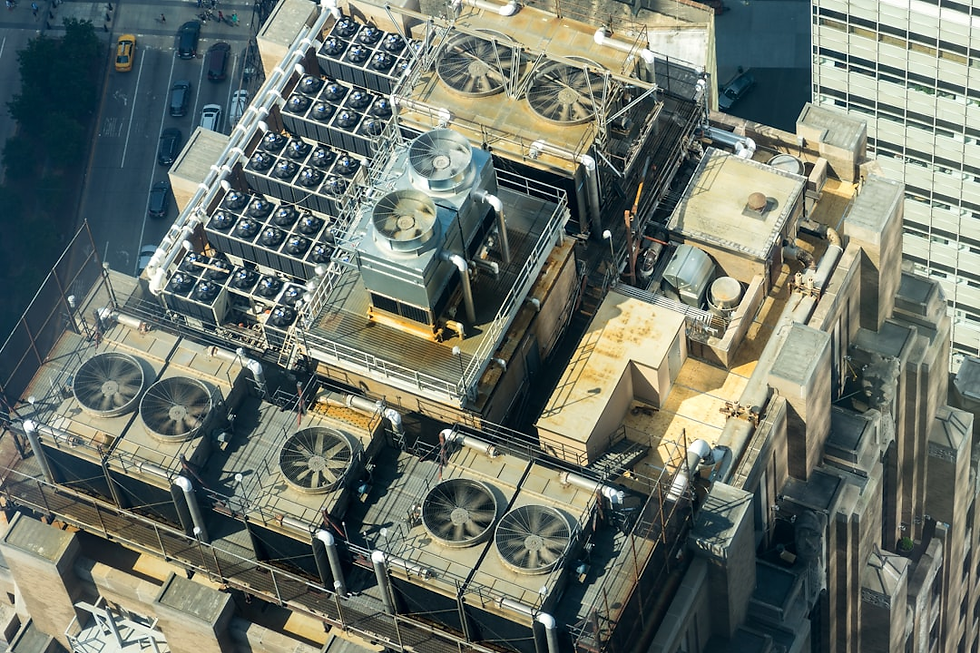
Integrating building controls with commercial HVAC is the process of connecting your heating, ventilation, and air conditioning systems to a centralized Building Automation System (BAS) — enabling automated, data-driven control of your building's climate, energy use, and equipment health from a single platform.
Here's what that means in practice:
What it is: A BAS links sensors, controllers, and HVAC equipment so they share data and respond automatically to real-world conditions like occupancy, outdoor temperature, and energy demand.
Why it matters: HVAC systems account for 40–50% of a commercial building's total energy consumption. Without integration, that energy is largely wasted on manual scheduling, reactive repairs, and systems that can't adapt.
What you gain: Documented energy savings of 5–30% (up to 29% per U.S. Department of Energy data), reduced unplanned downtime by up to 50%, and smarter maintenance driven by real equipment data — not calendar guesses.
Who it's for: Facility managers, building owners, and industrial operations looking to reduce overhead, improve occupant comfort, and future-proof their infrastructure.
What it requires: Open communication protocols (like BACnet or Modbus), compatible or gateway-bridged hardware, and a clear deployment strategy — not necessarily a full equipment replacement.
If your commercial facility is running HVAC equipment that operates independently of any centralized control platform, you're leaving significant energy savings and operational efficiency on the table. The good news: most equipment installed after 2000 is already capable of integration, and older systems can often be brought online through gateways and retrofit solutions.
This guide walks you through everything — from the technical architecture and communication protocols to real-world deployment steps and ROI — so you can make informed decisions about your facility's controls strategy.

The Technical Architecture of Integrating Building Controls with Commercial HVAC
To understand how integrating building controls with commercial hvac transforms facility operations, we first have to look at the relationship between the physical mechanical equipment and the digital "brain" governing it.
In many older or unintegrated buildings, heating and cooling equipment operates on localized, isolated control loops. A rooftop unit (RTU) or chiller runs based solely on its own internal thermostat or a simple time clock. True BAS integration changes this dynamic entirely by establishing a centralized, interactive network where all components communicate in real time.
When implementing these systems, it is helpful to clarify the terms used in the industry. For a detailed breakdown of how these centralized platforms differ from broader systems, read our guide on Building Management System vs Building Automation System. In short, while a Building Management System (BMS) often serves as the overarching umbrella managing everything from security to fire safety, the BAS represents the specific automation and control layer that dictates how your mechanical systems function.
For a foundational look at these automated networks, you can read more about What is a Building Automation System. By transitioning to an integrated architecture, your commercial HVAC components cease to be independent islands. Instead, they become part of a unified, responsive ecosystem.
Core Components of an Integrated System
Every integrated control loop relies on a continuous chain of data collection, processing, and physical response. To see how these elements fit together in practice, explore our resource on Commercial HVAC Controls Explained. The architecture is built upon four fundamental pillars:
Sensors (Inputs): These are the eyes and ears of your system. They measure real-world environmental variables such as space temperature, relative humidity, carbon dioxide ($CO_2$) levels, duct static pressure, and occupancy.
Controllers (The Brains): Microprocessor-based Direct Digital Control (DDC) panels receive the raw data from the sensors. They process this information using programmed logic loops (such as Proportional-Integral-Derivative, or PID, algorithms) and determine the necessary system adjustments.
Actuators (Outputs): These physical devices execute the commands sent by the controllers. Examples include motorized damper actuators that open to let in fresh air, or control valves that modulate the flow of chilled water through a cooling coil.
Automation Software (The Interface): This is the user-facing dashboard where facility managers can monitor system performance, adjust setpoints, establish schedules, and receive automated system alerts.
Levels of Commercial HVAC Controls
A robust control architecture operates across multiple tiers, starting at the individual equipment level and scaling up to the entire enterprise.
Control Level | Primary Focus | Typical Equipment | Communication Scope |
Unit-Level | Localized safety and basic operation of a single machine. | Packaged RTUs, Variable Air Volume (VAV) boxes, heat pumps. | High-speed, local sensor-to-controller loops; handles immediate safety limits. |
System-Level | Coordination of multiple units working together. | Chiller plants, boiler loops, multi-zone air handling units (AHUs). | Networked communication between devices to balance loads and optimize central plant efficiency. |
Enterprise-Level / BAS | Global optimization, scheduling, and cross-system integration. | Central supervisory servers, cloud-based analytics, graphical user interfaces. | Integrates HVAC with lighting, security, access control, and historical data logging across multiple facilities. |
Key Benefits of Modern Control Integration
The decision to connect your mechanical systems to a unified platform yields immediate, compounding returns. If you want to dive deeper into the operational advantages, check out our article on the Benefits of Modern Commercial HVAC Controls.
By bringing all your equipment under a single digital interface, you streamline your facility operations, eliminate manual overrides that lead to energy drift, and ensure your maintenance team can focus their efforts exactly where they are needed most. For a comprehensive look at the financial impact, read about How Building Automation Systems Save Energy.
Energy Conservation and Efficiency
Because HVAC systems account for 40–50% of commercial building energy consumption, optimizing these systems is the single most effective way to lower utility costs. Advanced control integration unlocks several sophisticated, energy-saving strategies:
Demand-Controlled Ventilation (DCV): Instead of continuously conditioning outdoor air based on worst-case design occupancy, $CO_2$ sensors monitor actual indoor air quality. The BAS modulates ventilation dampers to deliver only the fresh air required, leading to a 15–25% reduction in fan energy while remaining fully compliant with ASHRAE 62.1 standards.
Occupancy-Based Scheduling: Moving from round-the-clock HVAC operation to automated, scheduled control based on actual building usage patterns typically yields 10–30% energy savings in the very first month.
Temperature Resets: By monitoring real-time cooling loads across the building, the BAS can dynamically adjust (reset) chilled water or supply air temperatures upward when demand is low. This strategy can reduce central chiller energy consumption by 8–20%.
Optimal Start/Stop Optimization: Rather than starting the heating or cooling plant at a fixed time every morning, smart algorithms analyze outdoor air conditions and indoor zone temperatures to calculate the exact latest moment the system must start to reach comfort setpoints by occupant arrival. This saves 5–15% in morning energy use.
Predictive Maintenance and Fault Detection
Traditional maintenance schedules rely on the calendar—servicing equipment every three or six months regardless of actual wear and tear. Integrating building controls with commercial hvac shifts your operations from a reactive or calendar-based model to a predictive, condition-based strategy.
With continuous data streaming from your HVAC units, the BAS can run Fault Detection and Diagnostics (FDD) algorithms. For example, if a pressure sensor across an air filter detects a spike, or if a heating valve is commanded open but the downstream air temperature fails to rise, the system flags the anomaly immediately.
This proactive visibility can result in a 50% reduction in unplanned HVAC downtime through early detection, and a 25–40% reduction in unnecessary preventative maintenance visits because your service providers can target issues based on actual performance data rather than arbitrary calendar cycles.
Communication Protocols and Interoperability
For different building controls to work together, they must speak the same digital language. Historically, the building automation industry was fragmented, with manufacturers utilizing closed, proprietary communication protocols. Today, the industry relies heavily on open, standardized protocols to ensure interoperability.
The most common open protocols in modern commercial buildings include:
BACnet (ANSI/ASHRAE 135): Developed by ASHRAE, BACnet is the dominant protocol in North America, holding roughly 80% of the commercial market. It is highly versatile and runs over Ethernet networks (BACnet/IP) or twisted-pair serial wiring (BACnet MS/TP). The latest iteration, BACnet Secure Connect (BACnet/SC), utilizes TLS 1.3 encryption to provide robust, IT-secure communication.
Modbus: Originally designed for industrial automation, Modbus is a simple, robust protocol commonly used to integrate heavy mechanical equipment like chillers, boilers, variable frequency drives (VFDs), and electrical power meters into the broader BAS. It is typically deployed as Modbus RTU (serial) or Modbus TCP (Ethernet).
LonWorks: An older open standard that remains prevalent in many legacy installations, particularly those designed in the late 1990s and early 2000s. While highly reliable for device-to-device communication, it is less common in greenfield commercial projects today.
MQTT: A lightweight, publish-subscribe messaging protocol that is increasingly used to bridge the gap between local BAS networks and cloud-based analytics or IoT platforms.
Overcoming Proprietary Barriers when Integrating Building Controls with Commercial HVAC
Even in July 2026, facility managers frequently encounter multi-brand environments where a legacy chiller from one manufacturer must communicate with an air handler from another, all tied to a third-party front-end.
To overcome these proprietary barriers, systems integrators utilize protocol gateways and middleware. These hardware and software translators ingest proprietary data streams—such as the unique communication buses used in Variable Refrigerant Flow (VRF) systems—and translate them into standard BACnet or Modbus objects.
For instance, integrating a VRF system into a central BAS often involves using a dedicated gateway (like a BACnet server interface) that maps internal VRF operating data—such as compressor speeds and expansion valve positions—directly to the central supervisory dashboard. This allows the system to balance the high-efficiency zone control of VRF with the ventilation control of central air handlers.
Transitioning from Legacy Systems
Many older commercial properties in Virginia still rely on pneumatic control systems, which use pressurized air to modulate valves and dampers. While highly reliable in their era, pneumatics are prone to air leaks, require constant calibration, and offer zero data feedback.
To understand the differences and plan your path forward, read our comparison on Pneumatic vs Digital Controls Commercial HVAC Comparison. When you are ready to modernize your property, you can learn what the upgrade process looks like in Pneumatic to Digital Control Conversion What to Expect.
A pneumatic-to-digital conversion does not have to happen all at once. Many facilities implement a hybrid approach, retrofitting electronic controllers and digital actuators on a zone-by-zone basis during scheduled mechanical upgrades, gradually phasing out the central air compressor as the digital footprint expands.
Implementation and Deployment Strategies
A successful controls integration project requires structured planning to avoid common pitfalls like integration drift, communication lag, or security vulnerabilities.

Step-by-Step Roadmap for Integrating Building Controls with Commercial HVAC
Phase 1: Discovery and Audit: Create a comprehensive inventory of all existing HVAC assets. Document the make, model, onboard controller type, and native communication protocols of every piece of equipment.
Phase 2: Network Design and Connectivity: Establish the physical and digital network paths. Determine where serial connections (RS-485) are sufficient, where Ethernet backbones are required, and where wireless IoT sensors can be deployed to fill data gaps without running expensive conduit.
Phase 3: Control Logic and Programming: Define the sequence of operations. This is where you program your occupancy schedules, demand-controlled ventilation algorithms, and temperature reset strategies.
Phase 4: Commissioning and Point Verification: Systematically test every integrated point. Verify that a command sent from the central software interface physically moves the corresponding actuator, and that sensor readings match independent hand-held test instruments.
Semantic Modeling and Digital Workflows
As commercial buildings grow larger and more complex, managing thousands of data points becomes a significant challenge. If a temperature sensor is simply labeled "AI-01," it is incredibly difficult for a central program to understand where that sensor is or what it controls.
To solve this, modern integrations leverage semantic data models:
Project Haystack & Brick Schema: These are open-source metadata tagging standards. They assign standardized, machine-readable tags to every data point (e.g., tagging a point as a "zone," "air," "temp," and linking it to a specific "VAV box" on the "second floor").
Control Description Language (CDL): CDL is an emerging standard (undergoing formalization as ASHRAE Standard 231) that allows control sequences to be written as executable code. When combined with semantic models, CDL enables automated point binding, allowing advanced control sequences to be deployed across thousands of devices rapidly and with minimal manual programming errors.
Frequently Asked Questions about HVAC Integration
Do I need to replace existing HVAC equipment to integrate with a BAS?
No, you rarely need to replace your entire mechanical infrastructure. Most commercial HVAC equipment manufactured after 2000 features onboard microprocessor controls capable of communicating via BACnet, Modbus, or LonWorks. For older or proprietary equipment, systems integrators can install multi-protocol gateways or execute localized digital retrofits (such as replacing old pneumatic actuators with digital ones) to bring the existing machinery onto the centralized network.
What is the difference between BACnet and Modbus?
While both are open protocols, they serve different purposes:
BACnet is highly sophisticated, object-oriented, and specifically optimized for building automation. It supports complex data structures, automated device discovery, and standardized scheduling, making it the ideal backbone for a commercial BAS.
Modbus is a simpler, register-based protocol. It does not support automatic device discovery or complex scheduling, but its simplicity and speed make it highly effective for point-to-point communication with heavy industrial mechanical equipment, such as chillers, boilers, and power meters.
How much energy can BAS-HVAC integration save?
According to the U.S. Department of Energy, full utilization of advanced BAS controls can reduce commercial building energy consumption by an average of 29%. In real-world applications, facilities consistently achieve a baseline of 5–15% overall energy savings immediately after basic scheduling and ventilation strategies are implemented, with older, poorly automated buildings frequently seeing improvements of 18–30%.
Conclusion
Integrating building controls with commercial hvac is no longer a luxury reserved only for massive corporate campuses; it is a fundamental operational necessity for any modern commercial or industrial facility. By transforming isolated mechanical units into a synchronized, data-driven network, you unlock substantial energy savings, protect your mechanical investments through predictive maintenance, and provide a consistently comfortable indoor environment for your occupants.
At Whitescarver Engineering Co., we have spent over 75 years delivering technical solutions to businesses across Virginia. Based in Roanoke, VA, and serving Salem, Vinton, and the Blacksburg/Christiansburg corridor, our team specializes in custom industrial HVAC projects, comprehensive energy cost reductions, and tailored maintenance agreements. Whether you are looking to retrofit a historic facility with modern digital controls or need reliable, 24/7 service for your commercial clients, we bring unparalleled expertise to every project.
To learn more about how we can help you optimize your building's mechanical and automation systems, explore our specialized services in Commercial/Industrial Controls or contact our Roanoke office today to schedule a comprehensive facility controls audit.


Comments