
The Ultimate Guide to Pneumatic to Digital Control Conversion
Why Pneumatic to Digital Control Conversion Still Matters for Commercial Buildings
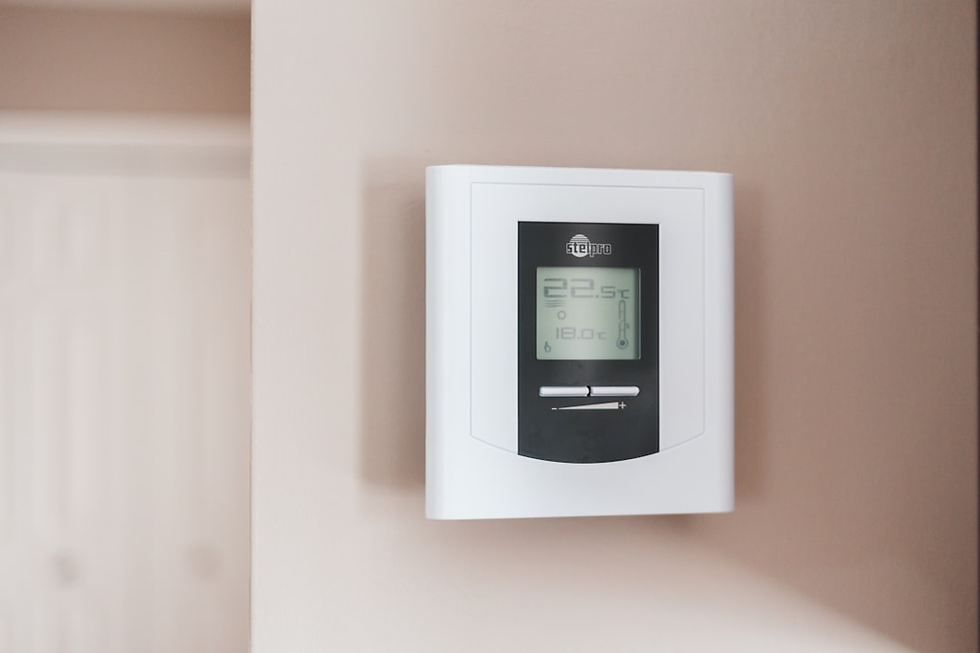
Understanding pneumatic to digital control conversion what to expect is essential for any facility manager or building owner running HVAC systems installed before the year 2000. Here is a quick summary of what the process typically involves:
What to expect from a pneumatic to DDC conversion:
Assessment - A site survey documents every pneumatic device, thermostat, actuator, and compressor in the building
Scope decision - You choose between a partial conversion (keeping some pneumatics via transducers), a full replacement, or a low-disruption wireless retrofit
Installation - Work is phased floor by floor or system by system to minimize occupant disruption
Integration - New digital controllers connect to a Building Automation System (BAS) using open protocols like BACnet
Commissioning - Every sequence of operation is verified, setpoints are configured, and schedules are programmed
Training and handoff - Facility staff learn to use the new system for monitoring, scheduling, and alarm response
Ongoing results - Buildings typically see meaningful HVAC energy reductions, fewer comfort complaints, and significantly lower maintenance burden
Pneumatic controls were the industry standard in commercial and institutional buildings from the 1950s through the mid-1990s. Decades later, roughly 70% of non-residential buildings in the US still rely on them in some form. That number is not a sign that the technology is holding up well — it is a sign of how disruptive and costly traditional upgrades have historically been.
One facilities operator put it plainly: running a building on aging pneumatic controls is like being "in the dark." There are no trends, no remote visibility, no alarms, and no way to know if a damper is stuck or a thermostat has drifted several degrees off its setpoint. Problems accumulate quietly rather than triggering any kind of alert.
The good news is that the conversion landscape has changed significantly. Facility managers today have more options than ever — from full building-wide digital replacements to phased hybrid approaches to non-invasive wireless technologies that can bring DDC-equivalent functionality to occupied spaces with minimal disruption. The key is knowing which path fits your building, your budget, and your operational goals before work begins.
This guide walks through everything commercial facility managers and building owners in Virginia need to know before starting a pneumatic to digital controls project.

What Is a Pneumatic to DDC Conversion and Why It Still Matters
At its core, a pneumatic to digital control conversion is the process of replacing or augmenting a building’s compressed-air-based HVAC controls with modern electronic Direct Digital Controls (DDC). While modern systems use electrical signals and computer software, pneumatic systems rely on a network of copper or plastic tubing to deliver air pressure signals.
To understand Commercial HVAC Controls Explained, we have to look at how these legacy systems operate and why they are still prevalent in Virginia’s commercial landscape.
What a pneumatic control system actually does
In a pneumatic system, a central air compressor generates 15–20 psi of clean, dry air. This air travels through "mains" to thermostats located throughout the building. As the temperature in a room changes, the thermostat adjusts the "branch pressure" sent to mechanical actuators. These actuators use that air pressure to physically move valves and dampers, regulating the flow of hot or cold air. It is a purely mechanical, analog process.
Why so many buildings still use pneumatic controls
It is estimated that 40% of corporate building portfolios and nearly 70% of all non-residential buildings in the US still use pneumatic controls. Why? Because these systems don't usually "fail" all at once. Instead, they degrade slowly over decades. Many facility managers are hesitant to move toward a pneumatic to digital control conversion what to expect because of the perceived high cost, the invasive nature of running new wiring through finished walls, and the disruption to tenants. In many cases, "if it isn't broken, don't fix it" becomes the mantra—even if the system is actually costing thousands in hidden inefficiencies.
What counts as a true digital conversion
A true conversion involves moving away from manual, mechanical adjustments toward a Building Automation System (BAS) that uses electronic sensors and digital controllers. This transition typically utilizes the BACnet protocol, which allows different pieces of equipment to "talk" to each other. Whether you replace every actuator or use Electric-to-Pneumatic (E/P) transducers to bridge the gap, the goal is to gain centralized software control, real-time alarms, and automated scheduling.
The Real Shortcomings of Pneumatic Controls vs Modern Digital Systems
If you are weighing a Pneumatic vs Digital Controls Commercial HVAC Comparison, the primary motivator is usually the massive gap in performance and visibility. Pneumatic systems are inherently "blind."
Why pneumatic thermostats struggle with accuracy and comfort
Pneumatic thermostats are notorious for "calibration drift." Over time, the mechanical components lose their tension, meaning a thermostat set to 72°F might actually be trying to maintain 68°F or 76°F. Furthermore, these systems often lose accuracy at roughly 25% of their control span. This leads to "hunting"—where the system constantly overshoots and undershoots the target temperature—causing tenant discomfort and wasting energy.
Why digital controls improve monitoring and day-to-day operations
DDC systems use proportional-integral (PI) control, which is far more precise than the simple proportional control of pneumatics. With digital controls, you get:
Remote Access: Adjust setpoints from a laptop or smartphone.
Trending: See exactly how a room has performed over the last 24 hours.
Occupancy Scheduling: Automatically set back temperatures when the building is empty.
Fault Detection: Receive an email the moment a fan fails or a valve gets stuck.
Hidden maintenance burdens many teams underestimate
Maintaining a pneumatic system is a labor-intensive chore. You must manage air dryers to prevent moisture from freezing in the lines, find and patch tiny air leaks in miles of tubing, and deal with air compressors that can cost $3,000–$5,000 per year just in electricity. As the workforce that understands these legacy systems retires, finding technicians with the expertise to calibrate these mechanical "clocks" is becoming increasingly difficult.

Scope Options: What to Expect From Partial, Full, and Low-Disruption Retrofits
When planning a pneumatic to digital control conversion what to expect, the "all or nothing" approach isn't your only option. Depending on your building's needs and budget, we often recommend different levels of intervention.
Partial conversion: where it makes sense first
A partial or "hybrid" conversion is often the most practical first step. In this scenario, we replace the controls on major equipment like air handlers (AHUs) or rooftop units (RTUs) but keep the existing pneumatic actuators on the VAV boxes or terminal units. We use E/P transducers to allow the new digital controllers to "speak" to the old pneumatic actuators. This provides about 80% of the benefit of a full system for a fraction of the disruption.
Full conversion: what changes building-wide
A full conversion is a complete modernization. We remove the air compressor entirely and replace every pneumatic sensor, thermostat, and actuator with electronic versions. This often requires new wiring and sometimes sheet metal work if older VAV boxes need to be replaced. While more intensive, this approach yields the highest Building Automation System energy savings because it eliminates the air compressor and allows for advanced strategies like demand-controlled ventilation.
Low-disruption options: Wireless Pneumatic Thermostats (WPT)
For occupied office spaces where running new wires is impossible, Wireless Pneumatic Thermostats (WPT) are a game-changer. These devices replace the old pneumatic thermostat in about 20 minutes without cutting into walls. They "bleed" the air pressure digitally and send data wirelessly to a central gateway. This gives you DDC-level visibility and control (including branch pressure data for diagnostics) without the invasive construction of a traditional retrofit.
How much disruption should building occupants expect?
Disruption is a major concern for facility managers. By phasing work floor-by-floor or scheduling "hot cut-overs" after hours, we can keep the building operational. Schools often schedule this work during summer breaks, while commercial offices may opt for a phased rollout that focuses on the most problematic zones first.
Expected Results: Energy Savings, Maintenance Reduction, and Better Building Performance
The business case for conversion is built on measurable performance gains. When you move to digital, you aren't just changing a thermostat; you are upgrading the "brain" of your building.
Pneumatic to digital control conversion what to expect for energy and utility performance
Pneumatic systems generally use 15–25% more energy than modern DDC systems. By implementing digital controls, buildings can realistically expect:
15–30% HVAC energy reduction through better scheduling and setbacks.
Elimination of compressor costs, saving thousands annually in electricity and maintenance.
Measured Success: In several case studies, buildings projected to save 22% actually delivered savings as high as 47% after a digital retrofit.
Operational improvements beyond the utility bill
The most immediate change is the drop in "hot/cold" calls. Digital systems prevent the constant cycling and overshoot that lead to HVAC design affecting tenant comfort. Furthermore, when a complaint does come in, your team can diagnose the issue remotely rather than spending hours walking the building with a pressure gauge.
Realistic results by building condition
It is important to note that a controls upgrade cannot fix a broken mechanical system. If a valve is physically leaking or a damper is rusted shut, a new digital actuator won't solve the underlying issue. A successful project includes a thorough mechanical inspection and repair phase to ensure the new "brain" is controlling a healthy "body."
Planning the Project: Key Steps, Open Platforms, Incentives, and Mistakes to Avoid
A successful conversion requires more than just buying new hardware. It requires a strategic engineering approach.
The best order of operations for a smooth conversion
Field Survey: Document every point and assess the condition of existing valves and dampers.
Device Mapping: Create a point list for the new BAS.
Phasing Plan: Determine which systems (e.g., central plant vs. zones) will be converted first.
Verification: Perform functional testing to ensure sequences work as designed.
Open vs. proprietary BAS decisions
One of the most critical decisions is choosing an open protocol system. Proprietary systems lock you into a single vendor for parts and service. By choosing a BACnet-based open system, you ensure that your building remains flexible and serviceable by different providers in the future.
Common mistakes that lead to poor outcomes
Under-scoping: Only upgrading the central plant while leaving the zones pneumatic often leaves energy savings on the table.
Skipping Commissioning: Rushed programming can lead to systems that fight themselves, wasting energy.
Ignoring Training: If your facility team doesn't know how to use the new graphics and alarms, the system's potential is wasted.
Incentives and Standards
Utility rebates in Virginia can sometimes cover 30–40% of the project costs for a pneumatic to DDC conversion. Additionally, following ASHRAE Standards for facility managers ensures that your new system meets modern ventilation and efficiency requirements.
Frequently Asked Questions About Pneumatic to Digital Control Conversion What to Expect
Is a full conversion always better than a partial conversion?
Not necessarily. A full conversion offers the best long-term ROI, but a partial/hybrid approach is a fantastic way to spread the budget over several fiscal years while still capturing major energy savings at the central plant level.
Can you keep existing valves and dampers during the upgrade?
Yes, provided they are in good mechanical condition. We can often replace just the pneumatic actuator with an electronic one, or use a transducer to keep the existing pneumatic actuator in place. We always check the "spring range" and linkage compatibility before making this recommendation.
How long should building teams expect before seeing operational benefits?
The benefits are often immediate. Once the new schedules are programmed and the system is commissioned, you will see a drop in energy spikes and a drastic reduction in comfort complaints within the first week of operation.
Conclusion
Converting from pneumatic to digital controls is one of the single most impactful upgrades a facility manager can make. It transforms a building from a "blind" mechanical system into a smart, data-driven asset. Whether you are looking for energy cost reductions, a way to handle a retiring workforce, or simply a way to stop the endless stream of hot/cold calls, a DDC conversion is the answer.
At Whitescarver Engineering Co., we have over 75 years of experience helping Virginia businesses navigate these complex transitions. From custom industrial HVAC projects to long-term maintenance agreements, our team provides the technical expertise needed to modernize your facility with confidence.
If you are ready to stop being "in the dark" with your building controls, we invite you to explore our Commercial HVAC System Engineering Guide for Salem and Roanoke or contact us to schedule a comprehensive building assessment. We provide 24/7 service for commercial clients across Roanoke, Salem, and the surrounding areas, ensuring your transition to digital is seamless and successful.


Comments