
Everything You Need to Know About How Industrial Process Chillers Work
How Industrial Process Chillers Work — And Why It Matters for Your Facility

Understanding how industrial process chillers work is essential for any facility manager or business owner running operations that generate significant heat. Here is a quick breakdown before we dive deeper:
How an industrial process chiller works — at a glance:
Heat absorption — A coolant (water or water-glycol mix) circulates through your process equipment, picking up heat.
Evaporation — That warm fluid passes through the evaporator, where refrigerant absorbs the heat and vaporizes.
Compression — The compressor raises the refrigerant vapor to high pressure and temperature.
Heat rejection — The condenser transfers that heat to the outside air or a cooling tower.
Expansion — The expansion valve drops the refrigerant pressure, cooling it down before the cycle repeats.
The result: your process equipment stays at a precise, stable temperature — continuously, reliably, and regardless of production load.
Industrial processes from injection molding and metal finishing to pharmaceutical manufacturing and food processing all generate heat as a byproduct. Left unmanaged, that heat degrades product quality, shortens equipment life, and can halt production entirely. Unlike a standard HVAC system designed for occupant comfort, an industrial process chiller is built for tight temperature tolerances, continuous duty, and mission-critical reliability — often running 24 hours a day, every day of the year.
At Whitescarver Engineering Co., we have been engineering and servicing large-scale industrial refrigeration and process cooling systems throughout Roanoke, VA and the surrounding region since 1937. In this guide, we walk through every aspect of how these systems operate so you can make informed decisions about your facility's cooling infrastructure.

What is an Industrial Process Chiller?
An industrial process chiller is a specialized refrigeration system designed to remove heat from a specific manufacturing process or piece of equipment. While the basic principles of refrigeration are shared with the air conditioning in your office, the engineering behind a process chiller is far more robust. These units are the workhorses of the industrial world, designed to maintain a constant temperature, pressure, and flow rate for fluids that keep machinery from melting down or products from spoiling.
To truly understand the role they play, it helps to look at Industrial Process Cooling Systems Explained, where we break down how these systems integrate into a wider production facility. A process chiller is mission-critical; if it stops, the assembly line stops.
Distinguishing Process Cooling from Comfort HVAC
The biggest mistake a facility can make is assuming a standard HVAC chiller can handle an industrial load. There are several key differences:
Water Circuitry: Process chillers often feature independent refrigeration and water circuits. This means if one circuit requires maintenance, the other can often continue running at a reduced capacity, preventing a total plant shutdown.
Component Integration: Industrial units typically include integrated pumps and reservoirs, making them "plug-and-play" solutions that can be placed directly next to the equipment they cool.
Temperature Tolerances: While an HVAC system might be happy within a 5-degree range, industrial processes often require accuracy within 1 degree or less to ensure product consistency.
Seasonal Fluctuations: HVAC systems are mostly used in the summer. Industrial processes generate heat in January just as much as they do in July. Process chillers are engineered to operate 24/7, 365 days a year, often in extreme ambient conditions.
The Core Components of a Process Chiller System
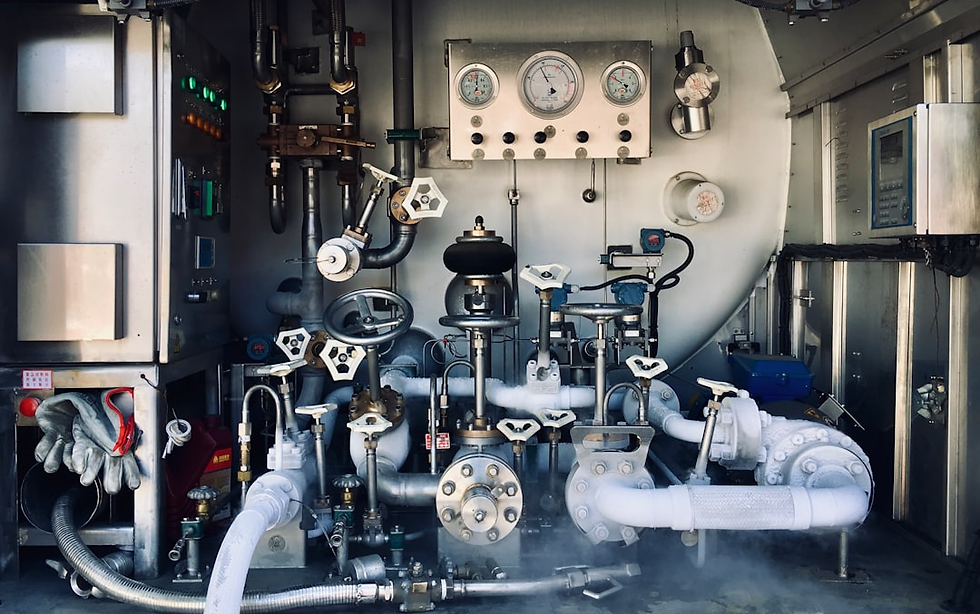
A chiller is only as strong as its weakest component. Each part of the system must be sized and maintained to handle the specific thermal load of your facility. You can explore our full range of Industrial Process Systems to see how these components are configured in real-world Virginia facilities.
The five primary components include:
The Evaporator: Where the magic of heat exchange happens. The process fluid gives up its heat to the refrigerant.
The Compressor: The "heart" of the system that moves the refrigerant.
The Condenser: Where the heat collected from your process is finally rejected to the environment.
The Expansion Valve: A throttling device that prepares the refrigerant for another round of cooling.
The Pump and Reservoir: These move the cooled fluid to your equipment and provide a buffer to handle sudden load spikes.
Compressor Types and Capacities
The compressor is the most significant factor in both the cost and the longevity of your chiller. Choosing the right one depends on your specific tonnage requirements:
Scroll Compressors (2 to 140 tons): These are common in smaller to mid-sized operations. They are quiet and efficient but generally have a shorter lifespan (8–15 years) compared to larger industrial models.
Screw Compressors (30 to 400+ tons): These are the heavy hitters for medium to large-scale cooling. They are incredibly durable, often lasting 20 years or more with proper maintenance.
Centrifugal Units (150 to 6,000 tons): These are used for massive industrial complexes or district cooling. They are highly efficient at full load but require specialized care.
How Industrial Process Chillers Work: The Refrigeration Cycle
To understand how industrial process chillers work, you have to understand the science of "phase change." Refrigerants are chemicals that boil at very low temperatures. By manipulating the pressure of these chemicals, we can force them to absorb heat in one place and dump it in another.
The Evaporator Phase: The process fluid (like water or glycol) enters the evaporator. Inside, the refrigerant is in a low-pressure liquid state. Because the process fluid is "warmer" than the refrigerant, the refrigerant absorbs the heat and boils, turning into a low-pressure gas.
The Compression Phase: This gas enters the compressor, which squeezes it. This raises both the pressure and the temperature of the gas significantly.
The Condenser Phase: The hot, high-pressure gas moves to the condenser. Here, outside air or cooling water is blown over the coils. The refrigerant loses its heat to the environment and turns back into a high-pressure liquid.
The Expansion Phase: The liquid refrigerant passes through an expansion valve. This drops the pressure instantly, which also drops the temperature (think of how a spray can feels cold when you use it). Now cold and at low pressure, it heads back to the evaporator to start again.
How industrial process chillers work in closed-loop systems
In a closed-loop system, the cooling fluid (water or glycol) stays within a sealed circuit. It never touches the outside air. This is vital for "clean" applications like pharmaceutical manufacturing or electronics. Because the fluid is recirculated, there is a much lower risk of scale buildup or biological growth in your expensive process machinery.
How industrial process chillers work for specific applications
Different industries use this cycle in unique ways:
Injection Molding: Chillers super-cool the molds so that plastic parts set faster, reducing cycle times and increasing profit.
Metal Finishing: During anodizing or plating, massive amounts of heat are generated. Chillers prevent the chemical baths from overheating, which would ruin the finish.
Food Processing: From cooling dough mixers in industrial bakeries to maintaining the temperature of jacketed tanks in a Roanoke brewery, chillers ensure food safety and consistency.
Comparing Air-Cooled and Water-Cooled Industrial Chillers
One of the most frequent questions we hear at Whitescarver Engineering Co. is whether to go with an air-cooled or water-cooled model. Both have their place in the Virginia climate.
Air-Cooled Chillers: These use fans to blow ambient air across the condenser. They are simpler to install, have a smaller footprint, and don't require a cooling tower. They are ideal for facilities where water is scarce or maintenance staff is limited.
Water-Cooled Chillers: These use a secondary water loop and a cooling tower to reject heat. Because water is a much better conductor of heat than air, these systems are significantly more energy-efficient, especially for large-scale operations.
For a deeper dive into which is right for your specific building, check out our guide on Air Cooled vs Water Cooled Commercial Chillers.
Efficiency and Environmental Considerations
As of May 2026, energy standards like ASHRAE 90.1 are stricter than ever. Modern chillers often include "energy recovery" features, where the heat removed from the process can be repurposed to heat the building or wash-down water, providing a double-win for your utility bills. You can compare the long-term savings in our article on Air Cooled Chiller vs Water Cooled Chiller Efficiency.
Selection Criteria and System Sizing
Sizing a chiller correctly is a technical exercise that shouldn't be guessed. If the chiller is too small, it won't keep up with production. If it's too large, it will "short cycle," leading to premature compressor failure.
The basic formula for tonnage is: Tons = 500 x Flow Rate (GPM) x (Incoming Temp - Outgoing Temp) / 12,000
However, you must also consider:
Fluid Type: A water-glycol mix has different thermal properties than pure water.
Ambient Conditions: A chiller in the humid Roanoke Valley performs differently than one in a dry climate.
Future Growth: We usually recommend adding a 20% "safety factor" to your calculated tonnage to allow for future production increases.
For more help with this, see Choosing Between Air and Water Cooled Chillers for Your Building.
Open-Loop vs. Closed-Loop Configurations
Open-Loop: The fluid is exposed to the atmosphere, often in a large tank or pit. These are common in massive industrial applications but require rigorous water treatment to prevent contamination.
Closed-Loop: The fluid is sealed. These are generally preferred for 2026-era high-tech manufacturing because they keep the system clean and reduce maintenance.
Essential Maintenance for Long-Term Performance
A "run-to-fail" strategy is the most expensive way to manage a chiller. Because these systems are under constant pressure and thermal stress, preventive maintenance is non-negotiable.
Essential practices include:
Vibration Analysis: We use sensors to "listen" to the bearings in your compressor. We can often predict a failure months before it happens.
Water Testing: If your water chemistry is off, scale will coat your heat exchangers, forcing the chiller to work harder and use more energy.
Condenser Cleaning: For air-cooled units, even a thin layer of dust on the coils can drop efficiency by 10% or more.
Oil and Refrigerant Analysis: Like a blood test for your machine, this tells us if there is internal wear or moisture in the system.
Maximizing Equipment Lifespan
With the right care, your investment should last decades. Statistics show that while scroll chillers might last 8 to 15 years, screw-compressor models frequently reach the 20-year mark. Fiberglass cooling towers used in water-cooled systems can even operate for up to 35 years. Our maintenance agreements at Whitescarver Engineering Co. are designed to ensure your system meets these 2026 efficiency requirements throughout its entire lifecycle.
Frequently Asked Questions about Industrial Chillers
What is the difference between a process chiller and an HVAC chiller?
An HVAC chiller is designed to keep people comfortable (usually 70–75°F) and typically runs seasonally. A process chiller is designed to keep equipment at precise temperatures (sometimes as low as -40°F) and is built for 24/7 continuous operation with much tighter tolerances.
How do I calculate the required chiller tonnage for my facility?
You need to know your flow rate in gallons per minute (GPM) and the "Delta T" (the difference between the temperature of the water entering the chiller and the temperature you need it to be when it leaves). Use the formula: (GPM x 500 x Delta T) / 12,000. Always consult an engineer to account for fluid types and environmental factors.
Can industrial process chillers operate year-round in 2026?
Yes, and most are required to. Modern process chillers are equipped with "low ambient kits" or variable speed fans that allow them to reject heat effectively even when Virginia temperatures drop below freezing.
Conclusion
Understanding how industrial process chillers work is the first step toward optimizing your facility’s production and energy efficiency. These systems are the unsung heroes of the industrial world, quietly ensuring that our local Roanoke manufacturers can produce high-quality goods without interruption.
At Whitescarver Engineering Co., we don't just fix broken equipment; we engineer solutions. Whether you are looking for a custom industrial HVAC project, a high-efficiency retrofit, or a reliable maintenance partner to protect your equipment, we bring over 85 years of technical expertise to every job. We understand the mission-critical nature of your operations and provide the B2B reliability you need to stay competitive.
Ready to optimize your facility's cooling? Request a customized industrial process system consultation with our Roanoke-based engineering team today.


Comments