
In-Depth Guide to Choosing the Right Process Cooling System
Why Choosing the Right Process Cooling System for Your Facility Can Make or Break Your Operation
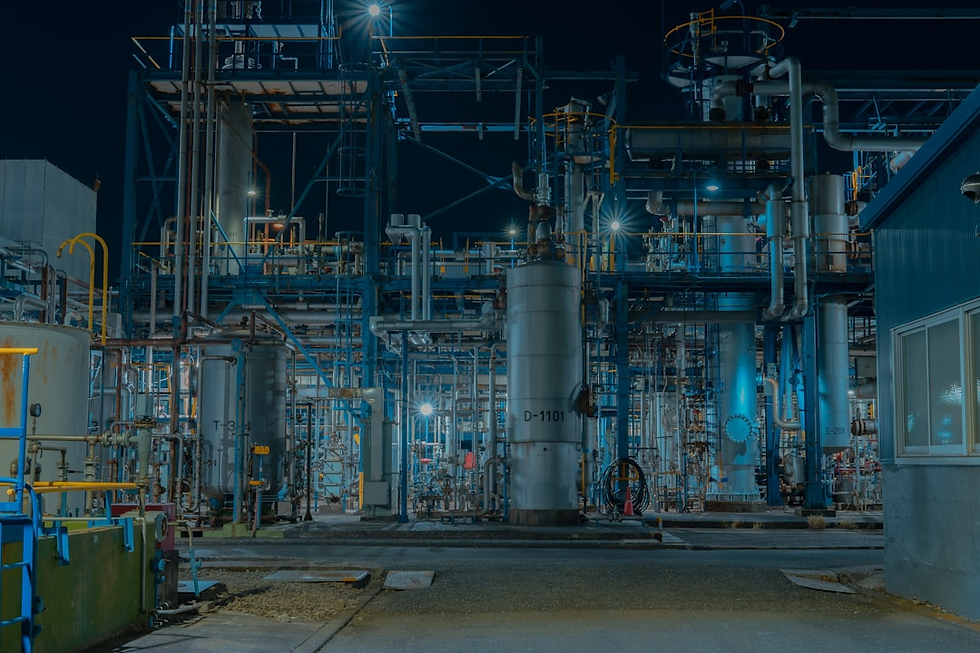
Choosing the right process cooling system for your facility is one of the most consequential engineering decisions a facility manager or plant operator will make. Get it right, and you have reliable temperature control, predictable energy costs, and a process that runs without interruption. Get it wrong, and you face equipment damage, product loss, unplanned downtime, and energy bills that climb year after year.
To quickly orient your decision, here are the core factors that drive process cooling system selection:
Required process fluid temperature - What temperature must your coolant reach, and will you use water, glycol, or brine?
Heat load - How many kilowatts or tons of cooling does your process actually generate?
Air-cooled vs. water-cooled - Does your site have reliable water access, or is air cooling more practical?
Compressor technology - Scroll, screw, or centrifugal — each fits a different load size and duty cycle.
Refrigerant compliance - Are your refrigerant choices aligned with current EPA AIM Act phase-down schedules and GWP limits?
Redundancy requirements - Can your operation tolerate any cooling loss, or do you need N+1 backup capacity?
Free-cooling potential - Does your climate allow water-side economizer operation to reduce compressor runtime?
Lifecycle cost - What does the system truly cost over 10 to 20 years when energy, maintenance, and water treatment are included?
Industrial cooling systems routinely account for 30 to 50 percent of total facility electricity in process-intensive operations. That means a poorly specified system does not just underperform on day one — it quietly drains your operating budget every single shift, for years. The difference between an unoptimized chiller plant running at 1.0 kW/ton and a well-engineered system running at 0.5 to 0.6 kW/ton can represent nearly $190,000 per year in excess electricity on a 300-ton plant alone.
This guide walks through every major decision point, from defining your process fluid and temperature requirements through compressor selection, refrigerant compliance, hydraulic design, redundancy architecture, and free-cooling integration — giving you a clear framework before you ever talk to an equipment supplier.

Key Factors in Choosing the Right Process Cooling System for Your Facility
Before you begin looking at specific hardware options, you must build a comprehensive profile of your facility's cooling needs. Many facility operators make the mistake of over-sizing or under-sizing their systems based on simple rules of thumb.
To properly size a system, you must first understand how industrial process cooling systems explained relate directly to your heat load calculations. The standard formula for calculating heat load is:
$$\text{Heat Load (kW)} = \text{Mass Flow Rate (kg/s)} \times \text{Specific Heat Capacity (kJ/kg}\cdot\text{K)} \times \Delta T\text{ (K or }^\circ\text{C)}$$
For example, if you are circulating pure water at a rate of 2.36 liters per second (which is approximately 2.36 kg/s) with a temperature difference ($\Delta T$) of 5°C, and using the specific heat capacity of pure water ($4.2 \text{ kJ/kg}\cdot\text{K}$), your heat load is:
$$2.36 \times 4.2 \times 5 = 49.56\text{ kW of required cooling}$$
If you introduce glycol, the specific heat capacity changes (typically to around $3.8$ to $4.8 \text{ kJ/kg}\cdot\text{K}$ depending on the concentration and temperature), which directly impacts the required flow rate and chiller capacity.
Additionally, you must account for the pressure drop across the evaporator and the entire piping network. High-speed manufacturing equipment, such as plastic injection molds, often requires a high flow rate with a very tight temperature difference (as small as 2°F), whereas hydraulic machines can tolerate much wider fluctuations. If the pressure drop is too high, your pumps will consume excess energy, eroding your overall plant efficiency.
Defining Your Process Fluid and Temperature Requirements
The choice of coolant is deeply intertwined with your target process temperature. While pure water is an excellent heat transfer fluid due to its high specific heat capacity, it poses a severe risk of freezing if your process setpoint is near or below 32°F (0°C).
To prevent freezing and protect your equipment, we routinely use glycol mixtures:
Ethylene Glycol: Offers superior heat transfer efficiency and lower viscosity, making it the standard choice for industrial manufacturing where toxicity is not a concern.
Propylene Glycol: Slightly more viscous and less efficient at heat transfer, but required in food processing, beverage, and pharmaceutical facilities due to its non-toxic, food-safe properties.
Adding glycol introduces a physical penalty. It increases the fluid's viscosity, which increases the pump work required to maintain the same flow rate. Understanding how industrial process chillers work with these different fluids is critical. If your system is designed for pure water and you suddenly introduce a 30% glycol mixture, your heat exchangers may become undersized, and your pumps may fail to deliver the required flow.
Assessing Facility Infrastructure and Spatial Constraints
Where will the cooling system live? This is a critical physical constraint.
Indoor Installations: Typically require a smaller footprint but demand robust mechanical room ventilation to reject heat. If you install an air-cooled chiller indoors, you must duct the hot exhaust air out of the building, which can complicate mechanical layouts.
Outdoor Installations: Free up valuable indoor floor space but expose the equipment to local weather conditions. Outdoor units require weatherproofing, low-ambient controls, and freeze protection (often requiring a glycol loop or automatic drain-down valves).
Understanding the industrial refrigeration vs commercial refrigeration difference is vital here. Industrial systems are built for continuous, heavy-duty operation and are constructed with highly accessible service panels, heavy-gauge steel, and modular designs that simplify maintenance in tight spatial constraints.
Air-Cooled vs. Water-Cooled Systems
One of the most fundamental decisions in the design phase is choosing between air-cooled and water-cooled condensing systems. Each has distinct advantages and trade-offs regarding energy efficiency, water consumption, maintenance, and spatial footprint.
Feature | Air-Cooled Chillers | Water-Cooled Chillers |
Typical Efficiency (EER) | 2.5 – 3.5 | 4.0 – 6.0 |
Lifespan | 10 – 15 Years | 15 – 25 Years |
Water Consumption | None | High (due to cooling tower evaporation) |
Maintenance Complexity | Low (clean coils, check fans) | High (water treatment, tower maintenance, tube cleaning) |
Physical Footprint | Larger outdoor footprint | Smaller indoor footprint (requires outdoor tower) |
Acoustic Profile | High (65 – 80 dB(A) due to condenser fans) | Low (45 – 65 dB(A) indoors) |
When choosing between air and water cooled chillers for your building, you must look beyond the initial purchase price. Air-cooled chillers are generally simpler to install because they do not require auxiliary water pumps, cooling towers, or extensive chemical water treatment programs. They are the ideal choice for facilities where water is scarce, expensive, or heavily regulated.
Conversely, water-cooled systems offer significantly higher thermodynamic efficiency. Because they reject heat to a cooling tower that leverages evaporative cooling, the chiller operates at lower condensing temperatures. If you are comparing air cooled chiller vs water cooled chiller efficiency, water-cooled units can cut your continuous compressor energy consumption by up to 30 to 40 percent. However, they require a dedicated water source, continuous chemical treatment to prevent scaling and biological growth (such as Legionella), and regular maintenance of the cooling tower fill media.
How Ambient Temperature Impacts Choosing the Right Process Cooling System for Your Facility
Your local climate dictates how well your chiller will perform. Air-cooled systems are directly limited by the dry-bulb temperature of the entering air. On hot summer days in Virginia, as the outdoor temperature climbs, the condensing pressure rises, forcing the compressor to work harder and reducing the chiller's net cooling capacity.
Water-cooled systems, on the other hand, are governed by the wet-bulb temperature. Because the wet-bulb temperature is almost always lower than the dry-bulb temperature, water-cooled chillers can maintain high efficiency even during peak summer heat. If your facility is located in a humid climate, wet-bulb design parameters must be carefully calculated to ensure the cooling tower can achieve the necessary temperature approach (typically within 7°F of the wet-bulb temperature).
Compressor Technologies and Refrigerant Compliance
The compressor is the heart of your process cooling system. Selecting the right compressor technology depends on your total cooling capacity, your load profile, and whether your process runs continuously or in batches.
Scroll Compressors: Best suited for smaller loads (typically under 60 tons). They are mechanically simple, highly reliable, and operate with minimal noise. However, they offer limited capacity modulation unless equipped with variable-speed drives.
Screw Compressors: The workhorse of medium to large industrial applications (60 to 500 tons). They utilize twin interlocking screws to compress refrigerant and offer excellent part-load efficiency when paired with variable-speed drives (VSD) or slide valves.
Centrifugal / Magnetic-Bearing Compressors: Ideal for large-scale operations (above 150 tons) with continuous running profiles. Modern magnetic-bearing centrifugal chillers eliminate oil lubrication entirely, reducing friction losses and achieving exceptional Integrated Part Load Value (IPLV) ratings.
Part-load efficiency is critical because industrial processes rarely run at 100% capacity around the clock. A chiller that spends 80% of its operating hours at 50% capacity will deliver massive energy savings if its compressor is optimized for part-load performance.
At the same time, environmental regulations are rapidly reshaping the refrigerant landscape. As of July 2026, the EPA's AIM Act and global phase-down schedules have severely restricted high-Global Warming Potential (GWP) hydrofluorocarbons (HFCs) like R-410A. When specifying a new system, you must ensure compliance by choosing low-GWP alternatives:
A2L Refrigerants: Options like R-454B and R-32 have become the standard for scroll and screw chillers, offering GWP ratings well below the EPA's regulatory thresholds.
Natural Refrigerants: Ammonia (R-717) and Carbon Dioxide (R-744) are increasingly favored in large-scale industrial refrigeration due to their near-zero GWP and exceptional thermodynamic properties, though they require specialized safety systems.
Hydraulic Design, Redundancy, and Free-Cooling Integration
A process cooling system is only as good as its hydraulic delivery. If your piping and pumping configurations are poorly designed, your chiller will struggle to maintain temperature stability.
To prevent short-cycling and temperature drift during sudden load changes, we highly recommend integrating a buffer tank. A buffer tank provides thermal mass, ensuring that the chiller has a stable volume of fluid to draw from. A good rule of thumb is to size your buffer tank for at least 2 to 3 minutes of the system's maximum flow rate.
Redundancy is another non-negotiable for critical industrial processes. If a single compressor failure can halt your entire production line, you need a resilient architecture:
N+1 Redundancy: Installing an extra chiller or compressor circuit beyond your peak load requirement. If your plant requires 200 tons of cooling, installing three 100-ton chillers (where two run and one acts as a standby) ensures 100% capacity is maintained during maintenance.
Lead-Lag Staging: Automatically rotating which chiller acts as the primary unit to balance operating hours across your equipment, extending the overall lifespan of the system.
In Southwest Virginia, where winter temperatures drop significantly, integrating a water-side economizer (free-cooling system) is one of the most effective energy cost reduction strategies available.
When the outdoor ambient temperature drops below your required process fluid temperature, the system can bypass the mechanical compressors entirely. The cooling fluid is directed through a dry cooler or a dedicated heat exchanger connected to the cooling tower. This allows you to achieve thousands of "compressor-free" cooling hours annually, cutting your cooling energy consumption by 30 to 50 percent during the colder months.
Staging and Piping When Choosing the Right Process Cooling System for Your Facility
To maximize efficiency, modern industrial facilities utilize decoupled piping systems (primary-secondary loops) or variable primary flow systems.
Decoupling the chiller loop from the process loop ensures that the chiller always receives a constant flow rate, protecting the evaporator from freezing or low-flow alarms, while the process loop can vary its flow rate based on demand.
Additionally, integrating continuous monitoring and AI-driven staging controls allows the system to analyze real-time weather data and production schedules. By predicting load changes, the control system can stage multiple chillers dynamically, maintaining the entire plant at its sweet spot of 0.5 to 0.6 kW/ton.
Frequently Asked Questions
What is the difference between process cooling and comfort HVAC?
While both systems remove heat, they serve fundamentally different purposes. Comfort HVAC is designed to keep human beings comfortable, operating within a narrow, seasonal temperature range and typically running only during business hours.
Process cooling systems are engineered to protect temperature-sensitive industrial machinery and products. They require precise temperature control (often within ±0.5°F), operate continuously (24/7/365), and must handle massive, rapid fluctuations in thermal load without tripping safety limits.
When should glycol be used instead of plain water?
You should use a glycol mixture whenever your leaving-fluid temperature setpoint is below 40°F (4.4°C), or if any portion of your piping network runs outdoors where it is exposed to freezing winter temperatures. Glycol acts as an antifreeze, preventing catastrophic tube ruptures inside your evaporator. However, because glycol decreases heat transfer efficiency and increases fluid viscosity, the concentration should be kept to the minimum level required for freeze protection (typically 20% to 40%).
How does a water-side economizer save energy?
A water-side economizer, or free-cooling system, leverages cold outdoor air to cool your process fluid, bypassing the chiller's energy-intensive compressors. When the outdoor air dry-bulb (or wet-bulb) temperature is lower than your return fluid temperature, the fluid is routed through a secondary heat exchanger. The outdoor air cools the fluid directly, allowing your compressors to remain idle while still meeting 100% of your facility's cooling demand.
Conclusion
Choosing the right process cooling system for your facility is a complex, multi-variable engineering challenge that directly impacts your bottom line, operational reliability, and carbon footprint for decades. From mapping your precise heat loads and selecting the ideal coolant to navigating the transition to low-GWP refrigerants and integrating energy-saving free-cooling loops, every decision requires deep technical expertise.
At Whitescarver Engineering Co., we have been delivering second-to-none technical solutions to commercial and industrial clients across Virginia since 1937. Based in Roanoke, VA, and serving businesses throughout Salem, Vinton, and the Blacksburg/Christiansburg corridor, our team specializes in custom industrial HVAC projects, comprehensive industrial process systems, and refrigeration engineering and design.
Whether you are planning a new industrial process systems installation in Roanoke VA or looking to optimize your existing plant for maximum energy cost reductions, we are here to help. We offer tailored maintenance agreements to keep your systems running at peak efficiency and provide 24/7 service for commercial clients to ensure your operations never skip a beat.
To work with a team that brings nearly nine decades of local heritage and technical excellence to your facility, explore our dedicated Industrial Process Systems page. If you are evaluating your options, check out our guide on how to list companies that install industrial heating and cooling systems in Virginia to see what sets our engineering standards apart. Contact us today to schedule a comprehensive facility cooling assessment.


Comments