
Warning Signs Your Commercial HVAC System Needs Professional Attention
Why Knowing the Signs Your Commercial HVAC System Needs Repair Protects Your Business Operations

The signs your commercial hvac system needs repair are often visible weeks — sometimes months — before a full breakdown occurs. For facility managers and building owners in Roanoke and the surrounding Virginia region, catching those signals early is the difference between a scheduled service call and an emergency shutdown that disrupts operations, drives up energy costs, and puts occupant health at risk.
Commercial HVAC systems account for roughly 39% of a facility's total energy consumption, according to the U.S. General Services Administration. When a system starts to fail, that number climbs fast. Poor maintenance alone can drive energy use up by 5–20% per year. And the business impacts go well beyond the utility bill — from reduced employee productivity and tenant dissatisfaction to potential regulatory concerns in sensitive environments like food service or healthcare.
The most common signs your commercial HVAC system needs repair include:
Unusual noises — grinding, squealing, or banging from mechanical components
Strange odors — musty, burning, or chemical smells from vents or units
Inconsistent temperatures — hot and cold spots across zones or floors
Rising energy bills — unexplained increases without changes in usage
Short cycling — the system turning on and off too frequently
Weak or uneven airflow — reduced output from vents or dampers
Water leaks or excess humidity — pooling around units or high indoor moisture levels
Poor indoor air quality — increased dust, allergens, or occupant complaints
Thermostat malfunctions — readings that don't match actual room conditions
Visible wear or corrosion — rust, frayed wiring, or deteriorating components
Recognizing these warning signs early gives facility managers the opportunity to act on their terms — scheduling repairs during planned downtime rather than scrambling during peak season. The sections below walk through each sign in detail, explain the underlying causes, and outline the steps your team should take to keep your systems — and your operations — running reliably.

Common Signs Your Commercial HVAC System Needs Repair

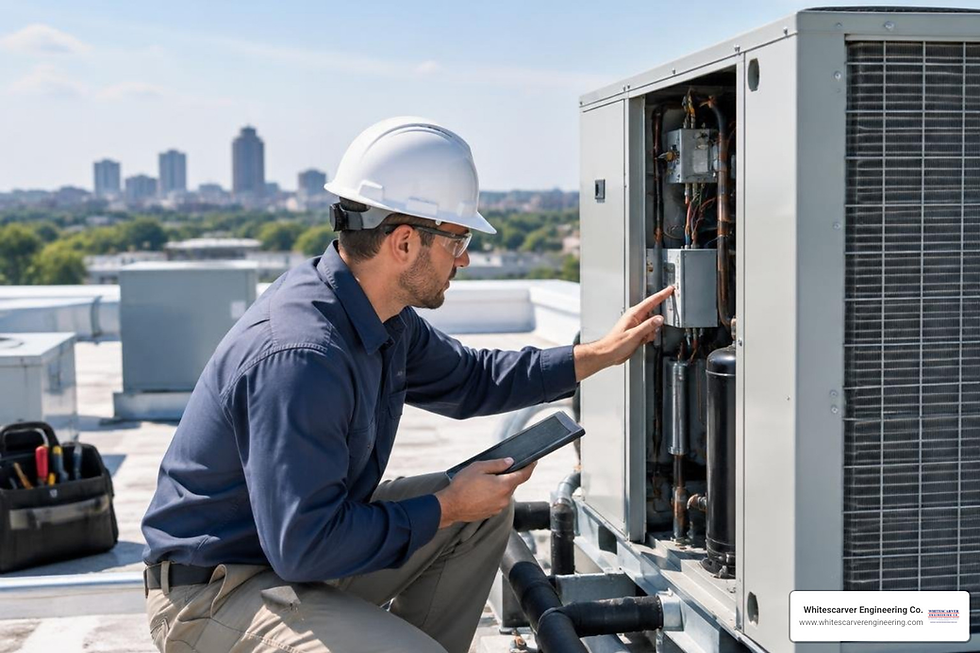
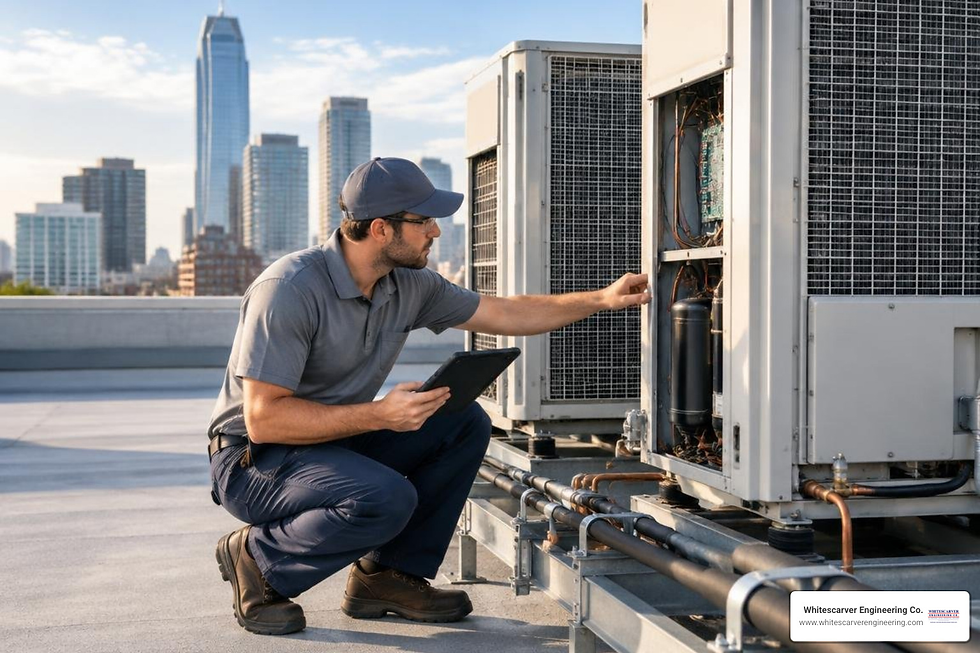
Identifying signs your commercial hvac system needs repair requires a keen eye on both the machinery and the environment it serves. Whether your facility utilizes large rooftop units (RTUs), split systems, or complex packaged units, the indicators of mechanical distress are universal. In our experience serving the Roanoke and Salem areas since 1937, we have found that issues often stem from a combination of component wear and shifting building demands.
One of the most frequent indicators is a refrigerant leak. Unlike a car that might "use up" oil, an HVAC system is a closed loop; if refrigerant is low, there is a breach. This forces the compressor to work harder, leading to overheating and eventual failure. Similarly, sensor malfunctions or thermostat lag can lead to "ghost" calls for cooling or heating, where the system runs unnecessarily or fails to activate when needed.
For those overseeing larger facilities, Commercial HVAC Repair Salem VA Guide provides a deep dive into how these systems behave under the specific humidity and temperature fluctuations we see here in Virginia. Short cycling—where the system kicks on and off in rapid succession—is particularly damaging. This behavior prevents the system from completing a full lubrication cycle, significantly increasing wear on the compressor and driving up energy consumption by as much as 30%.
Auditory and Olfactory Signs Your Commercial HVAC System Needs Repair
In the industrial and commercial world, your senses are often your best diagnostic tools. If a unit is "talking" to you, it’s rarely saying something positive.
Grinding: This almost always points to worn-out motor bearings. If caught early, a $300 bearing replacement can save the system. If ignored, it can lead to a catastrophic $5,000+ compressor failure.
Squealing: Usually indicative of a slipping or frayed fan belt. In high-static environments, a snapped belt can lead to a total loss of airflow and coil icing.
Banging or Clanking: This suggests loose internal components or a blower wheel that has come out of balance.
Odors are equally telling. A musty smell often indicates mold or mildew growth within the ductwork or on the evaporator coils, often due to clogged condensate drains. A burning or "ozone" scent is a red flag for electrical issues, such as a failing capacitor or scorched wiring. If you detect a chemical or sweet smell, you may be dealing with a significant refrigerant leak. When these signs appear outside of normal business hours, utilizing 24-Hour Commercial HVAC Repair in Salem VA is critical to preventing fire hazards or chemical exposure.
Performance-Based Signs Your Commercial HVAC System Needs Repair
Performance issues often manifest as "comfort complaints" from tenants or employees. If one side of your office is a refrigerator while the other is a sauna, you are likely dealing with airflow imbalances or zoning failures.
Weak airflow is frequently caused by obstructed ductwork or severely clogged filters. In commercial settings, we often see this exacerbated by building layout changes; if you have added partitions or moved heavy machinery, your original HVAC design may no longer be optimized for the space. This often requires a professional Professional HVAC System Repairs and Retrofits Service in Hollins VA to re-balance the system or install Variable Frequency Drives (VFDs) that adjust motor speed based on real-time demand.
The Hidden Impact of Ignoring HVAC Warning Signs
It is tempting to adopt a "run-to-fail" mentality to save on immediate costs, but the data suggests this is the most expensive path a business can take.
Feature | Proactive Maintenance | Reactive Repair |
Energy Costs | Optimized (5-20% lower) | Inflated (20-30% higher) |
Repair Cost | Minor part replacement | Major component failure |
System Lifespan | 15–20 Years | 10–12 Years |
Downtime | Scheduled/Minimal | Unplanned/Emergency |
ROI | 545% | Negative |
When a system operates inefficiently, it doesn't just cost more in electricity; it degrades the indoor air quality (IAQ). Poor IAQ is linked to "Sick Building Syndrome," which can reduce employee productivity by 10-20%. Furthermore, a simple 2-3°F inaccuracy in your thermostat can spike your heating or cooling costs by 10% across a large facility.
By following a Commercial HVAC Maintenance Guide Roanoke VA, facility managers can ensure they are capturing the 545% ROI that preventive programs offer. Catching a failing capacitor during a routine check costs a fraction of an emergency weekend call-out when the whole system has shut down.
When to Repair vs. Replace Your Industrial HVAC Equipment
Even the most robust industrial systems have a shelf life. Generally, a well-maintained commercial HVAC system lasts between 15 and 20 years. However, several factors in April 2026 may push you toward replacement sooner:
The R-22 Phase-Out: If your older unit still uses R-22 refrigerant, repairs are becoming prohibitively expensive as parts and reclaimed gas become scarce.
The 50% Rule: If a single repair cost exceeds 50% of the equipment’s total value, replacement is usually the more fiscally responsible choice.
Frequent Breakdowns: If you’ve had more than two major repairs in the last 12 months, the system is signaling its end-of-life.
Operational Shifts: If your building has transitioned from a warehouse to a high-occupancy office, or if you’ve added heat-generating industrial process systems, your current equipment may simply be undersized.
In these cases, we often recommend a Commercial HVAC Retrofit vs Full Replacement analysis. A retrofit allows you to keep the existing infrastructure while upgrading to high-efficiency compressors and smart controls, potentially reducing energy consumption by 20-40%.
Proactive Steps for Facility Managers and Building Owners
To prevent the signs your commercial hvac system needs repair from turning into a crisis, we recommend a tiered approach to oversight.
Daily: Staff should be trained to listen for new noises or report sudden temperature shifts immediately.
Monthly: In-house teams can handle filter replacements and visual inspections for rust or pooling water around the units.
Quarterly: This is where professional Maintenance Services become vital. A technician will perform deep coil cleaning, electrical terminal tightening, and refrigerant pressure testing.
Modern smart monitoring and Building Management Systems (BMS) can now provide real-time alerts for temperature anomalies. If your system triggers an error code, do not reset it and hope for the best. Document the code and call for a professional diagnostic. Early intervention is the only way to transform your HVAC system from an unpredictable expense into a predictable asset.
Frequently Asked Questions about Commercial HVAC Repairs
How often should commercial HVAC systems be professionally maintained?
For most businesses in the Roanoke area, we recommend a minimum of biannual inspections—once before the cooling season and once before the heating season. However, high-use facilities like restaurants, data centers, or medical labs often require quarterly service to manage the heavy load. Working with a Reliable Maintenance Services Contractor in Roanoke VA ensures that these visits are tailored to your specific equipment and usage patterns.
What causes poor indoor air quality in a commercial building?
The primary culprits are clogged filters and moisture buildup. When filters aren't changed, they become a breeding ground for dust and allergens. If the system's humidity control fails, mold can grow in the ductwork or on the drain pans. Regular Commercial HVAC Maintenance Blue Ridge VA Tips emphasize the importance of duct cleaning and biocide treatments in drain lines to keep the air safe for occupants.
Is it urgent to call a professional for minor system noises?
Yes. In industrial HVAC, a "minor" noise is usually the precursor to a major failure. A small rattle might be a loose bolt today, but tomorrow it could be a shattered fan blade that destroys the entire blower assembly. Addressing these sounds promptly via a 24-Hour Commercial HVAC Repair Blue Ridge VA Guide prevents the "domino effect" of mechanical failure, where one small part takes down a much more expensive component.
Conclusion
At Whitescarver Engineering Co., we understand that your HVAC system is the heartbeat of your facility. With over 75 years of experience serving the Roanoke, Salem, and Vinton corridor, we specialize in high-technical solutions for Commercial HVAC Systems and industrial process systems.
Whether you are noticing the first faint squeal of a failing belt or managing a complex energy-conservation retrofit, our team provides the B2B reliability and technical expertise your business demands. Don't wait for a total system failure to protect your investment—contact us today to schedule a comprehensive system evaluation.

Comments