
Why Your Building Might Be Ghosting Traditional HVAC for VRF
Why the VRF vs Traditional HVAC System Comparison Matters for Your Facility
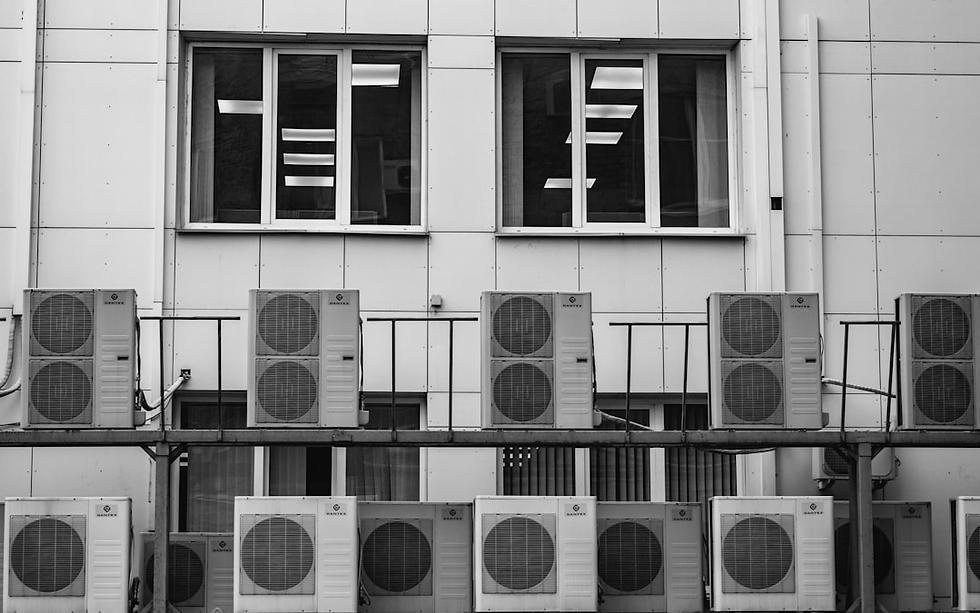
The vrf vs traditional hvac system comparison is one of the most consequential decisions a facility manager or building owner will make when evaluating climate control for a commercial or industrial property.
Here is a quick breakdown of how the two systems stack up:
Factor | VRF System | Traditional HVAC |
Energy Efficiency | SEER 16-20; 20-40% energy savings | SEER 13-16; less efficient at part-load |
Zoning | Precise, individual zone control | Limited; whole-floor or large-zone control |
Ductwork | Minimal or none | Extensive; 20-30% air loss possible |
Simultaneous Heating/Cooling | Yes (heat recovery models) | No |
Noise Level | 25-35 dB (whisper quiet) | 45-55 dB |
Upfront Equipment Cost | 20-40% higher than traditional | Lower initial investment |
Best Applications | Multi-zone offices, hotels, retrofits | Warehouses, open layouts, industrial |
Lifespan | 15-20 years | 15-20 years |
Ventilation | Requires supplemental DOAS | Often built in |
Maintenance | Specialized technicians required | Widely available service |
Most commercial facilities in Virginia are not single-zone, single-purpose spaces. Office buildings, healthcare facilities, mixed-use properties, and hospitality operations all have dramatically different temperature demands from room to room — and often at the same time. That is exactly the gap that VRF technology was built to close.
Traditional HVAC systems — rooftop units, central air handlers, packaged systems — have been the workhorses of commercial buildings for decades. They are well-understood, widely serviced, and straightforward to install. But they were designed for a different era of building operation, one where energy costs were low and occupant comfort expectations were simpler.
The commercial real estate and industrial landscape in Roanoke, Salem, Vinton, and the Blacksburg/Christiansburg corridor has shifted. Facility managers are now facing pressure to reduce operating expenses, meet tighter energy codes, and deliver consistent comfort across complex, multi-zone environments. Understanding where each system excels — and where it falls short — is the foundation for making the right long-term investment.

Understanding the VRF vs Traditional HVAC System Comparison

To truly grasp the vrf vs traditional hvac system comparison, we have to look at how they move heat. Traditional HVAC systems typically rely on air as the primary medium. Large central units condition the air and then blast it through a network of bulky ducts. It’s an "all or nothing" approach; even with Variable Air Volume (VAV) boxes, the central plant is often working harder than it needs to.
Variable Refrigerant Flow (VRF), on the other hand, uses refrigerant as the cooling and heating medium. Instead of one giant fan pushing air through the whole building, a single outdoor condensing unit connects to multiple indoor units via small-diameter piping. Each indoor unit can be controlled independently. This is made possible by inverter-driven compressors, which act like a dimmer switch rather than a standard on/off light switch. They ramp up or down to meet the exact load of the space, providing incredible precision in Engineering Design.
Energy Efficiency in the VRF vs Traditional HVAC System Comparison
Efficiency is where VRF systems truly shine, particularly regarding part-load performance. In a typical Roanoke office building, the HVAC system rarely needs to run at 100% capacity. Traditional systems often "cycle" on and off to maintain temperature, which is the most energy-intensive way to operate. VRF systems avoid this by modulating the flow of refrigerant to match the demand of each specific zone.
Research indicates that VRF technology can reduce energy consumption by 30-40% compared to conventional systems. In some commercial office settings, energy savings have been documented as high as 40-53% compared to older VAV systems. This high level of performance helps local facilities stay ahead of evolving regulations, such as those detailed in our guide on ASHRAE 90.1 Energy Efficiency Standard Explained.
Maintenance Realities in the VRF vs Traditional HVAC System Comparison
While VRF systems offer superior efficiency, they do come with a different set of maintenance requirements. Because these systems are highly sophisticated, they require specialized technicians who understand the complex electronics and refrigerant flow logic. Traditional systems are often simpler to service, but they involve more mechanical wear and tear due to constant cycling.
One critical consideration for VRF is refrigerant leak detection. Since the system circulates refrigerant throughout the building rather than keeping it contained in a central mechanical room, proper installation and regular inspections are paramount. However, because VRF systems operate at variable speeds and avoid the "start-stop" stress of traditional units, the equipment often experiences less mechanical strain over its 15-20 year lifespan. For businesses looking to maximize their current infrastructure, we often look at these factors during Systems Repairs & Retrofits.
Efficiency and Comfort: The VRF Advantage
Comfort is more than just a number on a thermostat; it is about consistency and acoustics. VRF indoor units are remarkably quiet, typically operating at 25-35 dB—which is about the level of a whisper. Compare that to the 45-55 dB range of traditional ducted systems, and the difference in a quiet office or a hotel room is night and day.
The real "magic" of VRF, however, is simultaneous heating and cooling. In Virginia, we often see "shoulder seasons" where the sunny side of a building needs cooling while the shaded side needs heat. VRF heat recovery systems can actually take the heat rejected from the cooling zones and "recycle" it to the zones that need warmth. This level of granular control is a major step up from traditional methods, as we explain in Commercial HVAC Controls Explained.
Heat Pump vs Heat Recovery Systems
When choosing a VRF system, you’ll encounter two main types:
Heat Pump Systems: These are two-pipe systems that can provide either heating or cooling to the entire building. They are great for buildings with consistent needs across all zones but still offer the efficiency of inverter technology.
Heat Recovery Systems: These are typically three-pipe (or specialized two-pipe) systems that allow for simultaneous heating and cooling. By redistributing thermal energy within the building, they offer the highest possible efficiency.
For many of our clients, these represent the gold standard for High-Efficiency System Upgrades in Salem, VA.
Eliminating Ductwork Losses
Traditional commercial duct systems are notoriously leaky. It is estimated that 20-30% of conditioned air is lost through leakage and conduction before it ever reaches the room it’s supposed to cool. By moving refrigerant through small pipes instead of air through large ducts, VRF systems virtually eliminate these transport losses. This also frees up significant plenum space, which can be a lifesaver in buildings with low ceilings, a common topic in our Commercial HVAC Optimization Guide Roanoke, VA.
When Traditional Systems Still Make Sense for Virginia Facilities
Despite the high-tech appeal of VRF, traditional HVAC systems—like packaged rooftop units (RTUs)—still have a firm place in the Virginia market. For large, open-concept spaces like warehouses, gyms, or big-box retail, the precise zoning of a VRF system is often unnecessary. In these cases, a high-efficiency RTU can provide the required "brute force" cooling and heating at a lower initial equipment cost.
Traditional systems also tend to be better at handling high ventilation requirements. Certain facilities, like laboratories or high-occupancy convention centers, must bring in massive amounts of fresh outdoor air to meet safety codes. Traditional air handlers are natively designed to mix and condition this outdoor air more easily than a standard VRF indoor unit. We always ensure these designs stay in line with How ASHRAE Standards Affect Commercial HVAC Design.
Large Open Spaces and Industrial Needs
In a 50,000-square-foot warehouse in Vinton, you don't need 20 different temperature zones. You need a reliable, powerful system that can maintain a steady temperature across a vast area. Traditional chillers or large packaged units are often the most cost-effective choice here. When evaluating these larger plants, we often compare Air Cooled Chiller vs. Water Cooled Chiller Efficiency to find the best fit for the specific industrial process.
Ventilation and Code Compliance
One common misconception is that VRF systems handle all your air needs. In reality, VRF indoor units primarily recirculate and condition the air already inside the room. To meet building codes for fresh air, a VRF system must be paired with a Dedicated Outdoor Air System (DOAS). While this adds a layer of complexity, it allows the VRF to focus on comfort while the DOAS focuses on air quality. This integrated approach is a staple of modern HVAC System Design in Roanoke, VA.
Strategic Implementation: Retrofits vs. New Construction
The vrf vs traditional hvac system comparison often looks very different depending on whether you are building from scratch or retrofitting an older structure. In new construction, you have the luxury of designing the building around the HVAC system. However, in retrofits—especially in historic Roanoke buildings—VRF is often the only viable way to add modern climate control without destroying the building’s architectural integrity. Because refrigerant pipes are tiny compared to ductwork, they can be snaked through tight spaces where ducts simply won't fit. We discuss these trade-offs extensively in Commercial HVAC Retrofit vs. Full Replacement.
Evaluating Return on Investment
Deciding between these systems requires looking at the total cost of ownership. While VRF equipment can cost 20-40% more upfront, the long-term operating savings often lead to a favorable payback period. We help facility managers calculate this by looking at:
Annual Energy Use: VRF typically saves 20-40% on utility bills.
Maintenance Costs: VRF may require specialized labor but has fewer mechanical failures.
Lifecycle: Both systems last 15-20 years, but VRF may retain better efficiency as it ages.
This evaluation is critical when determining When to Retrofit vs. Replace Commercial HVAC System.
Performance in Extreme Climates
Virginia’s climate can be demanding, with humid summers and freezing winter nights.
Hot Regions: Modern VRF units are often rated to operate in ambient temperatures up to 125°F, making them more than capable of handling a Virginia heatwave.
Cold Winters: Older VRF systems struggled in extreme cold, but today’s "hyper-heating" models can maintain significant capacity even when temperatures drop to 0°F or below.
Humidity: Both systems provide dehumidification, though VRF’s constant operation often does a better job of preventing the "clammy" feeling caused by traditional systems cycling off.
Frequently Asked Questions about VRF and Traditional HVAC
How does VRF perform in extreme Virginia winters?
Modern VRF systems are designed with cold-climate flash injection technology, allowing them to provide reliable heat even when outdoor temperatures are well below freezing. While traditional gas furnaces provide a different "feel" of heat, VRF heat pumps are incredibly efficient down to very low temperatures, often only needing supplemental heat in the most extreme mountain conditions.
Can VRF systems be integrated with existing building management systems?
Yes. Most VRF manufacturers offer gateways that allow their proprietary controls to communicate with standard protocols like BACnet or LonWorks. This allows facility managers to monitor the VRF system alongside lighting, security, and other building systems from a single interface.
What is the typical lifespan of a VRF system compared to a rooftop unit?
Both systems typically have a service life of 15 to 20 years. The longevity of a VRF system depends heavily on the quality of the initial installation—specifically the brazing and vacuuming of the refrigerant lines—and regular professional maintenance.
Conclusion
Choosing between VRF and traditional HVAC isn't about finding the "best" technology; it’s about finding the right tool for your specific building in Roanoke, Salem, or the surrounding corridor. At Whitescarver Engineering Co., we bring over 75 years of technical expertise to every project, ensuring that your facility benefits from a solution that balances upfront investment with long-term reliability.
Whether you are managing a high-rise office building, a complex industrial plant, or a historic renovation, we provide the engineering-led approach needed to optimize your environment. Our team is dedicated to delivering second-to-none technical solutions across Virginia.
Our core service areas include:
Roanoke, VA
Salem, VA
Vinton, VA
Blacksburg & Christiansburg, VA
Ready to see which system fits your facility's future? Explore our full range of Commercial HVAC Systems or contact us today to discuss your next project.


Comments