
The Ultimate Guide to Commercial Chiller and Boiler Service Frequency in Virginia

Determining how often should a commercial chiller or boiler be serviced in virginia requires looking at both operational health and state regulatory requirements. Commercial HVAC systems, including air-cooled and water-cooled chillers, function best under quarterly maintenance schedules governed by mechanical standards like ASHRAE Standard 180. Meanwhile, commercial boilers operating in Virginia must adhere strictly to statutory safety inspection schedules enforced by the Virginia Department of Labor and Industry (DOLI) Division of Boiler and Pressure Vessel Safety.
System Type | Mandatory Virginia Safety Inspection | Recommended Preventive Maintenance | Key Operational Focus |
High-Pressure Boilers (Steam >15 PSI / Water >160 PSI) | Annual internal; Annual external (running, ~6 mos later) | Monthly check; Quarterly comprehensive | Safety relief valves, burner calibration, water chemistry |
Heating Boilers (Steam ≤15 PSI / Water ≤160 PSI) | Biennial (every 2 years) external inspection | Monthly operational; Seasonal startup/shutdown | Combustion testing, controls, low-water cutoffs |
Pressure Vessels | Biennial (every 2 years) inspection | Annual integrity inspection | Shell thickness, relief valves, structural supports |
Commercial Chillers | Local mechanical code compliance | Quarterly cycle (4 times per year) | Refrigerant charge, condenser coil cleaning, oil analysis |
Guidelines for How Often Should a Commercial Chiller or Boiler Be Serviced in Virginia During Summer Demand
In Virginia's humid subtropical climate, summer brings heavy cooling loads that strain commercial chillers and central air handling plants. Facility managers must establish quarterly maintenance cycles to maintain efficiency and reliability during heat waves. Following our comprehensive HVAC Maintenance Frequency Guide 2026, spring pre-season chiller servicing should focus on condenser coil cleaning, tube descaling, sensor calibration, and checking refrigerant levels.
Failing to conduct quarterly checks under ASHRAE Standard 180 before peak summer heat leads to elevated condensing temperatures, surging electrical consumption, and unexpected high-pressure trips that disrupt building operations.
Regulations Governing How Often Should a Commercial Chiller or Boiler Be Serviced in Virginia During Winter Operations
As temperatures drop across the Roanoke Valley and the Blue Ridge region, commercial heating plants transition into continuous winter service. While low-pressure heating boilers undergo state-mandated external inspections every two years, best engineering practices dictate monthly operational checks and annual pre-heating season overhauls.
Winter boiler maintenance includes testing low-water cutoffs, calibrating gas trains and burner combustion, checking refractory linings, and inspecting venting systems. Regular water treatment monitoring is equally critical during winter operations to prevent scale buildup and thermal shock, ensuring reliable heat delivery across commercial and industrial facilities.
Virginia DOLI Boiler and Pressure Vessel Inspection Regulations
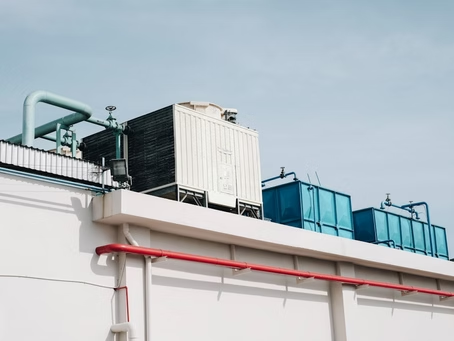
Virginia state law mandates strict safety inspection schedules for all non-exempt boilers and pressure vessels operating within the Commonwealth. Oversight is managed by Virginia DOLI, requiring equipment to be constructed to ASME standards and registered with both the National Board and state authorities. The legal inspection intervals are strictly defined by equipment classification:
High-Pressure Boilers: Defined as steam boilers operating above 15 PSI or hot water boilers operating above 160 PSI (or temperatures exceeding 250°F). These high-energy units must undergo an annual internal inspection and an annual external running inspection, typically scheduled six months apart.
Heating Boilers: Low-pressure steam and hot water boilers must undergo an external inspection every two years, with internal inspections performed at the discretion of the authorized inspector.
Pressure Vessels: Unfired pressure vessels require an inspection every two years.
Inspections must be conducted by an authorized insurance company inspector or a registered Contract Fee Inspector. Facilities using commercial rooftop equipment alongside central hydronic systems should also review our guide on How Often Should a Commercial Rooftop Unit Be Serviced in Virginia to align all facility asset care schedules.
Certificate Compliance, Grace Periods, and Extension Protocols
Once an inspection is successfully completed and billed through the state's Jurisdiction Online portal, DOLI issues an operating certificate. However, DOLI is not required to issue advance warning before a certificate expires—it is entirely the facility owner's responsibility to maintain active certification.
If a certificate expires, Virginia regulations grant a 60-day grace period to complete the renewal inspection without penalty. If additional time is needed due to operational constraints or parts availability, building owners can request an official extension of up to three months. To secure a certificate extension, the facility must submit the VA object number, pay a fee of $20 per additional month requested, and provide a signed external inspection report from a qualified inspector agreeing to the extension.
Commercial Chiller Maintenance, EPA Section 608, and Energy Codes

Commercial chillers demand specialized environmental and energy compliance management beyond basic mechanical tuning. Under Federal EPA Section 608 regulations and Virginia environmental standards, chillers carrying a refrigerant charge of 50 pounds or more are subject to mandatory leak repair timelines whenever leaks are identified:

Comfort Cooling Chillers: Any leak exceeding the 10% annual leak rate threshold must be repaired within 30 days of discovery (with extensions available up to 120 days under strict conditions requiring official plans).
Commercial Refrigeration & Industrial Process Cooling: Leaks exceeding the 20% (refrigeration) or 30% (industrial process) thresholds must be repaired within 30 days.
Following leak repairs, initial and follow-up verification leak testing must be completed to confirm regulatory compliance before systems return to normal duty. In addition to refrigerant tracking, maintenance practices must align with the Virginia Energy Conservation Code (incorporating ASHRAE Standard 90.1-2022). Energy standards mandate meticulous maintenance record-keeping, sensor calibration, setpoint verification, and operating efficiency logging to ensure central cooling plants run optimally. Implementing routine oil analysis, eddy current tube testing, and water temperature optimization yields significant energy cost reductions and protects critical capital assets.
To explore system-specific cooling maintenance strategies, review our insights on Industrial Cooling System Maintenance Basics and evaluate your options when Choosing Between Air and Water Cooled Chillers for Your Building.
Licensing, Permitted Work, and Seasonal Scheduling Best Practices
Maintaining high-tonnage HVAC systems requires understanding the line between routine maintenance and regulated mechanical contracting. Facility staff may handle basic tasks like replacing air filters, adjusting drive belts, or visually inspecting piping. However, any work involving sealed refrigerant circuits, electrical supply alterations, gas piping, or major component replacement requires a contractor licensed by the Virginia Department of Professional and Occupational Regulation (DPOR) holding proper Master HVAC and EPA Section 608 certifications.
To maintain peak facility performance, maximize equipment reliability, and meet strict state compliance timelines, building owners should partner with experienced mechanical specialists offering customized maintenance agreements and 24/7 emergency service coverage. Aligning seasonal service routines with Virginia's local climate ensures uninterrupted operational capability throughout the year:
Spring (March – April): Perform comprehensive pre-season chiller servicing, dynamic leak testing, tube cleaning, and condenser coil washing before ambient temperatures rise.
Summer (June – August): Conduct mid-season operational checkups, monitoring compressor oil quality, approach temperatures, and chilled water flow rates during peak cooling loads.
Fall (September – October): Execute pre-season boiler maintenance, combustion analysis, low-water cutoff testing, and prepare cooling towers for winterization or fluid draining.
Winter (December – February): Perform mid-season boiler burner inspections and conduct internal maintenance or custom industrial HVAC retrofits on chillers while they are offline.
For comprehensive maintenance agreement options tailored to your facility, visit our Maintenance Services page.
Frequently Asked Questions About Virginia Commercial HVAC Servicing
Do Virginia local municipalities require commercial boiler operator licenses?
No. The Commonwealth of Virginia does not maintain a statewide boiler operator licensing requirement. While the Code of Virginia allows individual cities or counties to establish local operator certification rules, no locality in Virginia currently enforces a local boiler operator licensing mandate.
What are the grace period options if a boiler certificate expires in Virginia?
Virginia provides an automatic 60-day grace period following certificate expiration. If a facility cannot schedule an internal or external inspection within those 60 days, they may request an official extension of up to three months by submitting a written request with the object's VA identification number, paying $20 per month requested, and filing an external inspection report confirming the unit is safe to operate during the extension window.
How fast must refrigerant leaks be repaired on commercial chillers in Virginia?
For commercial chillers with 50 pounds or more of refrigerant, EPA Section 608 rules require leak repairs to be completed within 30 days of detection if the leak rate exceeds applicable threshold limits (10% for comfort cooling, 20% for commercial refrigeration, and 30% for industrial process cooling).
Conclusion
Determining how often should a commercial chiller or boiler be serviced in virginia involves balancing routine quarterly preventive maintenance with mandatory state inspection cycles. By pairing disciplined seasonal servicing with timely DOLI boiler certifications, commercial facilities protect their mechanical investments, maximize energy performance, and maintain a safe, compliant operational environment year-round.
Whitescarver Engineering Company serves businesses throughout Roanoke, Salem, Vinton, and the Blacksburg/Christiansburg corridor. Operating as a commercial and industrial HVAC and refrigeration service firm based in Roanoke, VA, since 1937, we specialize in installing, maintaining, and retrofitting large-scale HVAC systems, industrial process systems, refrigeration engineering and design, and energy-conservation solutions. Contact our expert team today through our Maintenance Services portal to establish a customized service plan for your facility's chillers and boilers.


Comments