
How to Extend the Life of Commercial HVAC Equipment: 5 Proven Methods
Why Knowing How to Extend the Life of Commercial HVAC Equipment Can Save Your Facility Thousands

The fastest way to extend the life of commercial HVAC equipment is to follow five core practices:
Establish a structured preventive maintenance program with quarterly inspections and seasonal tune-ups
Prioritize airflow and cleanliness through regular filter replacement and coil cleaning
Leverage building automation and smart controls to reduce unnecessary runtime and catch issues early
Implement extended-scope and predictive maintenance including vibration analysis and electrical load testing
Maintain and seal commercial ductwork to prevent energy loss and airflow restrictions
Most commercial HVAC systems are designed to last 15 to 20 years. In practice, many fall well short of that — not because of poor equipment, but because of deferred maintenance and reactive repair habits. A poorly maintained 20-ton rooftop unit can fail after just 9 years. The same unit, properly maintained, routinely reaches 14 years or beyond. Across a multi-unit facility, that gap represents significant unplanned capital expenditure and operational disruption.
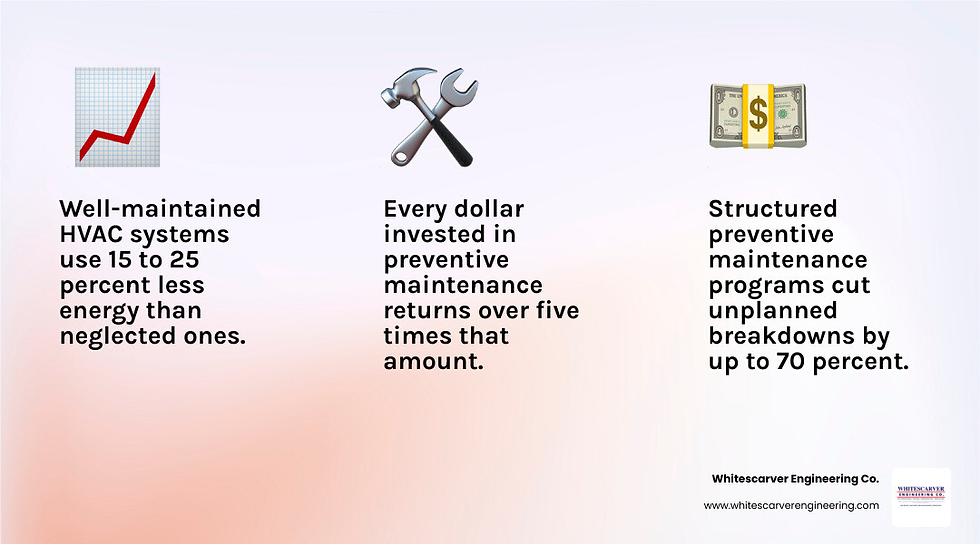
For facility managers and building owners in Virginia, the stakes are compounded by demanding seasonal load swings, aging building stock, and tightening refrigerant regulations. The good news: the data is clear. A U.S. Department of Energy study found that well-maintained HVAC systems use 15 to 25 percent less energy than neglected ones. Buildings running structured preventive maintenance programs cut unplanned breakdowns by up to 70 percent. And every dollar invested in preventive maintenance has a documented return of over five times that amount.
This guide walks through exactly what it takes to protect that investment — systematically, sustainably, and at a level of technical depth that matches the complexity of commercial and industrial HVAC systems.
Understanding Commercial HVAC Lifespans and Component Longevity
To effectively manage commercial HVAC systems, facility teams must view their infrastructure as a modular network of distinct mechanical components rather than a single, monolithic machine. While an overall system has an average operational life of 16 years, individual components exhibit wildly different degradation rates, wear patterns, and lifespans.
For instance, a commercial scroll or semi-hermetic compressor may run under heavy load for 8 to 10 years before efficiency declines, whereas a robust cast-iron boiler can easily exceed 30 years with proper water treatment. Understanding these variances allows facility managers to shift from reactive firefighting to strategic lifecycle management.
Several critical factors influence how close a component gets to its maximum theoretical lifespan:
Climate and Environmental Exposure: In Western Virginia, systems must handle humid summers and freezing winters. Outdoor condenser coils and rooftop units (RTUs) are exposed to pollen, dust, and temperature swings that accelerate corrosion and thermal stress.
Usage Patterns and Runtime: Systems operating 24/7—such as those in hospital wings, data centers, or continuous manufacturing lines—will reach their end-of-life hours much faster than those on standard commercial office schedules.
Installation Quality: Improper sizing, poor piping design, and incorrect initial refrigerant charges place immediate, structural stress on compressors and motors from day one.
Maintenance History: Consistent care directly determines whether components hit their maximum life expectancy or fail early.
To help visualize these lifespans, we have compiled the average life expectancies of major commercial HVAC components based on industry standards and real-world performance metrics:
Equipment / Component Type | Average Lifespan (Without Regular PM) | Target Lifespan (With Structured PM) | Primary Failure Driver |
Rooftop Units (RTUs) | 8–10 Years | 15–20 Years | Compressor failure, heat exchanger cracks, coil corrosion |
Water-Cooled Chillers | 15 Years | 20–30 Years | Tube fouling, compressor wear, water chemistry neglect |
Air-Cooled Chillers | 10–12 Years | 15–20 Years | Condenser coil corrosion, fan motor failure |
Boilers (Steel/Cast Iron) | 12–15 Years | 20–35 Years | Oxygen pitting, scale buildup, thermal shock |
Air Handling Units (AHUs) | 10–12 Years | 15–20 Years | Fan motor burnout, bearing wear, damper failure |
Compressors | 8 Years | 12 Years | Liquid slugging, electrical overload, dirty coils |
Ductwork Systems | 15–20 Years | 20–30 Years | Joint separation, moisture damage, static pressure strain |
For a deeper dive into these lifespans and how they affect your capital planning, read our detailed guide on How Long Does a Commercial HVAC System Last.
5 Proven Methods on How to Extend the Life of Commercial HVAC Equipment
Extending the life of heavy mechanical equipment requires a systematic approach. It is not about reacting to failures faster; it is about preventing the physical degradation mechanisms—such as friction, heat, corrosion, and electrical stress—that cause components to break down.
By implementing these five proven methods, B2B facility managers can optimize system performance, lower operational expenses, and ensure consistent indoor environmental quality.
1. Establish a Structured Preventive Maintenance Program
A reactive approach to commercial HVAC maintenance is highly inefficient. According to the Building Owners and Managers Association (BOMA), reactive repairs cost 3 to 9 times more than planned preventive tasks. When a system is run to failure, the damage is rarely confined to a single part. A simple electrical fault can easily cascade into a total compressor burnout.
A structured preventive maintenance (PM) program is designed to break this cycle. It relies on a disciplined, calendar-based or usage-based schedule of inspections, cleanings, and calibrations.
To implement an effective PM program, we recommend dividing tasks into clear seasonal and operational intervals:
Monthly In-House Tasks: Inspect air filters for pressure drops, verify belt tension on belt-driven fans, check for unusual operational noises, and ensure condensate lines are draining freely.
Quarterly Professional Inspections: Measure motor amp draws against nameplate ratings, check refrigerant operating pressures, test safety controls, and inspect electrical contacts for pitting or signs of overheating.
Pre-Season Tune-Ups: Perform complete cooling system startups in the spring (including condenser cleaning and economizer testing) and thorough heating system startups in the fall (including burner cleaning, heat exchanger inspections, and flue draft analysis).
By documenting every reading, repair, and inspection, you build a historical record that helps identify deteriorating performance trends before they cause a system shutdown. To learn how to structure these plans effectively, read our guide on How to Maintain Commercial HVAC Systems.
2. Prioritize Airflow and Cleanliness to Protect the Compressor
The compressor is the heart of any DX (direct expansion) cooling system, and it is also the most expensive single component to replace. The vast majority of premature compressor failures are not caused by manufacturing defects; they are caused by external system stresses—specifically, restricted airflow and dirty heat transfer surfaces.
When airflow is restricted by clogged filters or dirty coils, the evaporator cannot transfer heat effectively. This causes the refrigerant to remain in a liquid state as it leaves the evaporator, leading to liquid slugging—where liquid refrigerant enters the compressor cylinder and physically damages the valves and pistons.
Additionally, dirty condenser coils prevent heat from rejecting properly, driving up system operating pressures and temperatures. This forces the compressor to work harder, pulling more electrical current and overheating the compressor motor windings.
To protect your compressor and maintain high efficiency, prioritize these steps:
Enforce Strict Filter Schedules: Replace filters based on actual pressure drop measurements (using differential pressure gauges) rather than generic calendar intervals. Upgrade to MERV 13 filters where system static pressure allows, balancing filtration efficiency with proper airflow.
Schedule Professional Coil Cleaning: Clean evaporator and condenser coils at least twice a year using low-pressure water (under 300 psi) and specialized biodegradable cleaning agents to avoid folding the delicate aluminum fins.
Clear Surrounding Areas: Maintain at least two feet of clear space around all outdoor condensing units and RTUs to ensure unobstructed ambient airflow.
For businesses operating in Western Virginia, keeping up with local environmental factors is key. Check out our Commercial HVAC Maintenance Guide Roanoke VA for localized advice on managing seasonal debris, pollen, and humidity.
3. Leverage Building Automation and Smart Controls
Running commercial HVAC equipment unnecessarily is one of the most common causes of early equipment failure. Every hour a 50-ton chiller or a series of rooftop units operates during unoccupied periods represents wasted energy and unnecessary mechanical wear.
Integrating your HVAC assets with a modern Building Automation System (BAS) or Building Management System (BMS) allows you to optimize runtime through precise scheduling, smart setbacks, and automated occupancy controls.
Key automation strategies that extend equipment life include:
Optimal Start/Stop Programs: Instead of running systems on a rigid schedule, a BAS calculates the exact time required to bring the building to the target temperature before occupants arrive, minimizing runtime based on outdoor ambient temperatures.
Sensor Calibration: Calibrate temperature, humidity, and carbon dioxide sensors annually. Out-of-calibration sensors can cause systems to over-cool, over-heat, or introduce excessive outdoor air, putting unnecessary load on heating and cooling components.
Variable Frequency Drives (VFDs): Installing VFDs on supply fans, exhaust fans, and pump motors allows the system to match output precisely to actual load demands rather than running at 100% capacity constantly. This soft-starting capability reduces mechanical shock on belts, bearings, and motor windings.
Using smart controls to manage system runtime is also one of the most effective ways to lower your monthly utility bills. For practical strategies on optimizing your controls, read our article on How to Reduce HVAC Energy Costs in Commercial Buildings.
4. Implement Extended-Scope and Predictive Maintenance
While standard preventive maintenance focuses on visual inspections and scheduled cleanings, extended-scope and predictive maintenance (PdM) use advanced diagnostics to evaluate the actual physical condition of internal components. This approach allows facility managers to identify internal wear patterns long before they show up as visible damage or performance drops.
By investing in predictive technologies, you can catch major issues early and avoid costly emergency repairs:
Vibration Analysis: Measuring the vibration profiles of large fan shafts, pump impellers, and chiller compressors can identify bearing wear, shaft misalignment, and mechanical imbalance. Replacing a worn bearing during scheduled downtime prevents catastrophic shaft and motor failures.
Refrigerant and Oil Analysis: Regularly sampling compressor oil and refrigerant allows technicians to check for moisture, acid formation, and metal wear particles. Acid in the oil breaks down motor winding insulation, leading to compressor burnout. Catching acid early allows for oil changes and acid-scavenging treatments that save the compressor.
Thermal Imaging: Infrared thermography of electrical panels, motor starters, and disconnects reveals high-resistance connections and overloaded circuits. Addressing these hot spots prevents electrical fires and sudden component failures.
Electrical Load Testing: Measuring voltage balance and current draws on multi-phase motors ensures they are running within design tolerances. Even a small voltage imbalance of 1% can cause a 10% increase in motor operating temperatures, rapidly degrading winding insulation.
To understand how predictive diagnostics fit into a broader maintenance strategy, read our analysis on Preventive Maintenance vs Reactive Repairs Commercial HVAC.
5. Maintain and Seal Commercial Ductwork
Even the most efficient, well-maintained chiller, boiler, or RTU will struggle if the air distribution system is compromised. Commercial ductwork systems are designed to deliver conditioned air at specific static pressures and volumes. However, over time, thermal expansion, building settling, and joint degradation can cause significant duct leakage.
According to the U.S. Department of Energy, the average commercial duct system loses 20 to 30 percent of conditioned air through leaks and joint separations. This loss of conditioned air forces the primary heating and cooling equipment to run longer and harder to maintain space temperatures, accelerating component wear and driving up energy consumption.
To protect your system from ductwork-related strain:
Conduct Static Pressure Testing: High static pressure indicates duct restrictions, closed fire dampers, or undersized duct runs, which place heavy loads on supply fan motors. Low static pressure often points to major duct separations or leaks.
Professional Duct Sealing: Seal accessible duct joints with high-quality mastic or specialized aerosol-based internal duct sealing technologies that seal leaks from the inside out.
Phased Upgrades: If your facility is undergoing renovations or tenant improvements, plan phased ductwork replacements to fix older, uninsulated, or poorly routed duct runs without disrupting daily operations.
Recognizing the Signs of Wear and Deciding to Repair vs. Replace
Even with an excellent maintenance program, every mechanical asset eventually reaches the end of its useful life. The key for facility managers is recognizing when a system is nearing retirement so they can plan an orderly replacement, rather than waiting for a catastrophic failure during peak seasonal loads.
Common warning signs that a commercial HVAC system is wearing out include:
Frequent Short-Cycling: If a unit turns on and off rapidly, it may indicate oversized equipment, failing controls, or a failing compressor. Short-cycling places extreme stress on electrical contacts and compressor motors.
Unusual Mechanical Noises: Squealing, grinding, clunking, or heavy vibrations signal bearing failures, loose components, or internal compressor damage.
Rising Energy Consumption: If your energy bills are steadily climbing despite stable utility rates and weather conditions, your HVAC system is losing its heat transfer efficiency.
Inconsistent Temperature and Humidity Control: Inability to maintain setpoints indicates the system can no longer meet the building's heating or cooling loads.
When faced with a major component failure on an older system, how do you decide whether to repair or replace it? A reliable rule of thumb is the 50% Rule: if the cost of the repair exceeds 50% of the replacement value of the unit, replacement is generally the more sensible financial decision.
Additionally, you should factor in the age of the system. If a unit is over 15 years old and requires a repair that costs more than 20-30% of its replacement value, the declining reliability of the remaining older components often makes a full replacement or a modern retrofit the better long-term choice.
For a thorough breakdown of these warning signs, see our guide on Signs Your Commercial HVAC System Needs Repair. If you are weighing your capital options, read our detailed comparison on When to Retrofit vs Replace Commercial HVAC System.
Long-Term Capital Planning and Refrigerant Compliance
Extending the life of your commercial HVAC equipment is a critical part of capital planning, especially with changing environmental regulations. The environmental landscape is shifting rapidly, and facility managers must adapt their maintenance and replacement schedules accordingly.
Under the EPA's AIM Act, high-GWP (Global Warming Potential) hydrofluorocarbon (HFC) refrigerants—most notably R-410A—are being phased down in favor of low-GWP alternatives, such as R-32 and R-454B. This transition has direct implications for your existing equipment:
Rising Maintenance Costs for Older Systems: As production of R-410A decreases, the cost of virgin refrigerant for leak repairs will rise. Older systems with chronic leaks will become increasingly expensive to maintain.
Refrigerant Compliance Audits: Your annual preventive maintenance should include a thorough refrigerant leak audit. Identifying and repairing minor leaks early keeps your system compliant and prevents low refrigerant charges from overheating your compressors.
Strategic Retrofits: In some cases, older chillers or systems can be retrofitted to use transitional refrigerants, extending their useful life without requiring a complete system replacement.
Proactive Capital Budgeting: Instead of reacting to emergency failures, plan equipment replacements in phases. This allows you to select high-efficiency, low-GWP systems that qualify for energy rebates and reduce long-term operational costs.
Frequently Asked Questions About Commercial HVAC Longevity
How does regular coil cleaning help to extend the life of commercial hvac equipment?
Regular coil cleaning is vital for maintaining proper heat transfer. When condenser and evaporator coils accumulate dirt, dust, and grease, they form an insulating barrier that restricts heat exchange.
This forces the compressor to run at higher temperatures and pressures to achieve the same cooling effect, which accelerates oil breakdown, degrades motor winding insulation, and leads to premature compressor failure. Keeping coils clean restores optimal heat transfer, lowers system operating pressures, and reduces compressor strain.
What is the role of a maintenance agreement in how to extend the life of commercial hvac equipment?
A maintenance agreement provides a structured, professional framework for your facility's preventive maintenance. Instead of relying on reactive service calls, an agreement schedules regular inspections and tune-ups automatically.
This ensures critical tasks like electrical testing, safety calibrations, and wear analysis are completed on time. Furthermore, a formal agreement provides detailed service documentation, which is essential for warranty compliance, capital planning, and regulatory audits.
To learn more about how these agreements work, read our article on What is a Commercial HVAC Preventive Maintenance Agreement.
When should a facility manager choose to retrofit instead of replace a system?
A retrofit is an excellent option when the structural components of a system—such as the casing, ductwork, and main structural frames—are in good condition, but the internal mechanical parts are failing or inefficient.
Retrofitting allows you to upgrade specific components, such as installing new high-efficiency compressors, updating to modern digital controls, or adding variable frequency drives (VFDs). This approach delivers significant efficiency improvements and extends system life at a fraction of the cost of a full replacement.
Conclusion
Extending the life of your commercial and industrial HVAC equipment requires technical expertise, consistent maintenance, and strategic planning. By moving away from reactive repairs and adopting structured preventive maintenance, advanced diagnostics, and smart building controls, you can protect your facility's mechanical investments and ensure reliable year-round operations.
At Whitescarver Engineering Co., we have been delivering high-quality commercial and industrial HVAC and refrigeration services across Virginia since 1937. Serving businesses throughout Roanoke, Salem, Vinton, and the Blacksburg/Christiansburg corridor, we bring nearly nine decades of technical heritage and an A+ BBB accreditation to every project. Whether you need custom industrial design, a comprehensive maintenance agreement, or 24/7 emergency service, our team is committed to keeping your facility running efficiently.
To learn more about choosing the right service partner, read about the Benefits of Choosing a Long Established Commercial HVAC Partner. If you are looking for a trusted technician in our region, visit Reliable Maintenance Services Contractor Commercial HVAC Units in Roanoke VA.
Ready to optimize your facility's HVAC performance and extend your equipment's lifespan? Partner with Whitescarver Engineering Co. for Commercial HVAC Systems today.


Comments