
The Definitive Guide to Checking a Commercial AC Not Cooling First

When cooling capacity drops in a commercial facility, acting quickly keeps occupants comfortable and prevents minor glitches from turning into major repairs. Before diving into complex diagnostic tools, facility managers should establish a systematic preliminary triage routine.
Safety must always come first. Commercial HVAC systems operate on high-voltage power, including 208V, 230V, or 460V 3-phase power supplies. Before inspecting internal components, ensure that proper Lock-Out/Tag-Out (LOTO) protocols are followed and disconnect switches are identified. If you notice a complete system shutdown or performance drop, review our guide on commercial hvac system performance decline what to check.
Here are the critical initial checks every facility manager should perform:
Verify control panel and thermostat settings for active cooling calls.
Inspect main electrical disconnects and circuit breakers.
Check return air grilles and primary filters for air starvation.
Conduct a visual check of outdoor condenser coils and fan operation.
Look for error codes on the unit controller board or Building Automation System (BAS).
Thermostat and BMS Controls: Commercial Air Conditioner Not Cooling What to Check First
Control errors account for a surprisingly high percentage of cooling failure calls. When addressing a commercial air conditioner not cooling what to check first, start at the user interface or central control hub.
Verify that the Building Automation System (BAS) or local thermostat is actively calling for cooling. Look for active setpoint overrides, temporary schedule lockouts, or holiday programming schedules that may have altered normal operating hours. Ensure the 24V control signal is reaching the equipment terminal board. Additionally, check the fan mode setting; if set to "ON" rather than "AUTO," the system will circulate air continuously between cooling cycles, which can pull moisture off the evaporator coil and blow humid air back into the building.
Air Filters and Supply Airflow Restrictions
Restricted airflow chokes cooling output and places severe mechanical stress on fan motors and compressors. When filters become heavily loaded with particulate matter, the static pressure drop across the filter rack increases sharply.
A sudden rise in static pressure starves the indoor evaporator coil of necessary heat transfer. This can cause system performance issues where the equipment runs continuously without lowering building temperatures. Ensure filters match the recommended Minimum Efficiency Reporting Value (MERV) rating for your system's blower capacity, as overly restrictive filters can reduce airflow just as much as dirty ones. Inspect return air grilles across office zones to verify they haven't been blocked by furniture, storage boxes, or closed dampers. For a deeper look into airflow failures, read about a commercial hvac not cooling building properly.
Outdoor Condenser Unit Airflow and Cleanliness
The outdoor condenser coil is responsible for rejecting all the heat extracted from inside your facility. If airflow across the condenser coil is restricted, heat dissipation stalls out.
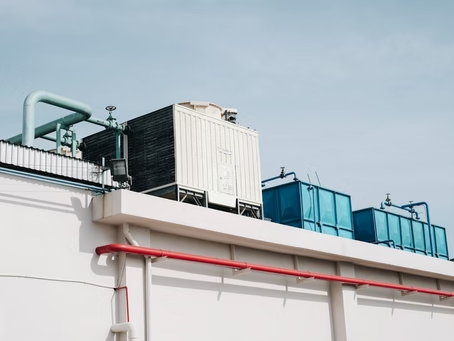
Inspect rooftop units (RTUs) or ground-level split system condensers for accumulated dirt, leaves, trash, or airborne debris like cottonwood seeds. Maintain at least 2 to 3 feet of clear space around condensing units. Dirty condenser coils restrict airflow, causing system head pressure to spike. High head pressure strains the compressor motor and will eventually trigger high-pressure safety cutouts, shutting down cooling entirely to protect the equipment.
Diagnosing Electrical and Mechanical Component Failures
If initial control and airflow checks reveal no obvious issues, the problem likely stems from an internal electrical or mechanical fault. Commercial cooling units rely on robust 3-phase power circuits, heavy-duty magnetic contactors, and start/run capacitors to power large motors.
When testing cooling delivery, a standard handheld thermometer provides immediate baseline data. Measure supply air temperature directly at the supply diffuser nearest the unit. A properly operating commercial system should yield a supply air temperature of 12 to 16°C (roughly 53.6 to 60.8°F), reflecting a 14 to 20°F temperature drop across the evaporator coil. If supply temperatures exceed 18°C (64.4°F), the system is underperforming due to component failure or charge issues.
Compressor Running vs Not Engaging
The compressor is the heart of the refrigeration circuit. When a call for cooling occurs, listen closely to the rooftop or pad-mounted unit.
If you hear a distinct motor hum or the condenser fans spin, but the compressor fails to engage, the system cannot compress refrigerant gas into high-pressure liquid. This failure often stems from pitted or burnt contactor points, a faulty magnetic starter coil, or a failed capacitor. In facilities experiencing low voltage or frequent power fluctuations, hard-start kits are often integrated to supply the necessary initial torque.

Short Cycling Causes and Solutions
Short cycling describes a scenario where a commercial AC unit starts up, runs for a brief period, and then abruptly turns off before completing a full cooling cycle.
This rapid cycling places immense wear on mechanical components and increases electrical demand spikes. Common causes of short cycling include:
Clogged Air Filters: Severe airflow restrictions trigger internal freeze stats or high-limit switches.
High-Pressure Cutouts: Dirty outdoor coils cause thermal head pressure to exceed safety limits, tripping pressure switches.
Oversized Cooling Equipment: Equipment with excess cooling tonnage lowers space temperatures too rapidly without removing humidity, triggering fast thermostat cycles.
Safety Float Switch Activation: Clogged condensate drain lines cause water to back up into the drain pan, tripping the safety float switch to prevent building water damage.
Condenser Fan Motor and Airflow Blocks
The condenser fan forces ambient air across the outdoor coil fins to draw off heat. If the fan motor fails due to worn bearings, an open winding, or an activated internal thermal overload switch, heat transfer halts immediately. Without active fan cooling, refrigerant pressure surges within seconds, causing high-pressure safety controls to trip the compressor offline.
Refrigerant Leaks vs Frozen Evaporator Coils
Refrigerant operates inside a closed loop; it is never consumed during normal operation. A drop in cooling efficiency accompanied by unusual pressure dynamics often signals either a loss of refrigerant charge or physical icing across the indoor evaporator coil.
Diagnostic Indicator | Low Refrigerant Leak | Frozen Evaporator Coil |
Supply Air Temperature | Warm or slightly cool (Above 18°C / 64°F) | Minimal to zero airflow; warm supply air |
Suction Line Condition | Warm or lukewarm to the touch | Heavily frosted or encrusted in solid ice |
System Pressure Profile | Low suction pressure and low head pressure | Low suction pressure with normal/low airflow |
Visual Signs | Oily residue around fittings or valves | Ice visible on indoor coil fins and copper bends |
Primary Root Cause | Physical puncture, vibration fatigue, or pinhole leak | Airflow starvation (dirty filter/blower failure) |
Identifying Low Refrigerant Charge and Leaks
When a leak occurs, operating suction superheat rises while system capacity drops. Facility managers conducting visual inspections should look for dark, oily residue surrounding copper refrigerant joints, service valves, or coil bends, as compressor oil escapes alongside refrigerant.
If sight glasses are built into the liquid line, persistent bubbling during steady-state operation indicates a low charge or a liquid line restriction (such as a clogged filter-drier or a sticking thermal expansion valve). Operating a unit with low refrigerant risks severe damage because returning refrigerant gas cools the compressor motor. To catch these issues early, look for key signs your commercial hvac system needs repair.
Frozen Evaporator Coils: Commercial Air Conditioner Not Cooling What to Check First
A frozen evaporator coil occurs when the coil temperature drops below 32°F (0°C), causing ambient moisture on the fins to freeze into solid ice.

Ice acts as an insulator, blocking airflow completely. The primary trigger for a frozen coil is restricted airflow from dirty air filters, loose blower belts, or closed dampers. In specialized commercial settings, such as restaurant kitchens, fine grease aerosols can pass through standard filters, coating evaporator coil fins and insulating them against heat transfer.
If ice accumulation is visible:
Turn off the cooling cycle at the thermostat or BMS immediately.
Switch the fan mode to "ON" to circulate room-temperature air across the coil.
Allow the ice to thaw completely before attempting any mechanical restart. Never scrape ice off coil fins with sharp tools.
Air Distribution, Leaky Ducts, and Building Heat Loads
Even when mechanical equipment runs perfectly, problems within air distribution systems can prevent cool air from reaching occupant spaces.
Modern commercial facilities rely on Variable Air Volume (VAV) systems, zone balance dampers, and extensive supply ducting. A loss of duct static pressure from disconnected joints or leaking seams allows cool air to escape into unconditioned plenum spaces. If your facility experiences spatial temperature variances, explore hot and cold spots in a commercial building causes and review what causes uneven temperatures in commercial buildings.
Checking Vents, Dampers, and Air Distribution
Inspect ceiling diffusers to confirm that supply louvers are open and delivering air velocity. In systems equipped with economizers—which mix outdoor air into the return stream for free cooling—check that outside air intake dampers are not stuck wide open. A stuck outdoor damper forces the system to condition 100% ambient outside air during peak summer heatwaves, overwhelming cooling capacity.
System Sizing, Building Heat Loads, and Duct Performance
Facilities change over time. If a commercial space undergoes a tenant fitout, adds high-density IT server racks, or increases staff occupancy, internal heat loads can exceed original system design tonnage.
An undersized system will run continuously without reaching setpoint during hot weather. Ductwork leaks can waste substantial cooling energy, reducing delivered airflow at distant supply diffusers.
When to Attempt DIY Checks vs Calling a Commercial Technician
Facility maintenance teams can handle basic operational checks safely, but clear boundaries must exist between basic troubleshooting and specialized technical repairs.
Safe In-House Facility Checks
Facility personnel can safely perform these tasks:
Inspecting and resetting tripped low-voltage circuit breakers once.
Changing disposable air filters and clearing return grilles.
Removing loose surface debris from outdoor condenser housing.
Checking thermostat batteries, time clocks, and BAS setpoint inputs.
Issues Requiring Professional Technical Service
Complex diagnostics require certified commercial HVAC technicians. Never attempt to service line-voltage electrical panels, test 3-phase motor contactors, or handle EPA-regulated refrigerants without proper certification and protective gear.
Contact a professional service firm immediately if you observe:
Repeatedly tripping circuit breakers or blown high-voltage fuses.
Burning odors, smoke, or electrical arcing noises.
Complete compressor non-engagement or severe grinding sounds from motor bearings.
Refrigerant leaks requiring recovery, vacuum evacuation, and precision charging.
For local service support, review our when to call a commercial hvac technician guide, check out our commercial hvac repair salem va guide, or read our commercial hvac repair blue ridge tips.
Frequently Asked Questions
What supply air temperature indicates a properly working commercial AC?
A properly functioning commercial AC system should deliver supply air between 12 and 16°C (53.6 to 60.8°F) at the supply diffuser nearest the coil. This reflects a normal 14 to 20°F temperature drop (delta T) compared to the return air entering the system. Supply temperatures above 18°C (64.4°F) signal low refrigerant charge, dirty coils, or restricted airflow.
Should I turn off the commercial AC unit if it is running but not cooling?
Yes. Operating a commercial cooling system that fails to cool can cause severe mechanical damage. If the system has a frozen evaporator coil, running the compressor pulls liquid refrigerant back into the compressor pump, causing hydro-lock and physical valve failure. Turn off cooling mode at the control panel immediately.
How often should commercial HVAC air filters and coils be serviced?
Commercial air filters should be inspected monthly and replaced every 1 to 3 months, depending on particulate exposure and building use. Condenser and evaporator coils require professional cleaning at least twice per year—typically during spring and autumn tune-ups. Explore our commercial hvac maintenance guide roanoke va and overview on how to maintain commercial hvac systems for scheduled care routines.
Proactive Commercial Care and Reliability
Catching minor issues early protects your mechanical equipment, lowers energy costs, and keeps your facility running smoothly. Routine preventive inspections ensure high-capacity commercial equipment operates efficiently throughout peak summer demand.
Whitescarver Engineering Company is a commercial and industrial HVAC and refrigeration service firm based in Roanoke, VA, operating since 1937. Serving businesses throughout Roanoke, Salem, Vinton, and the Blacksburg/Christiansburg corridor, our team specializes in installing, maintaining, and retrofitting large-scale HVAC systems, industrial process systems, refrigeration engineering and design, and energy-conservation solutions. Whether you require custom industrial HVAC projects, custom maintenance agreements, or emergency 24/7 service response, our technical expertise delivers reliable facility solutions.
Protect your commercial facility from unexpected downtime. Explore our comprehensive commercial hvac systems solutions or contact our Roanoke team today to set up a professional maintenance agreement tailored to your operational needs.


Comments