
Ultimate Checklist for Diagnosing Commercial HVAC Not Cooling Building Properly
Why a Commercial HVAC Not Cooling Building Properly Is a Business Risk You Can't Ignore
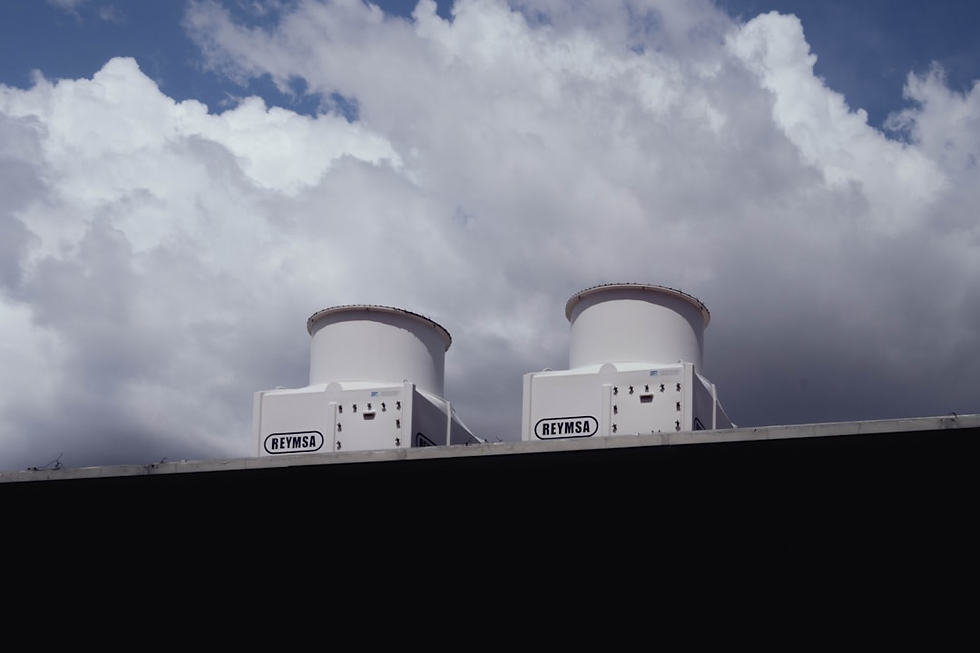
When your commercial HVAC is not cooling building spaces to a comfortable temperature, the impact goes well beyond occupant discomfort. Productivity drops. Customers leave. Equipment strains. And every hour without a diagnosis is another hour of compounding operational risk.
The frustrating reality is that a system can run continuously — fans spinning, compressors cycling, energy meters climbing — and still fail to deliver adequate cooling. Running is not the same as cooling. That distinction is exactly what makes these failures so difficult to catch early and so disruptive when they escalate.
According to industry data, over 60% of commercial rooftop unit cooling failures trace back to deferred preventive maintenance: dirty coils, failed capacitors, clogged filters, and low refrigerant. Another key finding is that airflow problems alone account for approximately 70% of all commercial HVAC failures — yet they are often the last thing facility managers investigate.
For facility managers and building owners across Virginia, understanding the most common causes of cooling failure — and knowing what to check before calling a technician — is the difference between a quick fix and a costly emergency repair.
The most common reasons a commercial HVAC system fails to cool properly include:
Clogged or dirty air filters restricting airflow through the system
Dirty condenser or evaporator coils reducing heat transfer efficiency
Low refrigerant caused by a leak in the refrigerant circuit
Thermostat or sensor miscalibration causing incorrect cycling
Economizer malfunction pulling in hot outdoor air instead of recirculating conditioned air
Leaky or undersized ductwork allowing conditioned air to escape before reaching occupied zones
Failing capacitors or blower motors reducing airflow delivery
Oversized or undersized equipment that short-cycles or cannot meet peak load
Frozen evaporator coils blocking airflow and heat absorption
Aging equipment that has lost efficiency and can no longer meet current building loads
This guide walks through each of these failure points in detail, with structured diagnostic steps designed for facility managers in commercial and industrial settings.

Airflow and Ventilation Failures in Commercial Systems
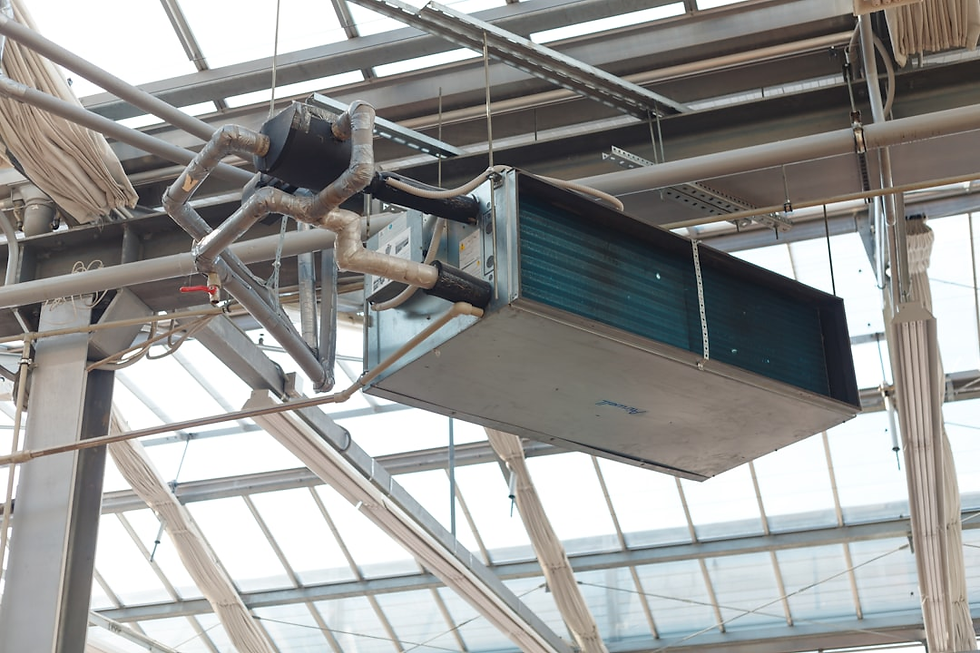
Airflow is the absolute foundation of commercial climate control. Because air is the medium that carries heat out of your building and delivers conditioned cooling, any restriction in the air loop directly cripples system performance. In fact, roughly 70% of all commercial package unit failures are categorized as airflow failures. When airflow drops, the system cannot transfer heat effectively, which often leads to the system running continuously without dropping the temperature.
Several common issues restrict airflow in commercial facilities:
Clogged Air Filters: The most common and easily preventable issue. When commercial AC filters are left unchanged, they build up a dense layer of dust, pollen, and debris. This dramatically increases static pressure within the air handler, forcing the blower motor to work harder while reducing the volume of air delivered to the building.
High Static Pressure: When static pressure rises due to dirty filters, undersized ductwork, or closed dampers, the system cannot push enough air through the building. This results in weak supply airflow and causes the cooling system to fall behind during peak load periods.
Blocked Return Grilles: In many commercial layouts, offices are rearranged or storage boxes are stacked without regard for HVAC design. Blocking return air grilles starves the system of air, preventing it from pulling warm air out of the space to be conditioned.
Blower Motor and Belt Failures: Commercial air handlers rely on belt-driven blowers. Over time, these belts stretch, crack, and slip, reducing blower RPMs and cutting air volume. If a belt snaps entirely or the blower motor fails, air stops moving altogether, even though the outdoor condenser units may continue to run.
These restrictions quickly lead to systemic temperature imbalances throughout your facility. For a deeper look into how air movement issues manifest as hot and cold zones, read our guide on What Causes Uneven Temperatures in Commercial Buildings.
How Airflow Issues Lead to a Commercial HVAC Not Cooling Building Properly
When air volume drops below design specifications, the system experiences a cascading series of thermal failures. One of the most common physical results is air stratification. In high-ceiling spaces like warehouses, retail showrooms, or open-plan offices, low airflow fails to mix the indoor air column. Warm air naturally rises while cool air pools near the floor, or conversely, poor distribution leaves stagnant pockets of hot, humid air at head height, making the building feel uncomfortably warm.
Additionally, mechanical issues like slipping blower belts or dirty blower wheels directly degrade heat exchange:
Slipping Blower Belts: As a belt slips, the blower wheel spins slower than designed. The air passes over the indoor evaporator coil too slowly, which can cause the coil temperature to drop below freezing, leading to ice accumulation.
Dirty Blower Wheels: Over years of operation, dirt and dust accumulate on the curved blades of a centrifugal blower wheel (often called a "squirrel cage"). This dirt alters the aerodynamic profile of the blades, severely reducing the fan's CFM (cubic feet per minute) output even if the motor is spinning at full speed.
Beyond the immediate cooling failure, poor airflow also severely degrades the indoor environment. To understand how these mechanical issues impact the air your occupants breathe, explore How Commercial HVAC Affects Indoor Air Quality.
Refrigerant, Coil, and Compressor Complications
The refrigerant circuit is the thermal engine of your commercial HVAC system. It is a closed loop designed to absorb heat from the building's interior and reject it outdoors. When any component within this thermodynamic cycle is compromised, the entire system struggles to cool.
Refrigerant Leaks: Commercial systems do not "consume" refrigerant like fuel. If refrigerant is low, there is a physical leak in the copper lines, coils, or joints. Low charge reduces the system's thermal capacity, causing the compressor to run constantly while supply air temperatures remain lukewarm.
Frozen Evaporator Coils: When airflow is restricted or refrigerant is low, the temperature of the indoor evaporator coil drops below 32°F. Moisture in the return air freezes onto the coil, creating a solid block of ice. This ice acts as an insulator, blocking heat transfer and completely stopping airflow.
Dirty Condenser Coils: Outdoor condenser coils are exposed to the elements. In Virginia commercial environments, they quickly accumulate dirt, dust, pollen, and grass clippings. This debris acts as a thermal blanket, preventing the system from rejecting heat to the outdoors. The compressor must work under much higher pressures, leading to high-energy draw and premature wear.
Thermal Expansion Valve (TXV) Malfunctions: The TXV is the metering device that regulates refrigerant flow into the evaporator coil. If the valve sticks open, it floods the coil; if it sticks closed, it starves the coil. Both scenarios stop proper cooling.
Compressor Degradation: The compressor is the heart of the system. Over time, valves can wear down, leading to a loss of compression. A degraded compressor cannot pump refrigerant effectively, resulting in little to no cooling capacity.
High-Pressure Lockouts: Modern commercial rooftop units (RTUs) feature safety switches. If outdoor condenser coils are extremely dirty or a condenser fan fails, pressures rise to dangerous levels, triggering a high-pressure lockout that shuts down the compressor to prevent catastrophic failure.
Recognizing these mechanical symptoms early can prevent an expensive compressor replacement. Learn more by reading about the Signs Your Commercial HVAC System Needs Repair.
Diagnosing Refrigerant and Coil Issues When Your Commercial HVAC Not Cooling Building Properly
When a technician arrives to diagnose a commercial hvac not cooling building properly, they use precise thermodynamic measurements rather than guesswork. Two critical metrics are superheat and subcooling:
Superheat measures the temperature increase of the refrigerant vapor after it has completely evaporated. Low superheat indicates liquid refrigerant may be returning to the compressor (flooding), while high superheat points to a starved evaporator coil (often due to low charge or a restricted TXV).
Subcooling measures the temperature drop of liquid refrigerant below its saturation point in the condenser. High subcooling can indicate a refrigerant restriction or overcharge, while low subcooling suggests an undercharge.
On the physical side, a condensate drain backup is a common consequence of coil issues. As warm, humid air passes over a cold evaporator coil, moisture condenses into water and drips into a drain pan. If the drain line is clogged with algae or rust, the pan overflows. Modern commercial systems utilize float switches that shut down the cooling system when water backs up to prevent property damage, resulting in a sudden loss of cooling.
Furthermore, ice accumulation on the suction line or evaporator coil is a visual indicator of either severe airflow restriction or low refrigerant. During extreme weather events, these issues compound rapidly. To understand how peak summer temperatures push compromised systems over the edge, read about Commercial HVAC Challenges During Heat Waves.
Thermostat, Sensor, and Control System Malfunctions
Even if the mechanical components of your HVAC system are in perfect working order, they cannot function without accurate instructions. Control failures are responsible for roughly 20% of all commercial HVAC service calls. In modern commercial and industrial facilities, these controls range from simple wall-mounted thermostats to complex, multi-zone Building Automation Systems (BAS).
Thermostat Miscalibration: Over time, internal temperature sensors in thermostats can drift. If a thermostat misreads the ambient temperature by even a few degrees, it may shut down the cooling cycle prematurely. Additionally, placing a thermostat on an exterior wall, near a heat-producing copier, or in direct sunlight causes it to misread the actual temperature of the occupied space.
Remote Temperature Sensors: Larger commercial zones often rely on remote wall-mounted sensors that feed data back to a central controller. If these sensors fail or are blocked by office furniture, the zone controller may receive inaccurate data, leading to improper damper modulation and uneven cooling.
Building Automation Systems (BAS) Glitches: In larger facilities, a central BAS controls scheduling, setpoints, and equipment stages. A software glitch, communication error, or corrupted schedule can lock the system in "unoccupied" mode, restricting cooling during operating hours.
Economizer Damper Failure: Economizers are designed to save energy by pulling in cool outdoor air (free cooling) when outdoor conditions are favorable. However, economizers are notorious for mechanical failure, representing up to 40% of commercial cooling complaints. If the outdoor air damper gets stuck open, the system will continuously pull in hot, humid outdoor air, overwhelming the mechanical cooling capacity.
Actuator Malfunctions: Dampers are positioned by electronic actuators. If an actuator motor burns out or the mechanical linkage slips, the damper may remain frozen in the wrong position, blocking return air or dumping excessive hot outside air into the mixing box.
Managing these control issues requires a systematic approach to diagnostic troubleshooting. For practical strategies on resolving occupant complaints related to control errors, see our guide on Commercial Building Comfort Complaints and HVAC Solutions.
Sizing, Heat Load, and Building Envelope Challenges
Sometimes, a commercial hvac not cooling building properly is not failing mechanically; rather, it is fighting an uphill battle against a heat load it was never designed to handle.
System Sizing and Short-Cycling: A common misconception is that "bigger is always better." An oversized cooling system will rapidly cool the air, satisfy the thermostat, and shut off. This rapid cycling (short-cycling) prevents the system from running long enough to remove moisture from the air, leaving the building cold but incredibly humid and clammy. Conversely, an undersized system will run continuously without ever reaching the setpoint, leading to high energy bills and premature compressor failure.
Heat Load Calculations: Original HVAC designs are based on specific heat load calculations (such as ASHRAE guidelines), which account for the number of occupants, lighting types, computers, copiers, and manufacturing equipment. If a warehouse is converted into a high-density office space, or a retail store adds high-heat production equipment, the existing HVAC system will no longer have the capacity to maintain comfortable temperatures.
The Building Envelope: The building envelope — walls, roof, windows, and doors — acts as the barrier between your conditioned space and the outdoor environment. Poor insulation, degraded weather stripping, and failing roof membranes allow outdoor heat to infiltrate the building.
Solar Heat Gain: Large, south- or east-facing windows can introduce massive amounts of radiant heat. Without high-efficiency glazing or window treatments, solar heat gain can easily overwhelm local zone sensors, creating localized hot zones.
High Humidity Levels and Latent Heat Load: Cooling involves two processes: lowering the air temperature (sensible cooling) and removing moisture (latent cooling). High outdoor humidity levels increase the latent heat load on the system. If the system must spend all of its energy condensing water vapor out of the air, it has less capacity left to lower the actual air temperature.
During extreme weather conditions, these structural and thermal loads are put to the ultimate test. To understand how extreme outdoor conditions affect your building's thermal performance, read How Extreme Weather Affects Commercial HVAC Systems.
Diagnostic Steps for Facility Managers Before Calling a Technician
Before dispatching an industrial technician, facility managers can perform several basic diagnostic checks. These simple steps can rule out minor issues, potentially saving time and helping you provide valuable diagnostic information to your service provider.
Component | Facility Manager Check | Professional Technician Diagnostic |
Air Filters | Visually inspect for heavy dust buildup. Replace monthly or quarterly if dirty. | Measure external static pressure drop across the filter bank using a manometer. |
Thermostat / Controls | Verify thermostat is set to COOL and AUTO. Check batteries and active schedules. | Calibrate temperature sensors; verify control voltage (24VAC) and BAS communication. |
Vents & Grilles | Walk the space to ensure supply registers and return grilles are completely unobstructed. | Measure airflow (CFM) at individual registers using a balometer or hot-wire anemometer. |
Outdoor Condenser | Ensure 2 feet of clear space around the unit. Look for visible debris on the coils. | Clean coils with specialized chemical wash; measure fan motor amp draw and capacitor microfarads. |
Refrigerant Lines | Check for visible ice buildup on copper lines or the indoor evaporator coil. | Connect manifold gauges to measure suction/discharge pressures, superheat, and subcooling. |
Electrical Panel | Check the main electrical panel for tripped circuit breakers or blown fuses. | Perform phase-balance testing; inspect contactors for pitting and measure compressor winding resistance. |
Economizer | Visually check if the outdoor air damper is stuck wide open during hot weather. | Test actuator motor, check mixed-air sensor calibration, and verify control logic. |
Taking these initial steps allows you to isolate the failure mode. For a detailed troubleshooting checklist tailored for facility operations, read Commercial HVAC System Performance Decline What to Check.
Repair vs. Replace: When is Your Commercial HVAC Not Cooling Building Properly Beyond Repair?
When a commercial cooling system experiences ongoing failures, facility managers face a critical decision: should you continue to repair the existing equipment, or is it time to invest in a replacement? Making the wrong choice can lead to wasted capital or unexpected downtime.
Several key factors guide this evaluation:
Equipment Age: The typical operational lifespan of a well-maintained commercial rooftop unit or split system is approximately 15 years. Units operating in harsh environments or with a history of deferred maintenance may begin to decline after 10 to 12 years.
Refrigerant Phase-Outs: Older systems running on R-22 refrigerant face steep operational challenges. Because R-22 is phased out, sourcing refrigerant for leaks is increasingly difficult and inefficient. Upgrading to modern, environmentally compliant refrigerants is often the most financially sound long-term decision.
Frequency of Breakdowns: If an RTU requires more than two emergency service calls per year, it is a clear sign of systemic component wear. The cumulative cost of minor repairs, combined with the cost of operational downtime, quickly surpasses the cost of a planned replacement.
Energy Efficiency Decline: Older systems lose efficiency as coils degrade and compressors wear. A new, high-efficiency system can reduce cooling energy costs by 15% to 25% compared to an aging, run-to-failure unit.
Retrofit ROI: Rather than a full system replacement, some facilities benefit from targeted retrofits, such as installing variable frequency drives (VFDs) on blower motors or integrating smart economizer controllers. This can deliver a rapid return on investment without the capital expense of a full replacement.
Proactive planning is key to maximizing the lifespan of your mechanical assets. To learn how to protect your equipment investments, read about How to Extend the Life of Commercial HVAC Equipment.
Frequently Asked Questions about Commercial Cooling Failures
Why is my commercial AC running but not blowing cold air?
This symptom typically points to a separation between the airflow system and the refrigeration circuit. If the indoor blower fan is running, it will circulate air throughout the building, but if the outdoor compressor has tripped on a high-pressure safety, lost its refrigerant charge, or suffered a failed capacitor, no heat transfer occurs.
The air will blow at ambient temperature. The most common causes are severely dirty condenser coils, a tripped circuit breaker on the outdoor unit, or a low refrigerant charge due to a leak.
How often should commercial HVAC systems be serviced to prevent cooling issues?
Commercial HVAC systems should receive comprehensive professional preventive maintenance at least twice per year, typically in the spring (before the cooling season) and in the fall (before the heating season). For facilities with demanding environments — such as manufacturing plants, high-traffic retail spaces, or buildings in high-pollen areas — quarterly maintenance is highly recommended.
Consistent servicing reduces emergency breakdowns by 30% to 50%. For a detailed breakdown of what a professional service visit should include, review How to Maintain Commercial HVAC Systems.
How does high humidity affect commercial HVAC cooling performance?
High outdoor humidity increases the latent heat load on your system. Air conditioners remove humidity by condensing water vapor onto the cold evaporator coil. When humidity is high, the system must dedicate a significant portion of its cooling capacity to turning water vapor into liquid water, leaving less sensible cooling capacity to lower the actual air temperature.
Furthermore, if the economizer's outdoor enthalpy sensors are miscalibrated, the system may pull in humid outdoor air, overwhelming the system and making the indoor space feel warm, sticky, and uncomfortable.
Conclusion
When a commercial hvac not cooling building properly threatens your daily operations, you need a highly technical, reliable partner to restore balance. Whitescarver Engineering Co. has provided commercial and industrial HVAC, refrigeration, and energy-conservation solutions across Virginia since 1937. Based in Roanoke, VA, we serve businesses throughout Roanoke, Salem, Vinton, and the Blacksburg/Christiansburg corridor.
With over 75 years of experience and a BBB A+ accreditation since 1974, our team specializes in custom industrial HVAC projects, large-scale system retrofits, and comprehensive maintenance agreements that deliver real energy cost reductions. We provide 24/7 service for commercial clients, ensuring your critical cooling infrastructure is always supported by expert hands.
To keep your facility running smoothly year-round, download our Commercial HVAC Maintenance Checklist for Facility Managers or Schedule professional commercial HVAC services with Whitescarver Engineering Co. today.


Comments