
Step-by-Step Guide to Planning Commercial HVAC Replacement Timing
Plan Commercial HVAC Replacement Before Failure
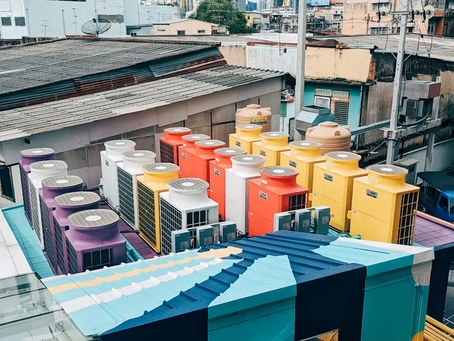
For commercial HVAC replacement in Roanoke, VA, begin planning when equipment enters the later part of its expected service life, shows repeat failures, loses efficiency, or relies on hard-to-source parts or legacy refrigerant. Packaged rooftop units often last 15 to 20 years, while chillers and boilers may serve longer with strong maintenance. The key is to track condition and performance early, then create a multi-year replacement plan before a critical failure disrupts operations. This helps facility managers protect comfort, process control, and business continuity.
Explore commercial HVAC system engineering and replacement solutions or contact Whitescarver Engineering Company to discuss your facility's next steps.
Whitescarver Engineering Company helps commercial and industrial facilities throughout Roanoke, Salem, Vinton, and the Blacksburg/Christiansburg corridor assess aging HVAC assets, maintenance history, and retrofit options. I am Hugh Joyce, and connect with our team to plan a reliable path forward.

Commercial HVAC System Lifespan: When to Plan for Replacement

Understanding your equipment's true operational horizon is the cornerstone of effective facility management. In industrial plants, healthcare campuses, and commercial properties, heating and cooling equipment does not simply quit without warning; it enters an extended phase of performance drift, mechanical fatigue, and thermal degradation. When evaluating commercial HVAC system lifespan, when to plan for replacement depends on operating hours, equipment age, and maintenance discipline to prevent sudden disruptions to your core operations.
Every mechanical asset operates on a predictable lifespan curve defined by industry standards such as ASHRAE benchmarks, cumulative runtime hours, thermal stress, and environmental load factors. However, knowing what shortens commercial HVAC system lifespan—from high ambient humidity to irregular servicing—helps building operators protect their systems. Conversely, discovering how to extend the life of commercial HVAC equipment through proactive operating protocols ensures you extract maximum value before capital renewal.

Assessing Commercial HVAC System Lifespan: When to Plan for Replacement by Equipment Type
Different mechanical configurations endure different levels of operational wear. A packaged rooftop unit (RTU) exposed to harsh outdoor weather patterns naturally degrades faster than a heavy-duty water-cooled chiller housed within an interior mechanical room. When asking how long does a commercial HVAC system last, facility executives must evaluate their specific asset classes against proven engineering metrics.
Equipment Type | ASHRAE Median Lifespan | Lifespan with >90% PM Completion | Lifespan with Reactive Maintenance | Primary End-of-Life Indicators |
Packaged Rooftop Units (RTUs) | 15–20 Years | 20–25 Years | 10–14 Years | Cracked heat exchangers, compressor burnouts, casing corrosion |
Centrifugal Chillers | 20–25 Years | 25–35 Years | 15–18 Years | Tube bundle erosion, refrigerant leaks, compressor efficiency loss |
Scroll / Screw Chillers | 20–25 Years | 20–25 Years | 12–16 Years | High vibration, repeated motor contactor failures, oil breakdown |
Air Handling Units (AHUs) | 20 Years | 25–30 Years | 12–16 Years | Severe casing air leakage, structural frame sag, coil degradation |
Cooling Towers | 20 Years | 25–30 Years | 12–15 Years | Basin corrosion, fill scale accumulation, gearbox/motor failure |
Commercial Hot Water Boilers | 20–25 Years | 25–35 Years | 14–18 Years | Refractory breakdown, tube scaling, thermal stress cracking |
Commercial Steam Boilers | 20–25 Years | 20–30 Years | 12–16 Years | Oxygen pitting, mud drum accumulation, combustion degradation |
Maintaining compressor health, verifying heat exchanger integrity, and monitoring boiler combustion efficiency are crucial for validating whether an asset remains safely inside its prime operating envelope.
Preventive Maintenance Impact on Equipment Longevity
The gap between early equipment retirement and extended service life comes down to maintenance discipline. Facilities that maintain a preventive maintenance (PM) task completion rate above 90% regularly see their HVAC assets operate 3 to 5 years beyond industry averages. Conversely, operations relying on reactive maintenance suffer a 30% to 40% reduction in equipment longevity.

Structured maintenance agreements ensure systems receive routine seasonal tune-ups, precise lubrication protocols, laser pulley alignment, electrical torque verification, and thorough chemical coil cleanings. Evaluating preventive maintenance vs reactive repairs commercial HVAC shows that run-to-failure approaches create compounding mechanical strain. For operations weighing long-term budgets, examining whether is a commercial HVAC maintenance plan worth it reveals that sustained care significantly lowers total cost of ownership while supporting overall facility uptime.
Critical Warning Signs and End-of-Life Performance Triggers
Mechanical systems display clear symptoms before critical failures occur. Recognizing these indicators early allows facility teams to transition from emergency reactions to structured capital planning. Recognizing the early signs your commercial HVAC system needs repair gives operations teams the time needed to evaluate long-term options before equipment fails completely.
When equipment exhibits persistent operating issues, completing a systematic commercial HVAC system performance decline what to check review will pinpoint root causes:
Elevated Mechanical Vibration and Noise: Excessive baseline vibration across blower shafts, chiller compressor shells, or pump bearings points to internal mechanical wear.
Refrigerant and Fluid Leaks: Chronic loss of refrigerant charge or recurring hydronic loop leaks indicate advanced metal fatigue and joint deterioration.
Parts Obsolescence and Supply Bottlenecks: Equipment relying on out-of-production electronic boards, legacy fan motors, or phased-out refrigerants faces extended downtime when components fail.
Inability to Maintain Setpoints: Inability to handle peak cooling or heating loads across production areas or workspaces signals severe thermal heat transfer loss.
Energy Efficiency Degradation and Operating Drift
Energy consumption represents 50% to 60% of an HVAC asset's total lifecycle cost—often 3 to 4 times the initial equipment purchase cost. As internal heat transfer surfaces scale up, mechanical friction climbs, and airflow passages deteriorate, the equipment's Coefficient of Performance (COP) drops.
A 10% to 15% increase in energy consumption per ton of cooling compared to the original commissioning baseline serves as an engineering signal that the unit is nearing the end of its economic life. For facilities running continuous processes or large square footage, reviewing the long-term benefits of upgrading commercial HVAC equipment demonstrates that energy cost reductions alone can help offset the investment in modern, high-efficiency equipment.
Maintenance Expenditure Escalation and the 50 Percent Threshold
Cumulative maintenance tracking provides the financial data necessary to justify capital renewal. When repair expenditures trend upward, facility managers need clear rules of thumb to determine whether continued investments make operational sense.
A dependable capital threshold guideline is the 50 Percent Rule: if a major repair quote exceeds 50% of the asset's remaining value (adjusted for remaining useful life), replacing the unit delivers better 10-year financial performance. Furthermore, if annual repair expenses surpass 30% to 40% of full replacement cost for two consecutive operating cycles, continuing to repair the unit is no longer cost-effective. Proper planning on how to budget for commercial HVAC maintenance and repairs provides the data baseline needed to decide when should you replace commercial HVAC equipment to protect your bottom line.
Step-by-Step Framework to Evaluate Repair, Retrofit, and Full Replacement
Navigating the choice between fixing a worn component, modernizing specific subsystems, or commissioning an entirely new unit requires a structured engineering evaluation.

Assess Base Structural and Pressure Integrity: Determine if the unit's cabinet, framework, hydronic headers, or core pressure vessels remain sound.
Audit Historic Maintenance and Uptime Records: Pull Computerized Maintenance Management System (CMMS) logs to review total repair investments over the past 24 to 36 months.
Calculate Payback and Operational Drift: Determine if efficiency losses exceed acceptable tolerances and model the energy savings achievable through new technologies.
Evaluate Facility Occupancy Changes: Verify whether the building's current cooling, ventilation, or dehumidification requirements match the original design specifications.
Analyzing when to retrofit vs replace commercial HVAC system helps facilities pinpoint which mechanical strategy fits their operational goals. Reviewing a detailed cost comparison HVAC retrofit vs replacement commercial breakdown clarifies short-term expenses against long-term operating costs. This helps facilities choose between a targeted commercial HVAC retrofit vs full replacement without compromising facility reliability.
Evaluating Targeted Retrofits and Component Upgrades
Retrofitting serves as an intermediate strategy when the core mechanical housing, coils, or distribution loops remain robust, but sub-tier systems have become inefficient.
Upgrades such as adding Variable Frequency Drives (VFDs) to constant-speed supply fans and hydronic pumps can reduce power demand by 20% to 40% under partial-load conditions. Upgrading legacy pneumatic controls with modern Direct Digital Controls (DDC), installing economizers for free cooling, or integrating high-efficiency fan arrays can modernize performance without requiring a complete system tear-out. Exploring how businesses can save on HVAC upgrades in Virginia helps businesses leverage targeted retrofits to lower utility bills while extending base equipment utility.
Establishing a Planned Replacement Schedule
Rushing an HVAC replacement during a total mid-season breakdown introduces unnecessary business risks, expedited freight fees, crane scheduling challenges, and potential operational shutdowns. Establishing a structured capital plan avoids these emergency disruptions.
Following a quick start guide to planned replacement for Virginia commercial HVAC provides facilities with an organized implementation roadmap from initial engineering survey through to final commissioning.
Frequently Asked Questions About Commercial HVAC Replacement
How far in advance should a facility begin planning for commercial HVAC replacement?
Commercial and industrial facilities should initiate replacement planning 12 to 24 months before an asset reaches the end of its expected service life. Major equipment—such as custom packaged rooftop units, centrifugal chillers, or heavy steam boilers—frequently carries factory manufacturing lead times ranging from 12 to 30 weeks. Starting early allows ample time to complete detailed engineering load calculations, evaluate electrical service infrastructure, coordinate crane logistics, and secure pre-approval for regional utility energy-efficiency incentives.
What is the primary difference between planned replacement and emergency replacement?
Planned replacement allows facility managers to specify the right equipment, schedule installation during planned plant shutdowns or mild shoulder seasons, solicit competitive pricing, and carefully prepare the site. Emergency replacement occurs after catastrophic mechanical failure, often forcing building owners to accept whatever equipment is immediately available in distributor stock regardless of efficiency ratings or physical fit. Emergency projects typically incur expedited shipping fees, overtime labor, and elevated risk of business downtime.
How do modern refrigerant transitions impact replacement timelines?
Environmental regulations continue to phase down legacy hydrofluorocarbon (HFC) refrigerants in favor of low Global Warming Potential (GWP) alternatives such as A2L refrigerants. As older refrigerants become restricted, the cost to repair leaks on aging equipment increases substantially, and replacement parts for legacy compressors become scarce. Planning a scheduled equipment replacement ensures your facility transitions smoothly to current refrigerant standards, preventing future compliance issues and parts shortages.
Conclusion
Maximizing equipment longevity while safeguarding operational uptime requires a balanced approach to asset lifecycle management. By monitoring key warning signs, tracking cumulative maintenance expenditures, and addressing energy drift early, commercial building operators can replace aging infrastructure methodically rather than reacting to catastrophic breakdowns.
Whitescarver Engineering Company is a commercial and industrial HVAC and refrigeration service firm based in Roanoke, VA, operating since 1937. With over 75 years of experience and a BBB A+ accreditation since 1974, our team delivers reliable technical solutions for complex mechanical challenges. We specialize in installing, maintaining, and retrofitting large-scale HVAC systems, custom industrial HVAC projects, process piping, refrigeration engineering and design, and advanced energy-conservation solutions.
Serving commercial facilities throughout Roanoke, Salem, Vinton, and the Blacksburg/Christiansburg corridor, our team offers dedicated 24/7 service and comprehensive maintenance agreements tailored to your operations. Contact our engineering team today to review your equipment fleet and establish a planned replacement strategy that secures your facility's operational future.


Comments