
How a Maintenance Agreement Reduces HVAC Downtime: A Practical Guide
Why HVAC Downtime Is a Serious Risk for Commercial Facilities in Virginia

How a maintenance agreement reduces HVAC downtime comes down to one core principle: catching problems before they stop your operation. Here is a quick breakdown:
Scheduled inspections identify worn components, electrical irregularities, and airflow restrictions before they escalate into failures.
Pre-season servicing prepares equipment for peak heating and cooling demand, reducing the risk of breakdowns when your systems are under the most stress.
Priority response clauses ensure that if something does go wrong, a qualified technician reaches your facility faster than a standard service call.
Documented service history supports manufacturer warranty claims and gives facility managers clear visibility into system health.
Consistent preventive care reduces mechanical strain on compressors, motors, and heat exchangers, extending equipment lifespan and lowering the frequency of emergency repairs.
For commercial and industrial facilities in Roanoke, Salem, Vinton, and the Blacksburg/Christiansburg corridor, an unplanned HVAC failure is not just an inconvenience. It can mean halted production, lost revenue, uncomfortable tenants, or a safety risk. Reactive maintenance — waiting for something to break before calling a technician — consistently costs more, disrupts operations more severely, and puts aging equipment under unnecessary strain. A structured maintenance agreement shifts that dynamic entirely, moving your facility from a reactive posture to a predictable, planned one.
I'm Hugh Joyce, and in this guide I'll walk you through exactly how a commercial HVAC maintenance agreement works, what to look for in a service contract, and how it protects your operation through Virginia's demanding seasonal climate.

What is a Commercial HVAC Preventative Maintenance Agreement?
A commercial HVAC preventative maintenance agreement is a structured contract between a building owner or facility manager and a professional mechanical contractor. Rather than operating on a "break-fix" model, this agreement establishes a scheduled routine of proactive inspections, cleanings, calibrations, and component replacements. It is designed to keep complex mechanical, ventilation, and refrigeration systems operating at peak thermodynamic and mechanical efficiency.
To understand why this contract is so vital for modern commercial facilities, it is helpful to contrast it directly with reactive maintenance. When a business relies on reactive repairs, they only call for service after a component has failed. This approach leaves the facility vulnerable to catastrophic system failures during extreme weather, leading to extended operational delays, emergency-rate labor charges, and long lead times for replacement parts.
By contrast, a structured agreement establishes a proactive operational framework. To learn more about how these philosophies compare in practice, you can read our detailed breakdown of preventive maintenance vs reactive repairs commercial hvac.
Establishing a formal agreement ensures that your building’s climate control and industrial cooling systems are never left to run to failure. For a complete look at what these contracts look like from an administrative standpoint, explore what is a commercial hvac preventive maintenance agreement.
The Core Differences Between Proactive and Reactive Care
The primary difference between proactive and reactive mechanical care lies in predictability. In a reactive scenario, emergency breakdowns dictate your facility's operational schedule and budget. These failures often occur during peak seasonal demands when local service technicians are heavily booked, leaving your facility waiting in line while productivity or tenant comfort plummets.
Proactive care under a maintenance agreement replaces this chaos with scheduled inspections. Technicians visit your facility during milder, off-peak months to thoroughly evaluate system health. This allows any necessary repairs to be scheduled at your convenience, ensuring your operations are never unexpectedly interrupted.
Beyond preventing sudden breakdowns, this consistency provides substantial peace of mind. If you are weighing the long-term value of these plans for your facility, consider our evaluation of whether is a commercial hvac maintenance plan worth it.
How a Maintenance Agreement Reduces HVAC Downtime Through Early Detection
Mechanical systems rarely fail without warning. Long before a commercial rooftop unit or chiller stops working entirely, it will exhibit subtle performance changes. These warning signs include slight electrical irregularities, minor airflow limitations, or worn components that place extra physical strain on the system.
During a routine maintenance inspection, a technician uses specialized diagnostic tools to detect these early indicators. By identifying a failing capacitor, a frayed belt, or a minor refrigerant leak early, we can replace the affected part during a planned service window. This keeps a minor, easily resolved issue from escalating into a major system failure that shuts down your entire building.
To help your team identify these warning signs between scheduled technician visits, review our guide on the signs your commercial hvac system needs repair.
How a Maintenance Agreement Reduces HVAC Downtime in Virginia's Climate
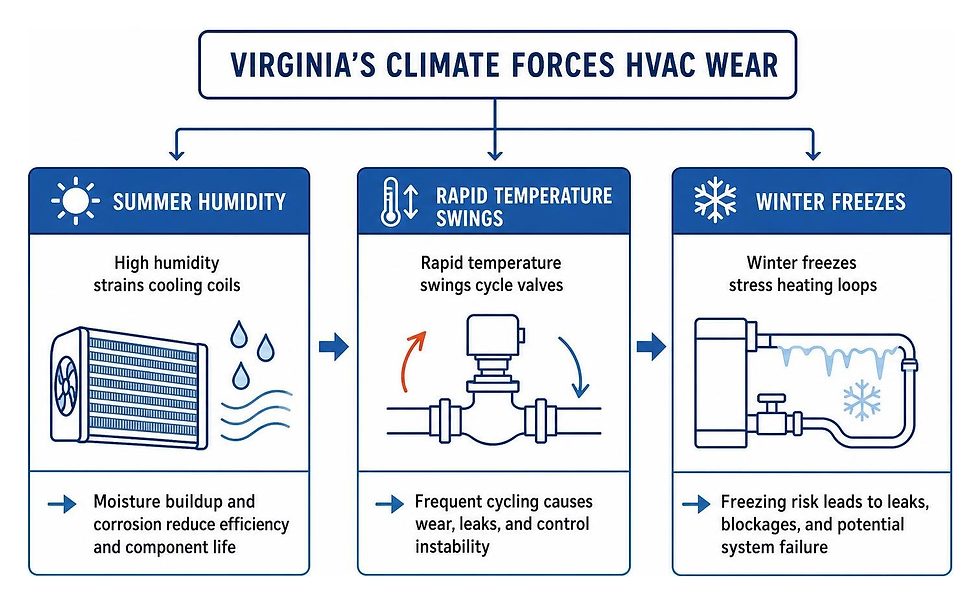
The climate of Southwest Virginia — including Roanoke, Salem, Vinton, and the Blacksburg/Christiansburg corridor — places unique physical demands on commercial and industrial HVAC systems. Our region experiences dramatic seasonal temperature swings, ranging from hot, humid summers to freezing winter weather.
These rapid transitions force commercial HVAC systems to work extremely hard to maintain stable indoor environments. High humidity levels during the summer put extra strain on cooling coils and condensate drainage systems, while winter freezes demand immediate, reliable performance from heating plants.
Without consistent, professional maintenance, these environmental pressures accelerate mechanical wear and dramatically increase the risk of sudden equipment failure. To understand how to protect your equipment from these local climate challenges, consult our comprehensive commercial hvac maintenance guide roanoke va.
Mitigating Seasonal Stress During Peak Heating and Cooling Months
During the hottest summer heatwaves and the coldest winter freezes, your HVAC systems operate under peak demand. This is precisely when weak or unmaintained components are most likely to fail. A single weak capacitor or a slightly restricted thermal expansion valve will quickly give out when forced to run continuously at maximum capacity.
A maintenance agreement mitigates this seasonal stress by scheduling comprehensive tune-ups before these peak periods arrive. Spring cooling inspections and autumn heating inspections ensure that every component is clean, calibrated, and fully prepared for the heavy workload ahead. This pre-season preparation is one of the most effective ways to avoid emergency outages when you need your system the most.
For a detailed look at the optimal timing and frequency for these seasonal tune-ups, check out our commercial hvac maintenance frequency guide 2026.
Protecting Aging Mechanical Systems in Legacy Commercial Buildings
Many commercial and industrial properties in Virginia feature legacy mechanical systems. While these robust, older units are highly durable, they require specialized care to maintain reliable performance as they age. Over time, physical component wear naturally increases, and even minor issues like a loose connection or dirty condenser coils can cause a complete system shutdown.
Regular preventative maintenance is essential for these older systems. Proactive tasks such as lubricating bearings, tightening electrical connections, and cleaning heat exchangers significantly reduce the physical stress on aging compressors and motors. This consistent care slows down the degradation process, helping you avoid costly, unexpected breakdowns while keeping your legacy equipment running reliably.
To learn more about maximizing the service life of your building's existing systems, see our practical advice on how to extend the life of commercial hvac equipment.
Key Elements of an Effective Commercial Service Contract
An effective commercial HVAC service contract is far more than a generic checklist. It should be a highly detailed, customized document tailored to the specific mechanical footprint of your facility. A well-structured agreement clearly outlines the exact scope of work, the frequency of service visits, and the specific responsibilities of both the contractor and the building owner.
When establishing a service contract, it is important to ensure it covers all the critical maintenance tasks required for your equipment. To make sure your agreement includes all necessary protections, read our guide on commercial hvac service contract what to look for.
To help you understand the practical differences between contract types, here is a comparison of basic versus comprehensive agreements:
Service Feature | Basic Maintenance Agreement | Comprehensive Service Agreement |
Visit Frequency | Typically bi-annual (Spring/Fall) | Quarterly or custom intervals |
Filter Replacements | Standard sizes included | All custom/standard sizes included |
Coil Cleaning | Surface brush-cleaning only | Deep chemical pressure washing |
Electrical Diagnostics | Visual inspection of contacts | Full voltage/amperage performance testing |
Priority Scheduling | Standard queue placement | Guaranteed priority response window |
Emergency Labor | Standard hourly billing rates | Discounted or fully covered emergency rates |
Refrigerant Monitoring | Leak checks only | Full system charge analysis and leak repair |
Priority Service and Emergency Response Clauses
One of the most valuable operational benefits of a formal maintenance agreement is the inclusion of priority service and emergency response clauses. When an unexpected breakdown occurs during a peak heating or cooling wave, non-contract customers often face long wait times as service providers handle backlog requests.
As an agreement customer, your service calls are automatically routed to the front of the queue. These priority clauses guarantee a technician will be dispatched to your facility within a specified, contracted timeframe — often within a few hours. This rapid response minimizes operational disruptions and ensures your critical systems are restored as quickly as possible.
Selecting the right service partner is essential to securing these reliable response times. For tips on choosing the best contractor for your business, read our guide on how to evaluate commercial hvac service providers.
Custom Checklists and Service Depth for Industrial Systems
Industrial facilities, manufacturing plants, and buildings with large-scale refrigeration systems require a level of service depth that goes far beyond standard commercial HVAC care. These complex systems feature specialized components like cooling towers, heavy-duty chillers, and industrial process piping that demand highly technical, customized maintenance checklists.
A generic maintenance plan is simply not sufficient for these complex systems. An effective agreement must feature a tailored checklist designed specifically for your facility's unique equipment. This ensures that critical tasks — such as testing chiller safety controls, checking water treatment levels in cooling towers, and inspecting industrial refrigeration compressors — are performed consistently.
For a practical starting point on what these checklists should include, refer to our commercial hvac maintenance checklist for facility managers.
Financial and Operational Benefits of Proactive Maintenance
Implementing a preventative maintenance agreement delivers significant financial and operational advantages that extend far beyond simply preventing breakdowns. For facility managers and business owners, one of the greatest benefits is the ability to shift from unpredictable emergency repair costs to a highly predictable, structured budget.
By scheduling routine maintenance, you can accurately budget for your mechanical service needs well in advance. This operational predictability makes it much easier to plan for future capital expenditures, ensuring you are never caught off guard by sudden, expensive equipment failures.
To learn more about aligning your mechanical upkeep with your long-term business goals, read our guide on how to budget for commercial hvac maintenance and repairs.
How a Maintenance Agreement Reduces HVAC Downtime and Protects Warranties
Modern commercial HVAC and refrigeration equipment represents a substantial capital investment. To protect this investment, manufacturers almost always require documented proof of regular, professional maintenance to keep their equipment warranties valid. If a major component like a compressor fails prematurely, the manufacturer may deny the warranty claim if you cannot show that the system was properly maintained.
A formal maintenance agreement solves this problem by establishing a complete, documented service history for every piece of equipment in your facility. Your service provider keeps detailed records of all inspections, cleanings, and repairs. This documentation provides clear proof of compliance, ensuring your manufacturer warranties remain fully intact and protecting you from paying out of pocket for covered part failures.
To ensure your facility's systems are maintained in strict accordance with manufacturer specifications, partner with a reliable maintenance services contractor commercial hvac units in roanoke va.
When to Maintain vs. Replace Aging Commercial Equipment
Every mechanical system eventually reaches the end of its useful service life. As equipment ages, facility managers face a critical decision: should you continue to invest in maintaining the existing system, or is it time to replace it entirely?
A maintenance agreement provides the detailed operational data and service history needed to make this decision with confidence. By tracking repair frequency, energy consumption, and performance trends over time, you can clearly see when a unit's performance begins to decline. This data allows you to plan for a replacement well in advance, avoiding the high costs and emergency downtime of a sudden, catastrophic failure.
For a detailed look at the key performance indicators that signal it is time for an upgrade, consult our guide on commercial hvac system performance decline what to check.
Frequently Asked Questions About Commercial HVAC Downtime
How often should commercial HVAC systems undergo preventative maintenance?
Most commercial and industrial HVAC systems should undergo professional preventative maintenance at least four times a year. While residential systems can often get by with bi-annual visits, the constant, heavy workload of commercial systems demands quarterly inspections.
These quarterly visits allow technicians to perform seasonal adjustments, replace air filters, inspect belts, and catch developing issues before they can cause a system shutdown. To explore how to structure and execute these routine tasks effectively, see our detailed guide on how to maintain commercial hvac systems.
What are the most common causes of sudden commercial HVAC failure?
The most common causes of sudden commercial HVAC failure include:
Electrical component failure: Worn-out contactors, blown fuses, or failed capacitors can instantly cut power to critical system components.
Compressor strain: Running a system with dirty condenser coils or restricted airflow forces the compressor to work much harder, leading to premature motor burnout.
Clogged air filters: Allowing air filters to become heavily restricted starves the system of airflow, which can cause evaporator coils to freeze or heat exchangers to overheat and crack.
Refrigerant leaks: Even minor leaks reduce system efficiency, increase operating temperatures, and put excessive physical stress on the compressor.
How do priority service clauses in an agreement minimize operational disruptions?
Priority service clauses ensure that your business is treated as a top priority when an unexpected breakdown occurs. During peak heating and cooling seasons, non-contract customers often face long wait times for an emergency service call.
With a priority service clause in your maintenance agreement, you receive guaranteed, rapid response times. A technician will be dispatched to your facility within a specified window, ensuring that any system disruptions are resolved quickly to keep your business running smoothly.
Conclusion: Partner with Whitescarver Engineering Co.
At Whitescarver Engineering Co., we understand that keeping your commercial and industrial HVAC systems running reliably is essential to your business's success. With over 75 years of experience serving Roanoke, Salem, Vinton, and the Blacksburg/Christiansburg corridor, our team has the technical expertise and deep local knowledge required to deliver second-to-none mechanical solutions. As a BBB A+ accredited contractor since 1974, we pride ourselves on building long-term, trusted partnerships with our clients.
Whether you manage a manufacturing plant, a commercial office building, or a complex industrial refrigeration facility, we can design a customized maintenance agreement tailored to your specific operational needs. Our proactive service plans are designed to maximize equipment efficiency, protect your capital investments, and keep unexpected downtime to an absolute minimum.
Ready to protect your facility with a professional maintenance agreement? Contact us today to discuss our comprehensive maintenance services and learn how we can help you keep your business running smoothly year-round.


Comments